Step-by-Step Guide to Beef Shank with Bone
Cooking a piece of meat that needs patience and care is very rewarding. Learning to cook beef shank with bone is more than just making dinner. It’s a skill that turns a less popular cut into something amazing.
Many home cooks avoid beef shank with bone because it looks tough. They think it’s too much work. But, this cut offers rich flavors that other meats can’t match.
This guide will teach you everything you need to know. You’ll learn how to pick the best beef shank at the butcher. You’ll discover how to make tough meat tender and delicious. You’ll also learn different cooking methods, like braising and pressure cooking.
Whether you’re new to beef shank or have cooked it before, this guide will boost your confidence. You’ll learn about timing, temperature, and techniques for great results.
By the end of this guide, you’ll cook beef shank like a pro. You’ll have recipes and methods that work in your kitchen. Most importantly, you’ll impress your family and friends with your cooking skills.
Table of Contents
What Makes Beef Shank with Bone Special
Beef shank bone cuts are special because of their flavor, texture, and health benefits. Choosing a cross cut beef shank bone-in for your meal means you’re in for a treat. This cut comes from the leg, where muscles work hard, making the meat rich and savory.
The bone in the cut is not just for looks. It plays a key role in cooking and nutrition.
What makes this cut special is its structure and how it cooks. The beef shank bone is at the center, surrounded by tough muscle and connective tissue. This makes it perfect for slow-cooking methods that make the meat tender and delicious.
Understanding the Cut and Its Characteristics
A cross cut beef shank bone-in has a visible marrow bone in the middle, surrounded by meat. The muscle around the bone is full of collagen, a protein that turns into gelatin when cooked. This gelatin makes your dishes silky and rich.
The connective tissue in the cut needs time and gentle heat to break down. Cooking a cross cut beef shank bone-in slowly converts collagen into gelatin. This process takes hours of gentle heat.
- The marrow bone adds depth and richness to cooking liquids
- Surrounding muscle tissue provides meaty substance and flavor
- Connective tissue creates natural body and texture
- The cut requires patient, low-temperature cooking methods
Nutritional Benefits of Bone-In Beef Shank
Cooking with the bone intact offers nutritional benefits you can’t get from boneless cuts. The beef shank bone releases minerals into your cooking liquid. These minerals include calcium, phosphorus, and magnesium, which are good for bones and muscles.
The meat itself is high in quality protein. The collagen-rich connective tissue offers amino acids like glycine and proline. These support joint health, skin elasticity, and gut function. The marrow inside the bone adds fat-soluble vitamins and minerals, enriching your dish.
| Component | Bone-In Beef Shank | Boneless Beef Shank |
|---|---|---|
| Mineral Content | Rich minerals leach into liquid | Limited mineral extraction |
| Collagen Quality | Maximum gelatin development | Reduced gelatin formation |
| Flavor Depth | Deep, complex bone-derived flavors | Primarily meat flavors |
| Cooking Liquid | Becomes nutrient-dense broth | Less nutritional value |
Serious cooks prefer keeping the bone attached because it transforms your cooking experience. The beef shank bone improves nutrition and enhances flavor and texture in your dish. This is why proper preparation and cooking methods are key with this distinctive cut.
Selecting the Perfect Beef Shank at Your Butcher
When you go to your local butcher, it’s important to know what to look for. The color of the meat tells you a lot about its freshness. Look for deep red tones, not brown or gray. Fresh beef shank should look vibrant and appealing.
Avoid packages with a lot of liquid at the bottom. This means the meat has been sitting too long.
When buying beef shanks, ask your butcher about the cut. You can choose between fore shanks and hind shanks. Hind shanks have more meat and less bone, perfect for more protein. Fore shanks are great for rich broth because they have more connective tissue.
Here are key questions to ask your butcher about beef shank with bone:
- What is the beef grade (Choice or Prime)?
- Has the meat been aged, and for how long?
- What is the thickness (aim for 1.5 to 2 inches)?
- Is the beef grass-fed or grain-finished?
- Do you have fresh or frozen options?
Check the bone’s cross-section carefully. Look for white or cream-colored marrow, not dark or discolored. This shows the meat has been stored properly. The marrow adds amazing flavor to your dish.
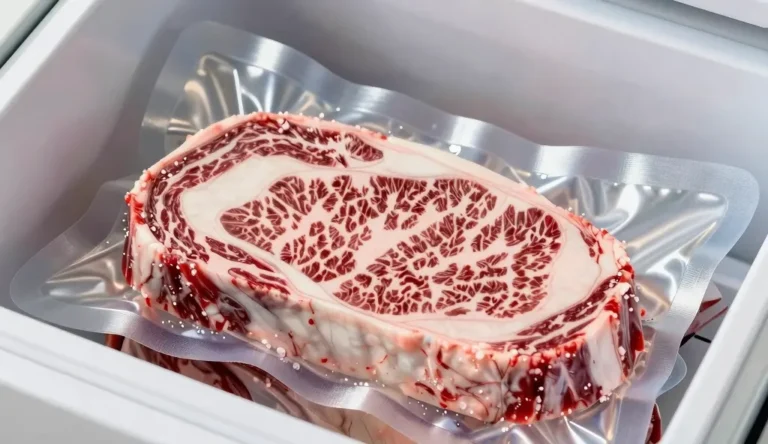
Think about how many beef shanks you need. Plan for one per person if it’s a main course. Your butcher can help you choose the right amount and thickness for even cooking. Store your beef shanks in the coldest part of your fridge, or freeze them in airtight containers for up to three months.
Essential Tools and Ingredients for Cooking Beef Shank
Before you start cooking beef shank bone-in recipes, you need to gather the right equipment and ingredients. Having everything ready before you begin makes the cooking process smooth and enjoyable. This section walks you through what you’ll need to create delicious braised beef shank with marrow bone at home.
Kitchen Equipment You’ll Need
The right tools make a real difference when preparing beef shank dishes. Your most important piece of equipment is a heavy-bottomed Dutch oven or braising pot with a capacity of 5 to 7 quarts. This pot needs a tight-fitting lid to keep moisture inside during the long cooking process. Heavy-bottomed cookware prevents burning and ensures even heat distribution across the bottom.
Beyond your main pot, gather these essential tools:
- Sturdy metal tongs for safely handling hot meat
- Sharp chef’s knife for cutting vegetables and trimming meat
- Cutting board for prep work
- Measuring cups and spoons for accurate ingredient portions
- Meat thermometer to check internal temperature
- Kitchen twine for securing shanks if needed
- Fat separator for creating cleaner, finished sauces
Aromatics and Seasonings That Complement Beef Shank
Flavor builds through layers when cooking braised beef shank with marrow bone. Start with the mirepoix—a classic combination of onions, carrots, and celery that forms your flavor base. These vegetables release natural sweetness and depth as they cook alongside your meat.
Essential herbs and seasonings include:
| Ingredient | Purpose | Amount per Shank |
|---|---|---|
| Fresh thyme | Earthy flavor and aroma | 3-4 sprigs |
| Rosemary | Robust pine-like taste | 2 sprigs |
| Bay leaves | Subtle depth and complexity | 2 leaves |
| Garlic cloves | Rich umami foundation | 4-6 cloves |
| Tomato paste | Concentrated umami boost | 2 tablespoons |
| Peppercorns | Subtle heat and bite | 1 teaspoon |
Acid ingredients balance the richness in beef shank bone-in recipes. Red wine, balsamic vinegar, or fresh tomatoes break down tough fibers and brighten the final dish. Start with a good pinch of salt and freshly ground black pepper, then adjust seasoning before serving.
For international variations, consider juniper berries for a game-like quality or warming spices like cinnamon and cloves for deeper complexity.
Preparing Your Beef Shank with Bone for Cooking
Getting your beef shank with bone ready for cooking is key. Proper preparation ensures even cooking. It makes the cooking process smooth and stress-free.
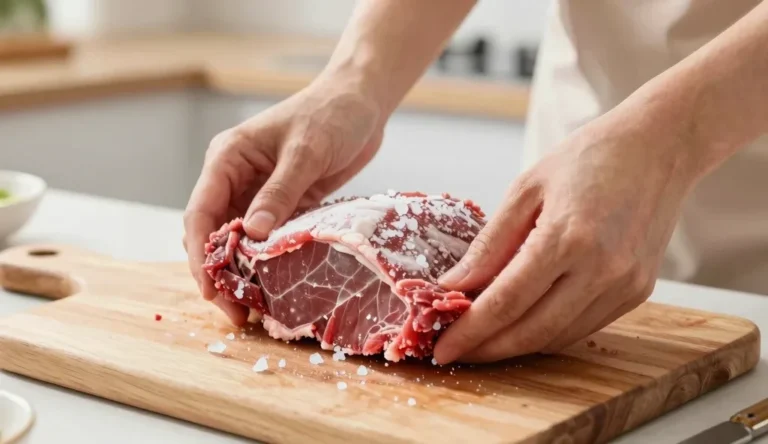
Start by taking your beef shank out of the fridge 30 to 45 minutes before cooking. This lets it warm up to room temperature. Cold meat cooks unevenly, leading to tough edges and undercooked centers.
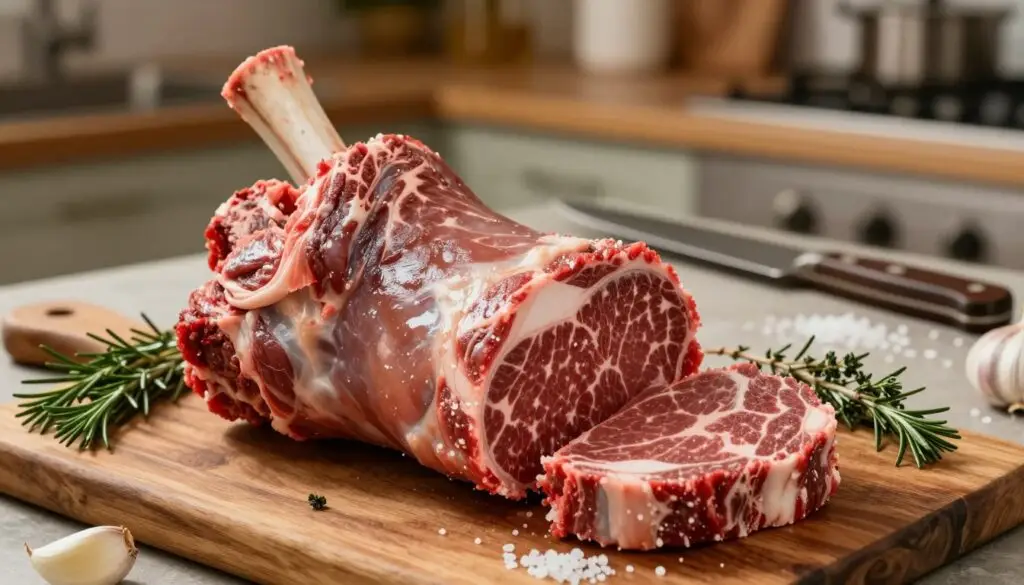
Pat the beef shank dry with paper towels. Moisture stops proper browning. Dry meat gets a beautiful crust, adding flavor to your dish.
Season the beef shank with salt and pepper on all sides. Don’t hold back on seasoning. Salt breaks down muscle fibers, letting flavors penetrate deep.
Prep Work Before Cooking
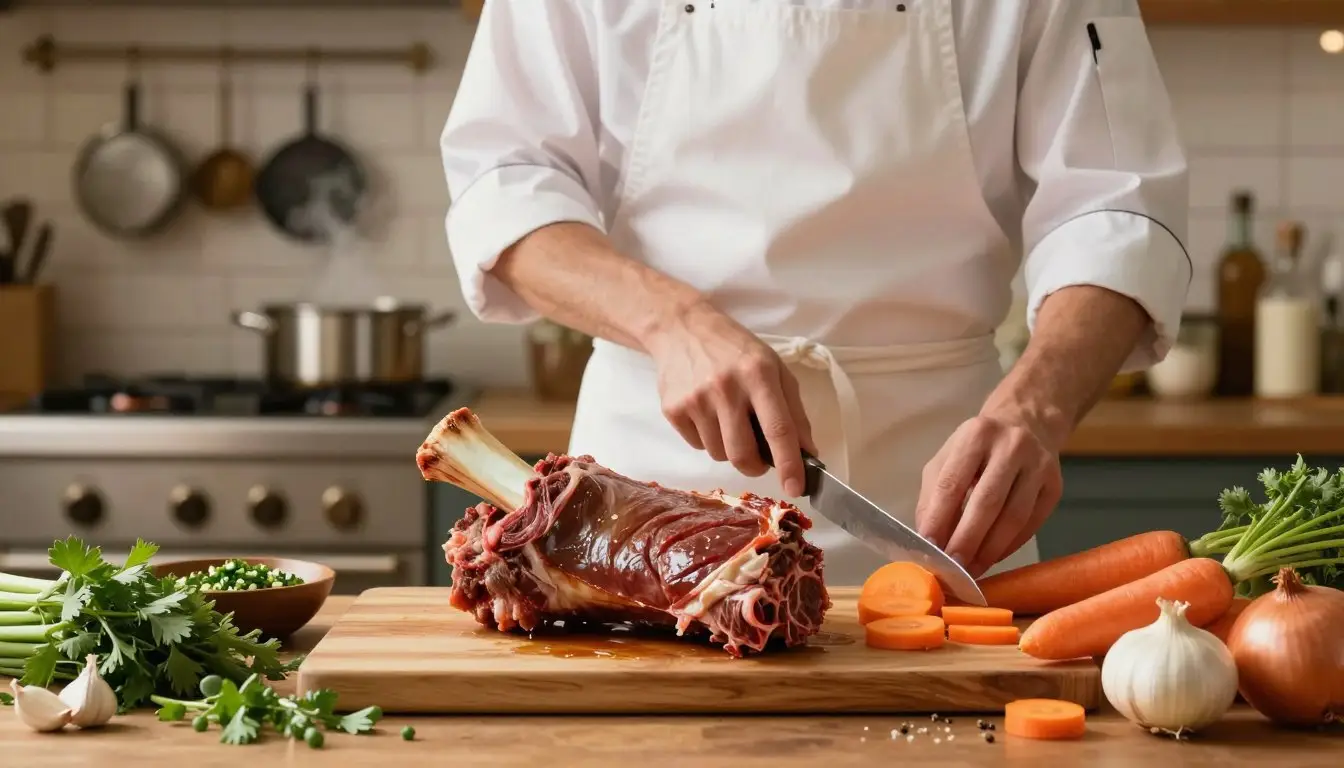
Get everything ready before cooking. This method is called mise en place. Chop vegetables into uniform sizes for even cooking. Smash garlic cloves to release their oils and flavor.
- Dice onions, carrots, and celery into similar-sized pieces
- Smash garlic cloves with the flat side of a knife
- Bundle fresh herbs together with kitchen twine
- Measure out all liquids and seasonings
- Line your cooking station with all ingredients within reach
Consider dredging your beef shank in flour before browning. This helps promote browning and thickens your sauce. Use just enough flour to coat lightly.
Tying your shank with kitchen twine helps it keep shape during cooking. This step is optional but keeps the meat intact as it cooks.
Optional Marinating for Extra Flavor
Marinating your beef shank overnight adds extra flavor. A simple marinade with oil, vinegar, herbs, and spices infuses more taste. Even though the long cooking time develops flavor, marinating enhances it.
| Preparation Step | Time Required | Purpose |
|---|---|---|
| Remove from refrigerator | 30-45 minutes | Allows even cooking throughout |
| Pat meat dry | 5 minutes | Enables proper browning |
| Season with salt and pepper | 2 minutes | Enhances flavor penetration |
| Prepare vegetables and aromatics | 10-15 minutes | Ensures uniform cooking |
| Optional flour dredging | 3 minutes | Improves browning and sauce thickness |
Your workspace should be organized and efficient. Having everything ready before cooking prevents scrambling. This keeps your focus on the task and ensures you don’t miss important steps.
How to Braise Beef Shank with Bone to Perfection
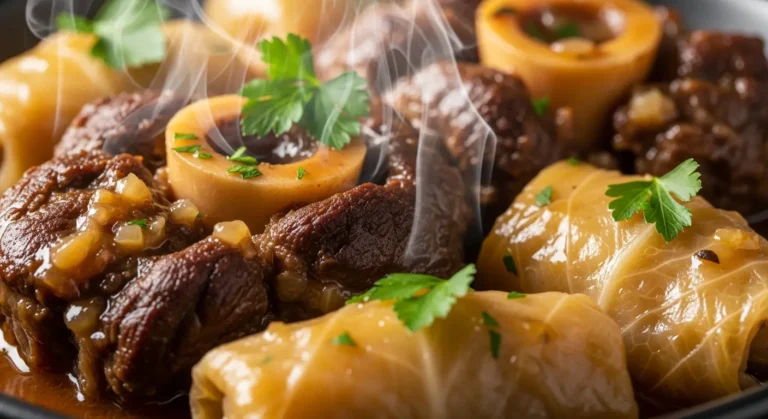
Braising turns tough beef shank into tender, flavorful meat. This slow-cooking method adds depth and richness. Whether you’re making traditional osso buco or a variation, mastering braising ensures great results at home.
The Browning Process
First, sear the meat properly. Heat your Dutch oven over medium-high and add oil like vegetable or canola. Place each shank in the hot pan for 3 to 4 minutes without moving it. This creates a deep golden-brown crust.
Avoid crowding the pan to prevent steaming instead of browning. Work in batches if necessary. The brown bits stuck to the bottom are called fond. They add a lot of flavor to your dish.
Building Layers of Flavor
After browning the beef shanks, remove them and set aside. In the same pot, sauté your aromatics like onions, carrots, and celery in the rendered fat. This step is crucial.
Add tomato paste and cook it for 1 to 2 minutes until it darkens slightly. The deeper color means more flavor. Then, deglaze the pan by pouring in wine or stock. Scrape up all that fond from the bottom.
A beef osso bucco recipe traditionally calls for equal parts meat and liquid, though your shanks should sit mostly submerged. Arrange the shanks in a single layer for even cooking.
Optimal Braising Time and Temperature
Set your oven to 300 to 325 degrees Fahrenheit. This gentle heat cooks the meat slowly and evenly without drying it out. Cover your pot with a lid and place it in the oven.
Your osso buco beef shank needs about 2.5 to 3 hours to become fork-tender. Check and turn the shanks halfway through cooking. The meat is done when it pulls easily from the bone with minimal resistance.
| Braising Element | Recommended Setting |
|---|---|
| Oven Temperature | 300-325°F |
| Cooking Time | 2.5-3 hours |
| Liquid Level | Half to three-quarters submerged |
| Lid Coverage | Covered throughout |
After braising, remove the pot from the oven and let it rest for 10 minutes. This allows the meat to relax and reabsorb juices. Your beef osso bucco recipe is now ready to serve with that incredible braising liquid spooned over the top.
Slow Cooker and Instant Pot Methods for Beef Shank
Modern cooking appliances make cooking beef shank bone-in easy and quick. You can use slow cookers or Instant Pots to make tough meat tender and flavorful. Your choice depends on your schedule and kitchen setup. These methods make traditional braising techniques fit busy lives while still delivering tasty results.
Slow Cooker Method for Beef Shank
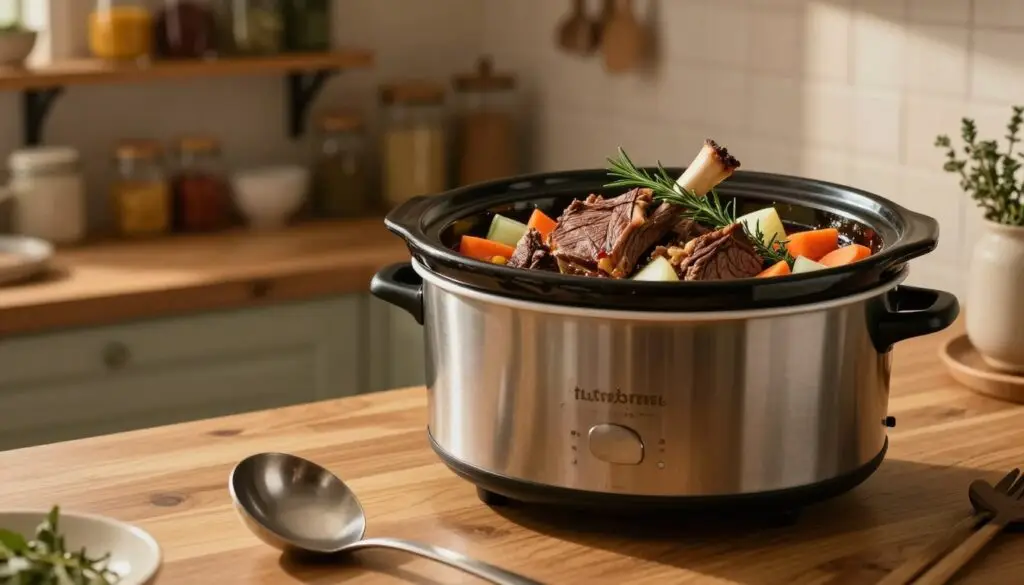
Start by browning your meat. Even with a slow cooker, searing the shank in a hot skillet adds flavor. Then, put your beef shank bone-in in the slow cooker with aromatics and liquid.
Cook on low for 8 to 10 hours or high for 5 to 6 hours. The meat should be tender and easy to pull from the bone. Use less liquid than traditional braising because the slow cooker traps steam. Add vegetables like carrots and potatoes in the last 2 hours to keep them from getting mushy.
- Brown the meat for 4 to 5 minutes per side
- Add broth, wine, or stock to cover halfway up the shank
- Set to low for 8 to 10 hours
- Add vegetables in the final 2 hours
- Test tenderness by piercing with a fork
Instant Pot Method for Beef Shank
The Instant Pot cuts cooking time for beef shank bone-in recipes. Brown your meat in the sauté function, just like on the stovetop. This step takes about 8 to 10 minutes.
Add your liquid to meet the minimum requirement (typically 1 cup for the Instant Pot). Place the trivet inside and set the shank on top. Close the lid and cook at high pressure for 45 to 60 minutes. Let the pressure release naturally for 15 to 20 minutes. Quick release can make the meat tough and stringy. Once released, your beef shank bone-in will be fall-apart tender.
- Use sauté mode to brown the meat (4 to 5 minutes per side)
- Add liquid and seasonings
- Lock the lid and set to high pressure
- Cook for 45 to 60 minutes
- Allow natural release for 15 to 20 minutes
- Manually release remaining pressure
Comparing Results and Methods
Each cooking method gives different results. Knowing these differences helps you choose the best method for your needs.
| Cooking Method | Total Time | Flavor Depth | Texture | Best For |
|---|---|---|---|---|
| Traditional Braising | 3 to 4 hours | Most developed | Tender with crust | Maximum control and flavor |
| Slow Cooker | 8 to 10 hours on low | Good depth | Very tender | Busy schedules, set and forget |
| Instant Pot | 45 to 60 minutes | Decent development | Fall-apart tender | Quick weeknight dinners |
Slow cooker beef shank bone-in is best for planning ahead. The long, gentle heat breaks down collagen into gelatin, creating silky sauce. The Instant Pot saves time without sacrificing much quality. Your beef shank bone-in recipes will succeed with either method when you follow proper timing and release procedures.
The secret to tender beef shank lies not just in heat, but in understanding how each cooking method transforms collagen into comfort.
Choose the slow cooker for morning prep and evening dinner. Select the Instant Pot when you want results in under an hour. Both deliver satisfying meals from this humble yet impressive cut of meat.
Making Rich Beef Bone Broth from Leftover Bones
Don’t throw away those beef shank bones after dinner. You can turn them into a nutritious beef shank bone broth. This broth is great for soups, sauces, and cooking liquids. Making your own broth saves money and lets you control the ingredients.
Homemade beef shank bone broth has deep flavor and nutrients that store-bought can’t match. When you cook the bones slowly, the collagen turns into gelatin. This gelatin is good for your joints and makes the broth silky.
Extracting Maximum Flavor and Nutrients
Start by putting your beef shank bone in a big pot and covering it with fresh water. Add a splash of apple cider vinegar—about one tablespoon per gallon of water. The vinegar helps pull minerals from the bones into your broth. Let it sit for thirty minutes before heating.
Heat the water gently, not too hard. Boiling too fast can cloud your broth and lose nutrients. Skim the foam that rises in the first hour. This makes your broth clearer and cleaner.
Simmer your broth for twelve to twenty-four hours. For the best taste, add fresh herbs and aromatics in the last few hours:
- Onions (quartered)
- Carrots (roughly chopped)
- Celery stalks (cut into pieces)
- Fresh thyme and bay leaves
- Black peppercorns
- Garlic cloves
Don’t add vegetables too early, or your broth might taste bitter. Wait until the last three to four hours. Your broth should be gel-like when chilled and have a rich, amber color.
Storage Tips for Homemade Bone Broth
Strain your broth through fine-mesh sieves or cheesecloth into clean containers. Let it cool before refrigerating. The fat layer on top protects your broth, so don’t remove it.
Here’s how to store your beef shank bone broth:
| Storage Method | Timeline | Best Use |
|---|---|---|
| Refrigerator | 4-5 days | Quick soups and sauces |
| Freezer (ice cube trays) | Up to 3 months | Individual portions for recipes |
| Freezer (containers) | Up to 6 months | Batch cooking and large recipes |
Label each container with the date and contents. Frozen broth cubes are great for deglazing pans or adding to weeknight dinners. Making broth from leftover bones turns waste into a valuable kitchen staple that boosts nutrition and flavor.
Serving Suggestions and Side Dishes
Your braised beef shank with marrow bone needs careful presentation and sides. The meat and marrow are rich and savory. They deserve sides that add to the dish, not take away from it. The right sides can make your meal feel like a fancy restaurant experience.
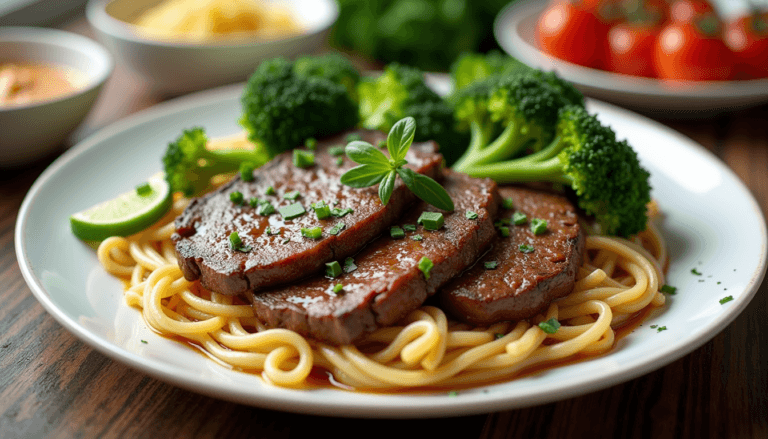
Creamy mashed potatoes or polenta are great with your beef shank. They soak up the sauce and balance the flavors. The soft texture of these sides contrasts well with the tender meat, making the dish complete.
- Roasted root vegetables like carrots, parsnips, and celery
- Sautéed spinach or kale for fresh green color
- Steamed green beans with garlic and butter
- Gremolata, the traditional Italian condiment of parsley, lemon, and garlic that cuts through richness
When serving your beef shank soup or braised version, presentation is key. Place the shank upright to show off the marrow bone. Spoon sauce around the meat, not on it. Add fresh herbs like parsley or thyme for garnish.
The marrow is a special treat. Offer small spoons for guests to enjoy it on crusty bread. This adds a touch of elegance and fun to your meal.
Choose full-bodied red wines like Barolo, Barbaresco, or Cabernet Sauvignon. These wines match the dish’s bold flavors and make the meal even better.
Don’t throw away leftovers. Shred the remaining meat for new dishes like tacos or pasta. You can also use it in shepherd’s pie for tasty meals later in the week.
Conclusion
You now know how to cook beef shank with bone like a pro. You’ve learned about choosing the right cuts, browning, adding flavors, and slow cooking. These steps turn tough beef shank into tender, tasty meat.
Beef shank with bone is easy to work with. Even if your first try isn’t perfect, braising makes it delicious. It’s great for weekends or special events because it cooks itself.
Try different flavors like Italian herbs, French wine, or Asian spices. This keeps your meals interesting.
Don’t stop with beef shank. Use leftover bones for beef bone broth. This broth is perfect for soups and stews. Mastering beef shank opens the door to other cuts like short ribs and brisket.
You’re ready to make amazing meals at home. Trust your cooking skills and enjoy the process. Your beef shank dishes will wow everyone. Start cooking today and see why this cut is a dinner table favorite.