
Can You Grill Frozen Burgers?
It is safe, practical, and produces great results when you adjust the heat and timing. The key difference from fresh patties: lower heat to start, more total cook time, and a thermometer to confirm doneness. That is the whole method.
01 The Short Answer and Why It Works
Can you grill frozen burgers? Yes, and millions of people do it every summer. The concern most people have is about food safety — whether a frozen patty can cook all the way through without burning on the outside. With the right heat management, it does.
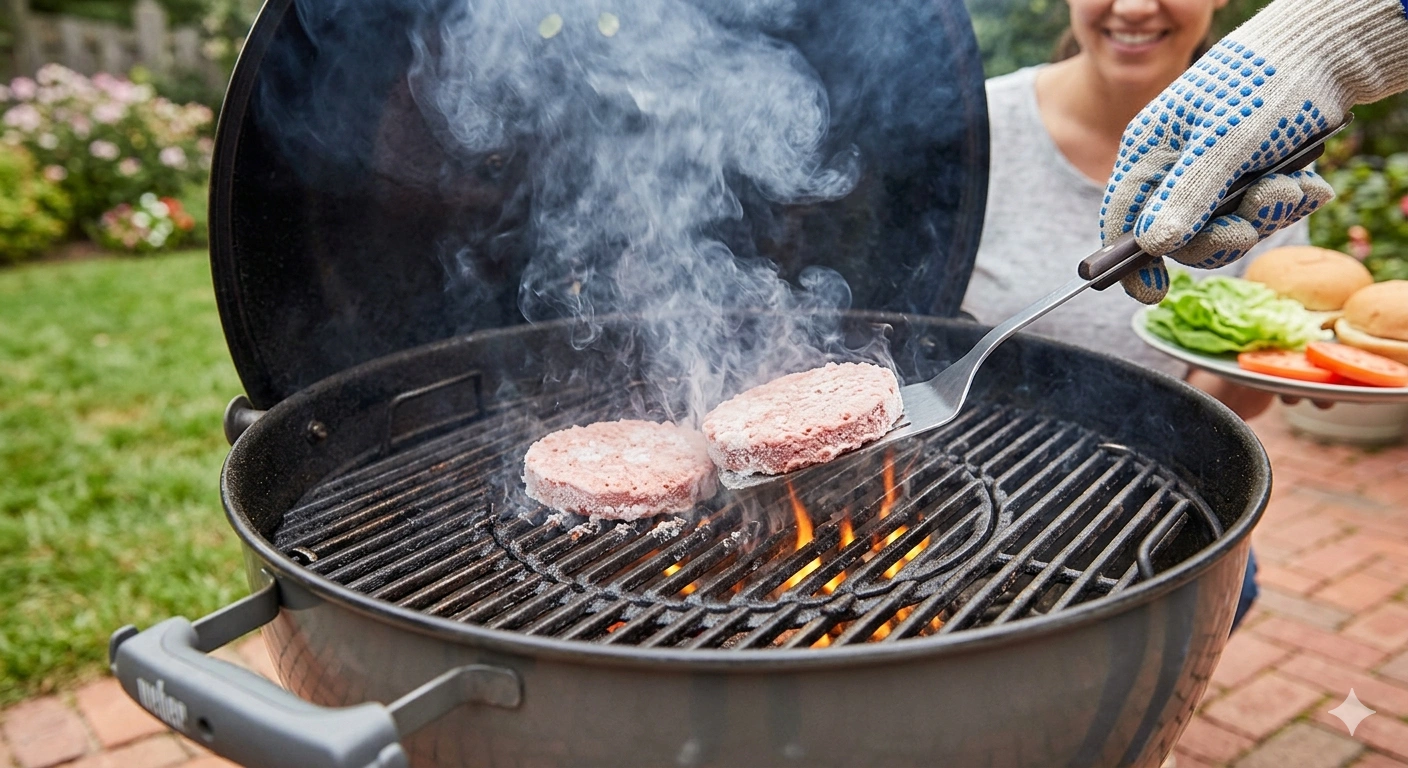
The method that works is a two-zone approach: start the frozen patties over medium heat so the interior can thaw and cook gradually, then move to high heat at the end for the crust and char marks. The total cook time roughly doubles compared to a fresh patty.
Ground beef must reach 160°F internal temperature — unlike whole cuts of beef which can be safely served at 145°F. Because ground meat can carry pathogens throughout (not just on the surface), this temperature applies regardless of whether you start from frozen or fresh. See the USDA safe temperature chart for the full reference.
02 Grilling Frozen vs Fresh Burgers
Both work. Here is an honest look at the trade-offs when grilling frozen burgers compared to fresh patties.
- No thawing time needed
- Patty holds its shape better on the grill
- Less shrinkage during cooking
- Convenient for impromptu cookouts
- Consistent results with commercial patties
- Works on grill, oven, and stovetop
- Takes roughly twice as long to cook
- Harder to season the interior
- Less effective smoke absorption
- Crust takes longer to develop
- Requires more attention to temperature
- Not ideal for stuffed or specialty patties
03 How to Cook Frozen Burgers — Timing Guide
The timing for how to cook frozen burgers depends on the cooking method and patty thickness. All times assume a standard 4 oz frozen patty at approximately 3/4 inch thick. Always confirm doneness at 160°F internal temperature.
| Method | Temperature | Total Time | Flip At | Notes |
|---|---|---|---|---|
| Gas Grill (2-zone) | Med then High | 20–25 min | 10–12 min | Best method for char and flavor |
| Charcoal Grill | Med direct heat | 22–26 min | 11–13 min | Move to hot zone last 2 min |
| Oven / Bake | 375°F | 25–30 min | Halfway | Broil last 2 min for browning |
| Stovetop / Cast Iron | Medium heat | 18–22 min | 9–11 min | Cover with lid to help cook through |
| Air Fryer | 370°F | 16–20 min | Halfway | No thawing, very consistent results |
04 How to Grill Frozen Burgers Step by Step
This is the exact method for grilling frozen burgers on a standard gas or charcoal grill. Follow these steps in order and you will get a properly cooked, safe burger with real grill flavor.
Set Up a Two-Zone Grill
On a gas grill, light one side on medium heat (350–375°F) and leave the other side off. On charcoal, bank the coals to one side. This two-zone setup gives you a gentle cooking zone and a high-heat finishing zone.
Season the Frozen Patties
Season the frozen patties with salt and pepper immediately before placing on the grill. The exterior moisture from the ice crystals actually helps the seasoning adhere. Do not add sauces or marinades at this stage — they will burn before the burger cooks through.
Place on Medium-Heat Zone and Close the Lid
Place the frozen patties on the medium-heat side. Close the grill lid immediately. The lid keeps heat circulating around the patty, speeding up cooking from all sides and preventing the exterior from charring while the inside is still frozen.
Cook 10 to 12 Minutes Then Flip Once
Let the patties cook undisturbed for 10 to 12 minutes. Flip once when the bottom is visibly browned and the patty releases cleanly from the grate. Do not press the burger — pressing forces out moisture and dries the meat.
Continue Cooking and Check Temperature
Cook the second side for another 10 to 12 minutes. When the internal temperature reaches 150°F, move the patties to the high-heat zone for the final sear. This builds the crust and char marks without overcooking the interior.
Pull at 160°F and Add Cheese
Remove from the grill at exactly 160°F internal temperature. If adding cheese, place it on the patty during the last 60 seconds and close the lid to melt. Rest for 2 minutes before placing on the bun.
05 Other Methods: Oven, Stovetop, and Air Fryer
The grill is the most popular method for can you barbeque frozen burgers questions, but the oven and stovetop are equally valid options — especially for larger batches or during colder months.
Frozen Hamburger Patties in Oven
Bake at 375°F on a wire rack over a rimmed baking sheet for 25 to 30 minutes, flipping halfway. For browning, switch to the broiler for the last 2 to 3 minutes. Wire rack keeps the patty out of its own drippings for a better result. Confirm 160°F before serving.
Stovetop / Cast Iron
Heat a cast iron skillet over medium heat. Place frozen patties and cover with a lid — the steam helps cook the interior evenly. Cook 9 to 11 minutes per side. Uncover for the final 2 minutes to crisp the exterior. Confirm 160°F.
Air Fryer
Air fry at 370°F for 16 to 20 minutes, flipping halfway. The circulating air cooks the frozen patty evenly without any special setup. No preheating required in most models. Confirm 160°F before serving. Add cheese for the last 60 seconds.
For a complete guide to cooking burgers in the air fryer at higher temperatures, see our guide on how long to grill burgers at 400°F. And if you are starting with fresh ground beef, our easy ground beef taco recipe offers another weeknight option for the same cut.
06 Key Tips for Better Frozen Burgers
Thawing on the counter is a food safety risk — the exterior warms to a bacteria-friendly temperature before the center thaws. Cook directly from frozen. The USDA advises against thawing meat at room temperature. See the FoodSafety.gov temperature guide for more detail.
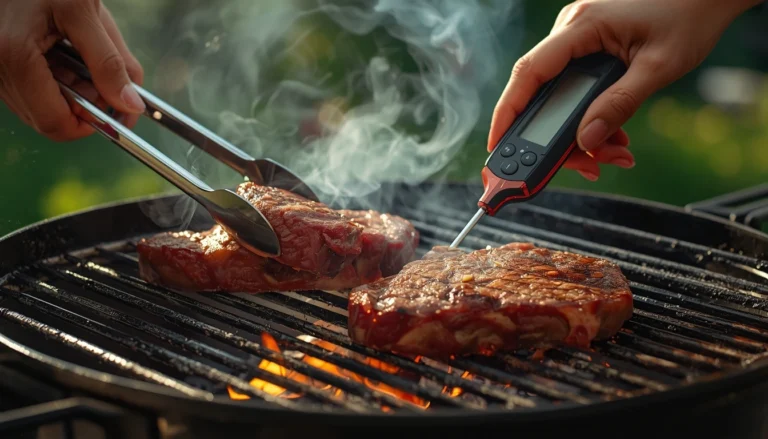
With frozen burgers especially, visual cues are unreliable. A patty can look fully cooked on the outside while the center is still below 160°F. A basic instant-read thermometer inserted into the side of the patty is the only reliable confirmation.
Every time you open the grill lid, the temperature drops and the cook time extends. With frozen burgers that already take longer than fresh, unnecessary lid openings compound the problem significantly. Open only to flip.
Frozen burger patties often come stacked with paper between them. If they are frozen together, separate them before grilling — stacked patties cook unevenly and are difficult to flip safely.
Beef Nutrition Calculator
Check calories, protein & fat for any cut — based on approximate USDA values per cooked weight.
Values are approximate, based on cooked weight per USDA data. Visit the full Meat Nutrition Calculator on our homepage.
07 Frequently Asked Questions
Julia writes practical meat recipes and grilling guides for home cooks. Her focus is on clear methods, reliable temperature references, and results that hold up every time — without unnecessary complexity.