How Long Can You Freeze A5 Wagyu Beef?
You’ve just bought a top-notch cut of A5 Wagyu beef from Japan. The marbling is stunning. The smell tells you this meat is truly special. You want to save it for the perfect dinner, but you’re not sure how long it can stay frozen without losing its quality.
This worry is valid. A5 Wagyu beef is a big deal in your kitchen. The fat inside the meat is delicate. It needs careful handling and the right storage to keep its luxurious texture and taste.
Knowing how long you can freeze A5 Wagyu beef is key. Your storage choices can make your next meal a hit or a miss. The difference between a great meal and a disappointing one often depends on how well you manage your freezer.
This guide will teach you everything about storing your premium Japanese beef at home. You’ll learn the ideal temperature, the best wrapping methods, and the signs that your meat might be in trouble. By the end, you’ll be sure your investment is safe in your freezer.
Table of Contents
Understanding the Quality of Premium Wagyu Beef
A5 Wagyu is the top grade of Japanese beef in the U.S. market. It needs special care from the moment you get it home. Knowing what makes it special helps you store it right.
The Wagyu beef grading system focuses on marbling quality, from 8 to 12. This marbling gives it a buttery texture and rich flavor. The fat in the meat is what makes Wagyu so special, but it needs careful handling.
The Unique Marbling of Japanese Wagyu
Marbling in Wagyu beef looks like white lines in red meat. This fat melts at lower temperatures than regular beef fat. When you cook Wagyu, the fat adds to the flavor.
The marbling also helps protect the beef from freezer burn. High-quality A5 beef has so much marbling, it looks like marble.
Why Proper Handling Matters for Your Investment
Wagyu beef is much pricier than regular beef. A single A5 steak can cost between $50 and $150. This price reflects the animal’s quality and care.
Mishandling Wagyu beef can damage its delicate fat structures. Oxidation turns the fat brown and changes the flavor. Freezer burn and temperature changes can also harm the meat.
By storing Wagyu beef carefully, you keep your investment safe. You protect the meat’s quality and ensure it tastes great when cooked.
How long can you freeze a5 wagyu beef
It’s important to know how long you can freeze A5 wagyu beef. This Japanese delicacy needs special care in the freezer. You want to keep it in top shape, with its amazing taste and texture.
The a5 wagyu freezer storage time is usually 3 to 6 months for the best quality. In this time, the meat keeps its marbling and rich flavor. After that, it’s safe to eat but the quality starts to go down.
Knowing the a5 wagyu beef shelf life frozen helps plan your meals. Freezers keep the meat fresh by stopping bacteria growth. The fat in A5 wagyu also helps prevent freezer burn.
Here are some storage guidelines:
- 3 months: Best flavor and texture
- 4-6 months: Good quality, some loss
- 6-12 months: Safe but quality drops more
- Over 12 months: Not good for premium cuts
How you store the beef affects its quality. Use proper wrapping and keep the freezer at the right temperature. Buy based on how fast you’ll eat it to enjoy it at its best.
Essential Preparation for Freezer Storage
Preparing your A5 Wagyu beef for the freezer is key. Proper preparation keeps its quality top-notch. The steps you take before freezing are critical for preserving its value.
Cleaning and Trimming Your Beef
Begin by checking your A5 Wagyu. Use paper towels to remove any moisture. Look for fat or damaged areas to trim.
Trim carefully. The fat in A5 Wagyu is what makes it unique. Only remove excess or damaged parts. Use a sharp knife for clean cuts.
Portioning Before You Freeze
Split your beef into portions for each meal. Smart portioning is the first step in proper storage. Cut steaks or portions for one meal.
Portioning has many benefits:
- You thaw only what you need for each meal
- You avoid refreezing meat
- You reduce exposure to air and temperature changes
- You maintain consistent quality across all portions
Smaller portions thaw faster and more evenly. This keeps the tender texture of A5 Wagyu intact.
Best Practices for Wrapping Your Meat
Keeping your A5 Wagyu beef safe in the freezer starts with the right wrapping. You need to block the cold air from reaching your meat. High-fat meats like Wagyu are most vulnerable to air, so you must seal it tight.
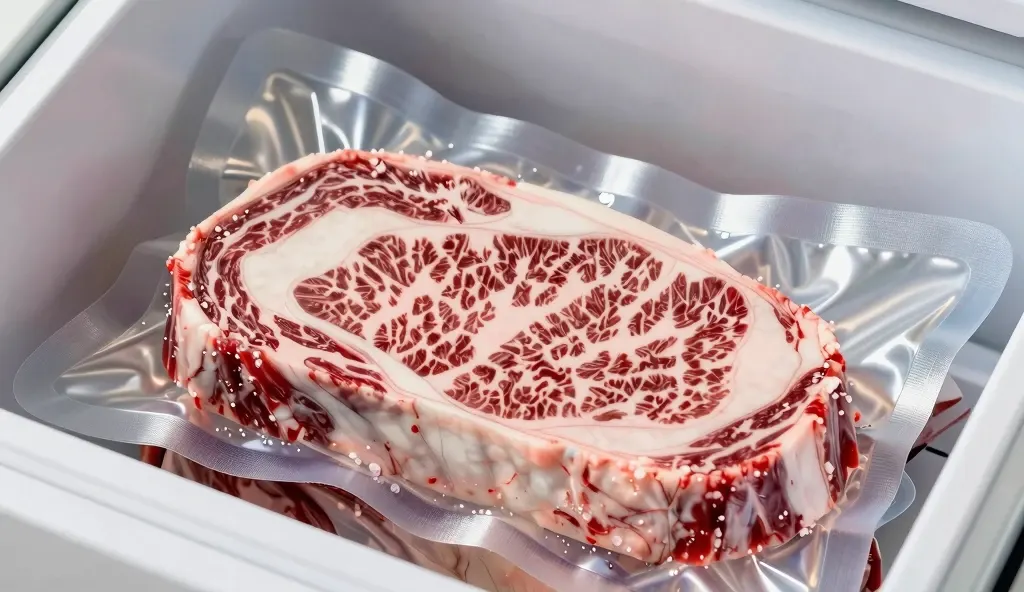
To store A5 Wagyu beef right, use a layered wrapping method. Begin with vacuum-sealed bags to remove oxygen. This is key because oxygen can turn the fat rancid and change the flavor.
Creating Your Multi-Layer Protection System
After vacuum-sealing, add another layer with heavy-duty freezer paper or aluminum foil. This layer protects your meat from freezer burn. Freezer burn occurs when moisture escapes, causing ice crystals that harm the meat’s texture and taste.
Here’s how to wrap it up for the best results:
- Wrap each portion in plastic wrap first
- Put the wrapped portions in vacuum-sealed bags
- Wrap the vacuum-sealed package in freezer paper
- Mark the date and cut type with a permanent marker
- Store it in the coldest part of your freezer
Using the right wrapping techniques keeps your A5 Wagyu beef fresh. This multi-layer method preserves the meat’s flavor and quality.
Identifying the Ideal Freezer Temperature
Getting the right freezer temperature is key when freezing Japanese Wagyu beef. Your freezer is essential for keeping this premium meat fresh and tasty. The freezer’s temperature affects how well the beef stays good over time.
Keeping the meat at a steady, cold temperature is vital. Small temperature changes can harm the meat’s texture and taste. A consistent temperature prevents damage that can spoil expensive cuts. Let’s look at the best temperature and how to avoid common mistakes.
Setting Your Appliance for Long Term Storage
Set your freezer to 0°F (-18°C) for storing Wagyu beef. This temperature keeps the fat stable and prevents unwanted changes in the meat’s structure. Your freezer should maintain this exact setting consistently. Check your freezer’s dial or digital display to confirm the reading. Many home freezers have adjustable controls on the inside wall or back section.
For best results, use these storage guidelines:
- Place a freezer thermometer inside to monitor the actual temperature
- Check the reading weekly to catch any problems early
- Avoid freezers that are too cold, as this wastes energy
- Keep your freezer at least three-quarters full for better temperature control
Avoiding Temperature Fluctuations
Temperature swings damage your meat significantly. When your freezer cycles on and off, ice crystals form and grow. These crystals break down muscle fibers and change the texture. Open your freezer door less often and keep it closed for shorter periods. Self-defrosting cycles can cause temperature changes, so understand how your specific model works.
Keep these practices in mind:
- Limit door openings to necessary times only
- Organize your freezer so you find items quickly
- Know when your freezer’s defrost cycle runs
- Keep the freezer away from heat sources and direct sunlight
- Ensure proper air circulation around your appliance
Stable temperatures mean better quality beef when you thaw it for cooking. Your attention to these details protects the premium nature of your Wagyu purchase.
Signs of Freezer Burn on Premium Cuts
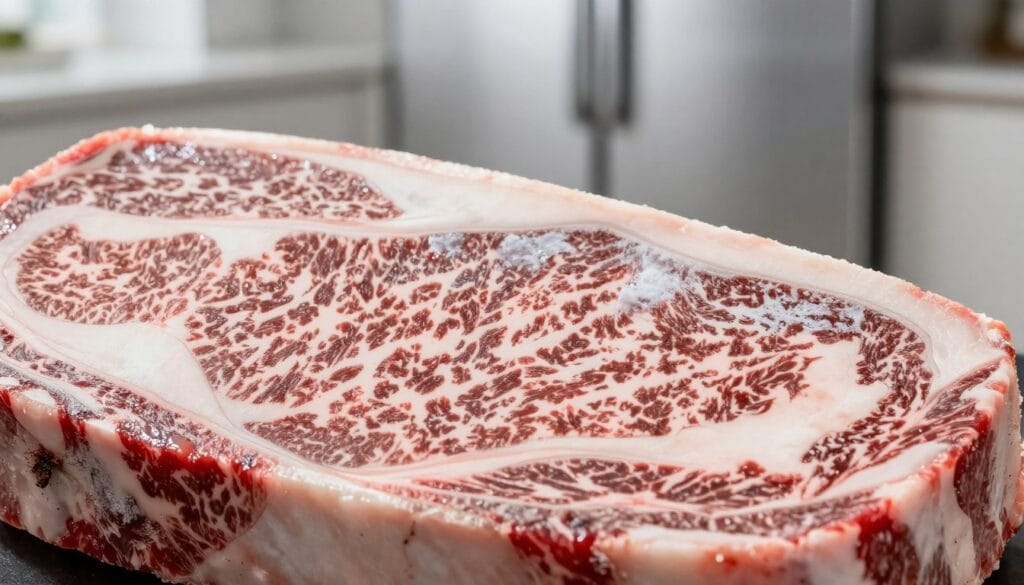
Freezer burn is a common issue when storing premium wagyu beef. It shows up as grayish-brown patches on the meat’s surface. These patches mean moisture has left the beef. Knowing these signs helps keep your expensive cuts in top shape.
Freezer burn happens when water molecules turn into ice crystals on the meat’s surface. This occurs when air reaches the beef during storage. Even though the meat is safe to eat, the affected areas lose their flavor and become tough.
- Discolored patches with a grayish or brownish appearance
- Dull, dry-looking areas on the meat surface
- White frost or ice crystal buildup on packaging
- Leather-like texture in affected sections
- Loss of the meat’s natural marbling appearance
Preventing freezer burn is better than fixing it after it happens. Use vacuum-sealed bags and airtight containers to keep moisture out. Keep your freezer at a steady temperature without sudden changes. Check your meat regularly for any damage. With the right storage, you can keep your wagyu’s quality high during freezing.
Thawing Your Wagyu for Optimal Texture
Thawing your frozen A5 Wagyu beef is your last chance to keep its quality. How you defrost it is as important as how you stored it. The meat’s fat and muscle fibers need gentle care during thawing. Rushing this step can ruin the meat and waste your investment.
Thawing correctly helps your Wagyu keep its buttery texture and rich flavor. Many people make mistakes that undo their careful storage. The right thawing method ensures your meat is perfect when it comes out of the freezer.
The Importance of Slow Thawing
Thawing in your refrigerator slowly is the best way for premium beef. Set your fridge to 38°F (3°C) and let your Wagyu thaw over 24 to 48 hours. This slow thawing lets the fat soften naturally without harming the muscle.
Fast thawing can stress the meat and cause moisture loss. Slow thawing avoids these issues by letting the meat’s cells adjust gently. The fat warms at the same rate as the tissue, keeping the meat’s special balance.
| Thawing Method | Temperature | Time Required | Quality Result |
|---|---|---|---|
| Refrigerator Thawing | 38°F (3°C) | 24-48 hours | Optimal texture and flavor preserved |
| Cold Water Bath | Below 40°F (4°C) | 1-2 hours | Good quality with slight risk |
| Microwave Defrosting | High heat | 15-30 minutes | Significant quality loss |
| Counter Thawing | Room temperature | 2-4 hours | Poor results with bacterial growth risk |
Avoiding Microwave Defrosting
Never thaw your Wagyu beef in a microwave. Microwave heat is uneven, causing hot and cold spots. The fat in Wagyu melts at lower temperatures than the rest of the meat. This uneven heating can make the fat render out too soon, leaving the meat dry and flavorless.
When microwave energy hits the surface, the fat melts before the rest of the meat thaws. This can make the meat lose its luxurious, buttery texture. The result is a disappointing meal that doesn’t live up to the Wagyu’s premium quality.
Plan ahead to thaw your Wagyu correctly. Put it on a plate in the fridge the night before cooking. This simple step ensures your Wagyu is perfect every time. Your patience during thawing will reward you with exceptional taste and texture.
Maintaining Flavor Integrity During Storage
Freezing Japanese Wagyu beef is all about keeping its rich umami taste. A5 Wagyu has a special flavor with notes of nuts and sweetness. It’s important to store it right to keep these flavors intact.
Oxidation is the enemy of flavor. Even in the freezer, Wagyu fats can oxidize over time. This can change the taste if the meat is frozen for too long. Keeping it stored for short periods and using airtight packaging helps prevent flavor loss.
How you store your Wagyu affects how it tastes. The umami that makes Japanese Wagyu special needs careful protection. Fat oxidation happens slowly but gets worse with temperature changes and air.
Key Factors for Flavor Protection
- Use vacuum-sealed packaging to eliminate air contact
- Maintain consistent freezer temperatures between 0°F and -10°F
- Keep your wagyu away from strong-smelling foods
- Label packages with the freezing date for tracking
- Store meat in the back of the freezer, away from the door
| Storage Factor | Impact on Flavor | Your Action |
|---|---|---|
| Air Exposure | Accelerates fat oxidation | Choose vacuum sealing |
| Temperature Swings | Damages cellular structure | Keep freezer stable |
| Storage Duration | Gradually reduces quality | Freeze for 3-6 months maximum |
| Freezer Location | Exposure to warmer air | Store in back section |
Wagyu is a big investment, and it deserves careful handling. Knowing how freezing affects its flavor lets you enjoy it at its best.
Common Mistakes When Storing Japanese Wagyu
Many people spend a lot on A5 wagyu beef, but they often make big mistakes in storage. These errors can ruin the meat’s quality. Knowing how to store A5 wagyu beef right helps you avoid waste and enjoy its rich taste.
Using Improper Packaging Materials
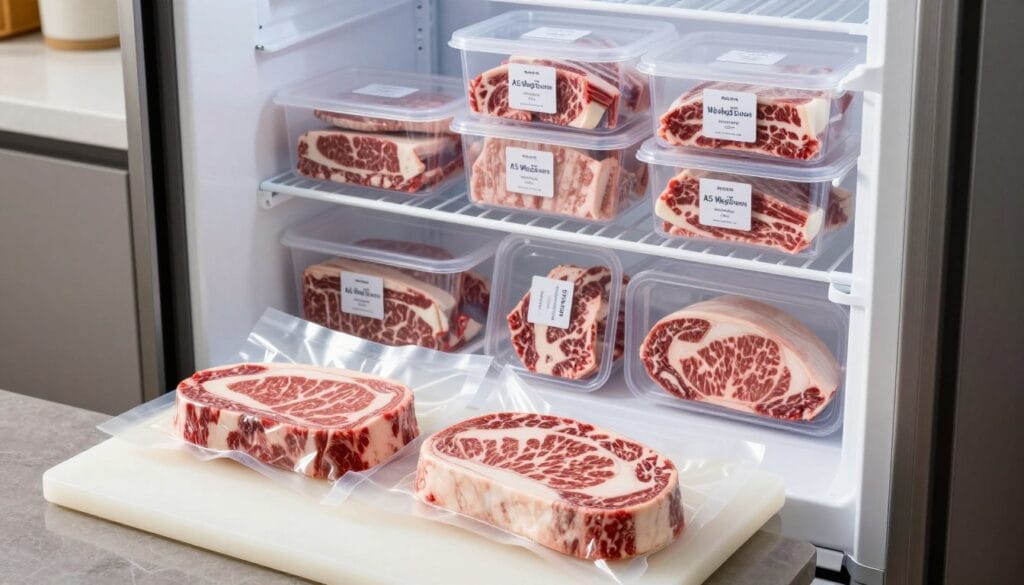
Standard plastic wrap is a big problem for premium wagyu. It lets air in, causing the meat to spoil fast. When wrapped badly, your beef picks up smells from other freezer items, ruining its flavor.
For proper A5 wagyu storage, use vacuum-sealed bags or freezer-safe butcher paper. These keep your meat fresh longer. They prevent freezer burn and keep the flavor from getting worse.
Ignoring Air Exposure Risks
Even small air pockets in your packaging can harm your meat. Wagyu’s fat can go bad in weeks if it’s exposed to air.
- Remove as much air as possible before sealing
- Use a vacuum sealer for best results
- Double-wrap your meat for extra protection
- Avoid storing near the freezer door where temperature fluctuates
By avoiding air exposure, you protect your wagyu’s quality. This ensures a great taste when you thaw and cook it.
Recommended Freezer Duration for Peak Quality
Getting the most from your A5 wagyu beef means knowing the best storage time. Freezing A5 wagyu beef right is key to keeping its top-notch quality. Your investment needs the right care from start to finish.
The a5 wagyu freezer storage time is critical for the best results. While a5 wagyu beef can last up to six months in the freezer, the best taste is within 90 days. For the best flavor and texture, aim to not freeze it for more than three months.
Why is the three-month mark so important? After 90 days, the meat’s marbling and tenderness start to change. Ice crystals grow more, and the fats lose their rich taste. The meat is safe, but the quality drops.
Creating Your Storage Timeline
Start tracking freezer storage right after buying your beef. Label your packages with the date. This simple step helps avoid guessing how long it’s been frozen.
- Store A5 wagyu at 0°F or below
- Check storage duration monthly
- Plan meals within the first three months
- Use older packages before newer ones
Respecting the a5 wagyu beef freezer duration ensures you enjoy every bite as the ranchers meant. Your careful storage turns your premium purchase into a memorable meal.
Safety Considerations for Long Term Storage
Keeping your A5 wagyu beef safe is key. Make sure your freezer is working well. This helps keep the meat fresh and safe for a long time.
Monitoring Your Freezer Performance
Your freezer needs regular checks. Look out for these important things:
- Check the internal temperature daily using a reliable thermometer
- Keep your freezer at 0°F (-18°C) or below for optimal safety
- Listen for unusual sounds or frost buildup inside the unit
- Clean freezer coils every three months to prevent overheating
- Avoid opening the door frequently, which causes temperature swings
Small temperature changes can harm your meat. They can cause freezer burn and spoilage.
Recognizing Spoilage Indicators
Check your thawed wagyu before cooking. Look for these signs:
| Spoilage Sign | What to Look For | Action to Take |
|---|---|---|
| Off Odor | Sour or rancid smell after thawing | Discard immediately |
| Slimy Texture | Slick or sticky surface on the meat | Do not cook; throw away |
| Discoloration | Gray, brown, or greenish patches | Remove and discard affected areas |
| Ice Crystals | Large white deposits on meat surface | Sign of freezer burn; may be safe but quality is bad |
Your health is most important. If unsure, throw it away. Don’t risk getting sick from bad beef.
Conclusion
Freezing A5 Wagyu beef needs careful attention at every step. From portioning to the slow-thaw process, each choice affects the quality. Your dedication to storage techniques is key to keeping the beef’s legendary texture and flavor.
Airtight packaging and consistent freezer temperatures are essential. Wrapping your A5 Wagyu with care and maintaining the right freezer temperature prevents freezer burn and oxidation. These steps ensure every bite is as luxurious as the day you bought it.
Knowing these storage tips lets you keep your premium beef in top shape for months. Whether you freeze it for three months or longer, the methods in this guide will help. By following these recommendations, you can enjoy high-quality beef at home whenever you want.