
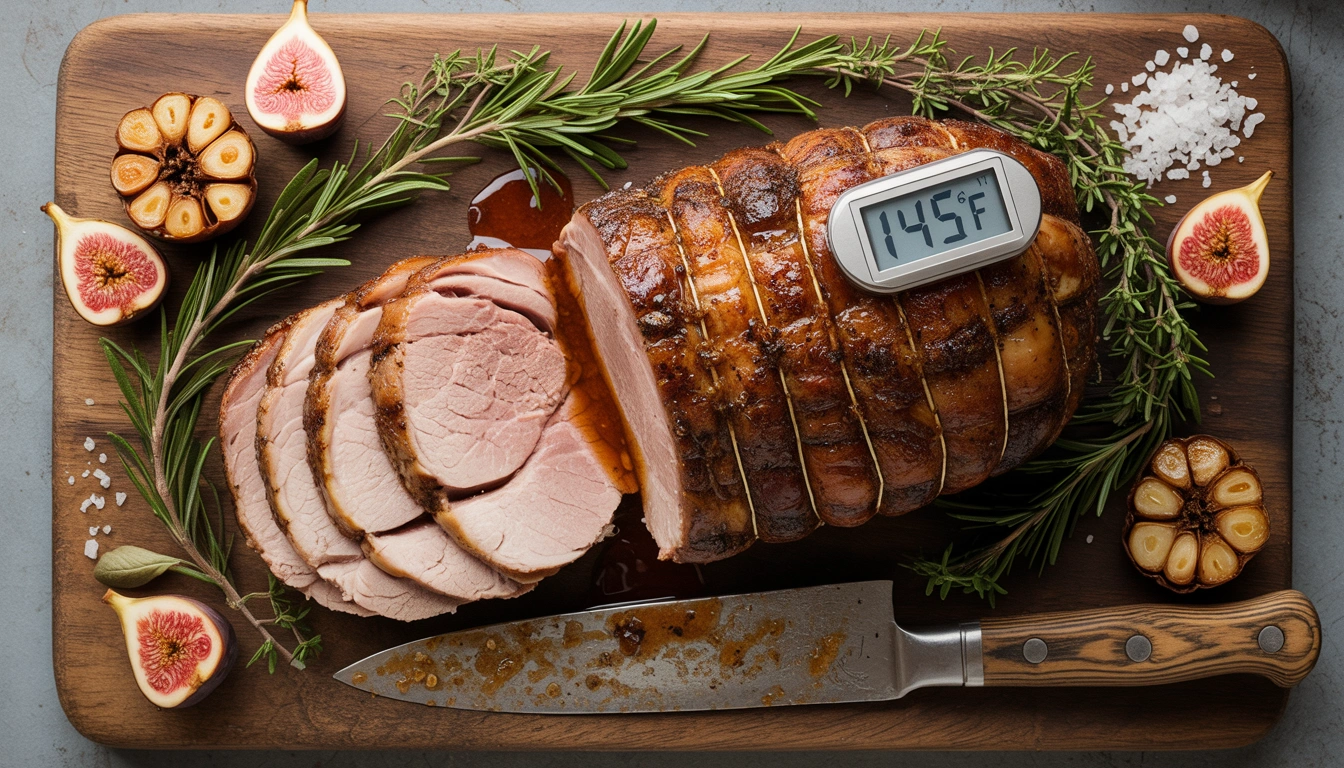
Internal Temperature for Pork: 145°F is Safe (USDA Guide)
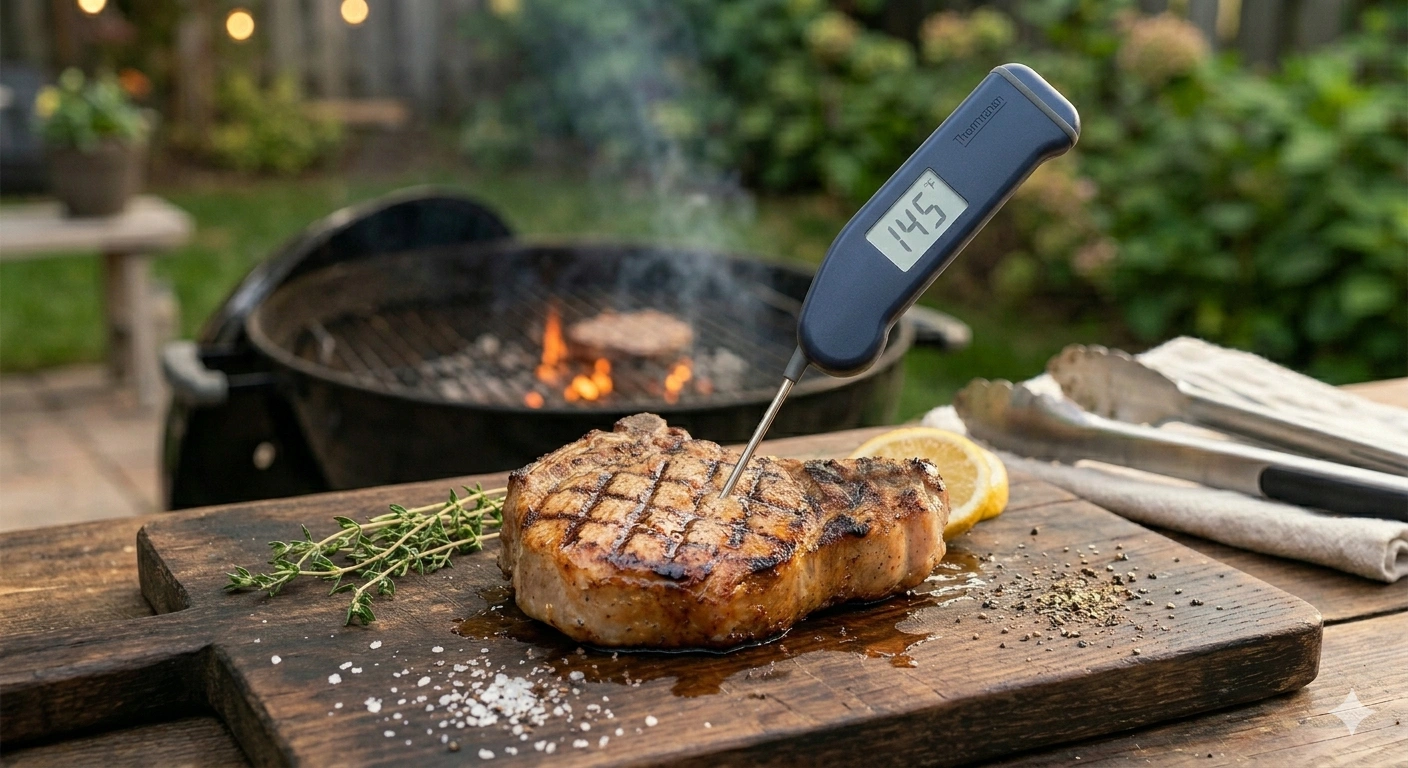
The USDA recommends cooking whole cuts of pork to a minimum internal temperature of 145°F followed by a 3-minute rest. Ground pork must reach 160°F. A slight pink color in the center of cooked pork at 145°F is safe. For the official reference, see the USDA safe temperature chart.
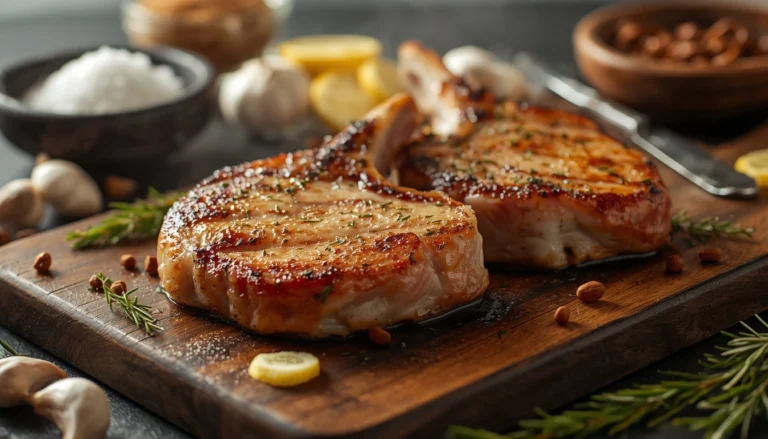
Loin · Steaks
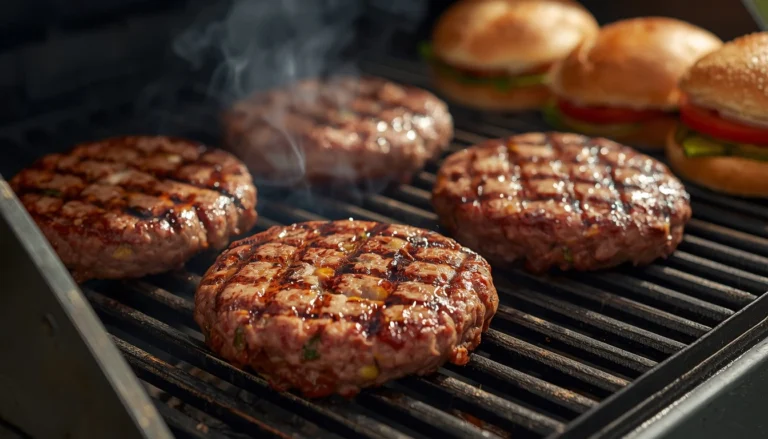
Sausage · Meatballs
Picnic Roast
Fresh ham: 145°F
01 Why Internal Temperature Is the Only Reliable Indicator
Internal temperature for pork is the only measurement that tells you whether the meat is safe to eat and how the texture will be. The color of pork is not a reliable guide — a pork chop can appear white and fully cooked at 130°F or pink at 155°F, depending on the cut, the animal’s age, and the cooking method.
The USDA updated its pork doneness temperature guidelines in 2011, lowering the recommendation for whole cuts from 160°F to 145°F with a 3-minute rest. At this temperature, pork is safe even if the center retains a light pink blush. This change aligned pork guidelines with those for whole beef and lamb.
The pink color in cooked pork comes from myoglobin, a protein that retains its color at certain temperatures. Reaching 145°F followed by a 3-minute rest eliminates pathogens regardless of the visual appearance. Temperature, not color, is the food safety standard.
The 3-minute rest is part of the USDA recommendation, not optional. During resting, the internal temperature continues to rise slightly (carryover cooking), pathogens are destroyed, and the juices redistribute through the meat. A properly rested chop is both safer and more flavorful than one cut immediately.
02 Internal Temperature for Pork — Complete Cut Reference
This table covers every common pork cut with the target internal temperature, pull-from-heat temperature (accounting for carryover), and resting requirements.
| Cut | Safe Temp | Pull At | Rest | Notes |
|---|---|---|---|---|
| Pork Chop (boneless or bone-in) | 145°F | 140°F | 3 min | Slight pink center at 145°F is safe. Juiciest at 145–150°F. |
| Pork Tenderloin | 145°F | 140°F | 3 min | Very lean — dry out fast above 155°F. Use a thermometer every time. |
| Pork Loin Roast | 145°F | 140°F | 5–10 min | Larger cut — carryover can add 5–8°F. Tent with foil while resting. |
| Pork Shoulder (pulled pork) | 195–205°F | 195°F | 30–60 min | Collagen breaks down only above 195°F. Safe at 145°F but not shreddable until 195–205°F. |
| Pork Ribs (baby back / spare) | 145°F | 185–195°F | 10 min | Safe at 145°F but texture improves dramatically at 185–195°F when collagen fully renders. |
| Pork Belly | 145°F | 165–175°F | 10 min | Higher fat content. Best texture at 165–175°F when fat fully renders. |
| Ground Pork | 160°F | 155°F | 3 min | Higher standard than whole cuts. Applies to burgers, meatballs, sausage patties. |
| Sausage (fresh, uncooked) | 160°F | 155°F | 3 min | Treat as ground pork. Check internal temp at center of thickest link. |
| Ham (fresh, uncooked) | 145°F | 140°F | 3 min | Whole fresh ham is a large cut — plan on slow cooking time. |
| Ham (pre-cooked, reheating) | 140°F | 135°F | 3 min | Already safe. Just needs reheating to 140°F for food quality and safety. |
| Bacon | — | Visually crisp | None | Cook until uniformly crispy. Salt-cured and often smoked. Thermometer not standard here. |
03 Cut-by-Cut Temperature Guide
Each pork cut behaves differently because of its fat content, thickness, and structure. Here is a practical summary for the cuts most home cooks use most often.
Pork Chops
145°FThe most commonly overcooked pork cut. Pull at 140°F and rest 3 minutes. At 145°F the center may look slightly pink — this is correct and safe.
Pork Tenderloin
145°FThe leanest pork cut. Loses moisture rapidly above 155°F. Always use a thermometer — visual cues are nearly impossible on this cut.
Pulled Pork Shoulder
195–205°FSafe at 145°F but won’t shred. The collagen needs 195–205°F to fully break down into gelatin. Rest 30–60 minutes wrapped in foil.
Pork Ribs
185–195°FTechnically safe at 145°F but rubbery. Best texture develops at 185–195°F when the connective tissue renders. Use the bend test as a secondary check.
Ground Pork
160°FHigher threshold than whole cuts because grinding spreads surface bacteria throughout. Check patties, meatballs, and sausage links at their thickest point.
Pork Loin Roast
145°FA larger cut with significant carryover cooking. Pull from the oven at 138–140°F and rest 10 minutes tented with foil. Internal temp will climb to 145–150°F.
04 Pork Doneness Temperature Levels and Carryover Cooking
Unlike beef, pork has a narrow optimal doneness window. Most cuts reach their best texture and moisture within a 10°F range. Understanding how carryover cooking affects the final temperature is essential for consistently good results.
Carryover cooking adds 5–10°F in most whole pork cuts. Larger roasts can rise 8–12°F. Always account for this when deciding when to pull from the heat source.
Pork Doneness Temperature Levels
Below the USDA recommended minimum for pork. The meat will be noticeably pink and soft. Some restaurants serve pork at this level with specific sourcing guarantees, but home cooks should follow the 145°F USDA guideline.
The recommended pork doneness temperature for whole cuts. The center may be slightly pink. Texture is firm but juicy — this is the sweet spot for chops and tenderloin. All safe. All delicious.
No pink remaining. The meat is firm and fully opaque. Still acceptable but noticeably drier than medium. Many home cooks prefer this level for visual reassurance of doneness.
Fully cooked through with no moisture retained in the center. Pork becomes dry and tough quickly above 160°F for lean cuts like tenderloin and chops. Required for ground pork.
05 How to Measure Pork Internal Temperature Correctly
The temperature reading is only accurate if the thermometer is placed correctly. An incorrect placement can show a safe reading while part of the meat is still undercooked — or show an overcooking signal when the center is still ideal.
Insert the probe into the thickest part of the cut, away from bone, fat pockets, and grill grates. Bone conducts heat differently than meat and will give a falsely high reading if the probe touches it.
For thin cuts like chops (under 1 inch), insert the probe from the side horizontally through the center of the meat rather than from the top. This positions the tip in the true center of the thickest part.
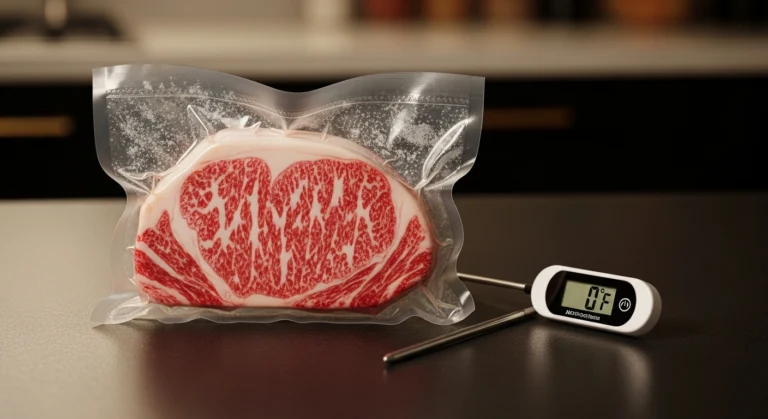
An instant-read thermometer requires you to open the oven or grill each time you check, which affects cooking time. A leave-in probe thermometer stays in the meat throughout cooking and lets you monitor temperature without interruption — especially useful for pork roasts and shoulders.
For more on pork cooking methods and specific recipes using these temperature targets, see our collection of easy pork chop recipes and our guide on thin cut pork chop recipes.
06 Common Pork Temperature Mistakes
Pink pork is not automatically unsafe, and white pork is not automatically safe. Color is determined by myoglobin content, cooking method, and animal age — not by safety. Temperature is the only reliable indicator.
Pulling a pork chop at 145°F and then resting it will take it to 150–155°F, which is medium-well. To finish at 145°F (medium), pull at 140°F and rest 3 minutes.
Pork shoulder at 145°F is technically safe but completely inedible as pulled pork — the texture will be tough and chewy. It needs 195–205°F to break down the collagen. Different cuts have different functional doneness targets.
Cutting immediately after removing from heat causes significant moisture loss. The 3-minute rest is part of the USDA guideline, not a suggestion. It also allows the internal temperature to equalize across the cut, giving a more consistent result.
Pork Nutrition Calculator
Check calories, protein & fat for any pork cut — based on approximate USDA cooked weight values.
Values are approximate, based on cooked weight per USDA data. Visit the full Meat Nutrition Calculator on our homepage.
07 Frequently Asked Questions
Julia writes practical meat recipes and cooking guides for home cooks. Her focus is on accurate temperature references, reliable methods, and results that hold up every time — backed by USDA guidelines.
![A cinematic close-up of golden-brown [air fryer pork chop recipes] with a crispy caramelized crust, served on a minimalist plate with creamy sides.](https://www.meatrecipezone.com/wp-content/uploads/2026/04/Hero-Image-Air-Fryer-768x419.webp)