Savor the Flavors of Salmon Crudo
There’s magic in the first bite of raw salmon. It’s like tasting the ocean’s purity in one slice. You don’t need a fancy restaurant to enjoy this. You can make it at home with the right ingredients.
Salmon crudo is more than a dish. It’s about simplicity and quality. With fresh seafood, a little prep makes it extraordinary. This Italian dish is honest, with no heavy sauces or complicated steps.
Learning to make salmon crudo safely and well is exciting. Your guests will love the sophisticated look of your dishes. You’ll feel proud to have mastered a chef’s technique.
This guide will teach you everything you need to know. From picking the best fish to handling it right, you’ll learn to make amazing salmon crudo at home.
You’ll discover how to prepare raw fish safely and well. Quality seafood, fresh citrus, and olive oil make it special. By the end, you’ll be able to impress anyone with your salmon crudo.
Table of Contents
Understanding the Essence of Italian Crudo
Italian crudo is a key part of the Mediterranean’s culinary world. It’s all about simplicity and using the best ingredients. When you make italian crudo, you let the fish’s natural flavors shine.
This dish is all about being simple. You use just a few ingredients to highlight the taste of fresh seafood. It’s different from other raw fish dishes around the world.
Defining the Raw Fish Tradition
Italian crudo is about serving thinly sliced raw fish with a few quality toppings. The fish is raw, unlike ceviche, which uses citrus to cook it. You focus on keeping the fish’s delicate texture.
The real italian crudo has a few key features:
- Paper-thin slices of pristine raw fish
- Minimal seasoning with sea salt and pepper
- Premium olive oil as the primary dressing
- Fresh citrus juice used sparingly
- Clean, simple garnishes
Cultural Roots of Mediterranean Crudo
This tradition comes from Italian coastal towns where fishermen ate their catch right away. Places like Liguria, Sicily, and the Amalfi Coast are where it started. Fishing families passed down this method out of respect for their work.
This tradition is deeply rooted in culture. It’s about valuing freshness over manipulation. Fishermen knew that the best fish needed no extra treatment. This idea is alive in Italian cooking today.
| Preparation Style | Cooking Method | Primary Acid Use | Texture Result |
|---|---|---|---|
| Italian Crudo | No cooking | Light, optional | Tender, buttery |
| Ceviche | Acid-cured | Heavy citrus required | Firm, cooked-like |
| Sashimi | No cooking | No acid | Delicate, silky |
Knowing where this tradition comes from makes preparing crudo at home special. It’s not just cooking; it’s keeping a Mediterranean tradition alive for centuries.
Selecting High Quality Sushi Grade Salmon
Choosing the right salmon is key to a great crudo dish. Success comes from finding fish that meets strict safety and quality standards. Sushi grade salmon is different because of how it’s handled, frozen, and stored.
The FDA has rules for eating raw fish. Fish for raw dishes must be frozen at minus 4 degrees Fahrenheit for at least seven days. This freezing kills parasites that could make you sick. Buying sushi grade salmon means you’re getting fish that follows these safety steps.
Finding a Trustworthy Fishmonger
Having a good fishmonger is vital. A quality supplier ensures the fish is fresh and handled right. Ask your fishmonger about:
- Where the salmon comes from
- When it was caught and frozen
- The freezing temperatures used
- How long it’s been stored
Inspecting Your Salmon Fillet
When you look at the salmon, check for firm, vibrant flesh and bright color. It should smell like the ocean, not strong or fishy. Press the flesh; it should spring back right away. If it’s discolored, dull, or smells bad, don’t choose it.
Spending time to pick excellent sushi grade salmon makes your crudo taste fresh and clean. It also keeps you and your guests safe.
Essential Tools for Fresh Salmon Preparation
Preparing salmon crudo is more than just having good fish. You need the right tools to turn raw salmon into a beautiful dish. The tools you pick affect the dish’s texture, look, and safety. Having the right equipment is key to success in the kitchen.
For fresh salmon, you need tools that pros use every day. These tools help you work with precision and confidence. With the right tools, your technique gets better, and your dish looks amazing.
Choosing the Right Filleting Knife
A sharp filleting knife is your most important tool. You need a knife that stays sharp and flexible when working with the fish. It should cut smoothly without tearing the fish.
Look for these knife features:
- Blade length between 5 to 7 inches
- Flexible steel that bends without breaking
- Sharp edge that cuts cleanly with minimal pressure
- Comfortable grip for steady control
- Easy to sharpen and maintain
Brands like Wüsthof and Victorinox make reliable filleting knives. Change or sharpen your knife often to keep it sharp.
Maintaining Proper Temperature Control
Keeping the salmon cold is key for safety. Raw fish must stay cold from start to finish. Warm salmon can grow harmful bacteria.
Remember these temperature tips:
| Temperature Method | Best Use | Duration |
|---|---|---|
| Ice bath with sea salt | Whole fillets before slicing | Up to 30 minutes |
| Chilled ceramic plate | During plating and serving | Continuous |
| Refrigerator at 32°F | Storage between steps | Short intervals only |
Use a chilled cutting board and keep your area cold. Wash your hands often and use clean tools. These steps help keep your workspace safe for handling raw seafood.
Mastering the Art of Salmon Crudo
Making a great salmon crudo takes skill and patience. You must learn how to slice the salmon just right. This turns fresh fish into a light dish that highlights its natural taste.
It’s all about slicing techniques, getting the right thickness, and how your knife skills impact the dish.
Perfecting Your Slicing Technique
The key to a top-notch crudo is in the slicing. You should cut against the grain for the softest texture. This method breaks down the fish’s muscle fibers, making each bite tender.
Pay attention to your knife angle. Aim for slices that are about one-eighth inch thick. This ensures even seasoning and a stunning presentation.
Achieving Uniform Thickness
Getting your slices the same thickness is what makes a dish stand out. Uniform slices cook evenly and soak up marinades the same way.
- Use a sharp, long blade for smooth cuts
- Keep your knife wet with cold water between slices
- Maintain steady hand pressure while cutting
- Practice the same angle for every slice
Bringing Out Natural Sweetness
Quality salmon has a natural sweetness that shines when handled carefully. Minimal interference lets the fish’s true flavor come through. Your slicing technique affects whether this sweetness is highlighted or lost.
Once you get the hang of these basics, your salmon crudo will taste fresher and more refined.
Balancing Flavors with Citrus Crudo
Making a stunning raw salmon dish is all about flavor balance. Citrus adds a bright touch, cutting through the fish’s richness. With the right mix, simple ingredients become truly special.
Choosing the right flavors is key. Acid is essential for raw fish, adding freshness and sweetness. Your choice of acid greatly affects the taste.
Selecting the Best Acidic Components
Fresh citrus juice is essential for citrus crudo. You have several great options:
- Fresh lemon juice adds a classic, clean brightness
- Lime juice brings tropical, sharp notes to your dish
- Grapefruit juice creates deeper, more complex flavors
- Orange juice offers subtle sweetness and mellow acidity
Always squeeze juice from fresh, quality citrus. Bottled juice can’t match the flavor your salmon needs. The acid “cooks” the fish’s outer layer, making it tender and tasty.
Enhancing Profiles with Quality Olive Oil
Premium extra virgin olive oil takes your dish to the next level. Choose cold-pressed oils from places like Italy or Spain for unique flavors:
| Olive Oil Type | Flavor Profile | Best Use |
|---|---|---|
| Early Harvest | Grassy, peppery, herbaceous | Bold, dominant flavors |
| Mid-Season | Balanced, fruity, buttery | Versatile pairings |
| Late Harvest | Mild, buttery, smooth | Delicate preparations |
Drizzle oil over salmon just before serving. This keeps flavors fresh and prevents spoilage. The oil’s richness pairs well with acidity, creating a perfect taste.
Creative Garnishes for Your Raw Salmon Dish
The way you present your salmon crudo is just as important as its taste. Garnishes can turn a simple dish into a masterpiece. They add color, texture, and flavor that complements the fish. The right garnishes make your dish unforgettable.
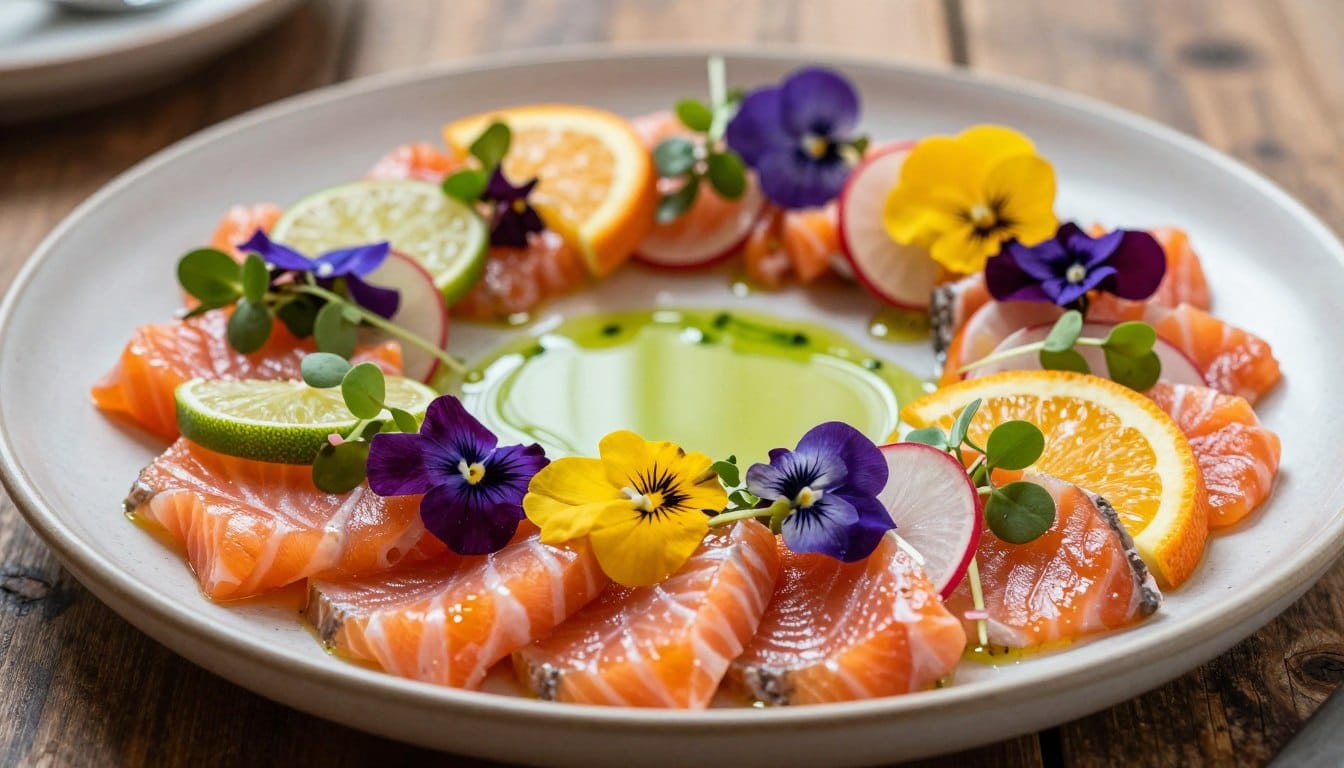
Choosing garnishes should balance looks and taste. Think about what each ingredient adds to your dish. Radishes add a crisp, peppery taste that contrasts with salmon’s richness. Capers bring a salty, tangy flavor. Microgreens add color and a hint of earthiness.
Sea salt flakes enhance the fish’s natural taste without overpowering it. Black pepper adds warmth and depth. These ingredients work together to elevate your dish.
Top Garnish Options to Consider
- Thinly sliced radishes for crunch and peppery notes
- Capers for briny, acidic bursts
- Fresh microgreens for color and texture contrast
- Sea salt flakes for enhanced natural flavors
- Freshly cracked black pepper for depth
- Thinly shaved red onion for sharp bite
- Edible flowers for elegant presentation
- Crispy shallot chips for textural contrast
Layering garnishes adds visual appeal. Start with larger items and add smaller ones for depth. Make sure each garnish has its own space. Remember, less is often more for a beautiful presentation.
Try new ingredients from your local farmers market. Fresh herbs like dill or chervil go well with salmon. Citrus zest adds a bright, zesty flavor without making the dish too wet. Small edible flowers from specialty stores add elegance to your dish.
Serving Suggestions for a Sophisticated Crudo Appetizer
How you serve your crudo appetizer can make a big difference. It turns a simple dish into a memorable experience. Choose pairings that highlight the raw salmon’s flavors without overpowering them.
Setting the right mood for your meal is key. Pick drinks and sides that enhance the fish’s taste, not clash with it.
Pairing with Crisp White Wines
For the best wine pairing, look for high acidity. This type of wine cuts through the richness of the salmon oil. It refreshes your palate between bites. Here are some top picks:
- Italian Vermentino from Sardinia offers bright citrus notes and minerality
- Sauvignon Blanc delivers grassy undertones and zippy acidity
- Pinot Grigio provides a light, refreshing contrast
- Chablis brings complexity with its unoaked Chardonnay character
These wines complement your dish well. Their acidity matches the citrus in your crudo, creating a balanced taste.
Selecting Complementary Accompaniments
Texture is important in the dining experience. Choose foods that contrast with the salmon:
- Toasted crostini add satisfying crunch and can hold portions
- Cucumber slices offer refreshing, cool contrast
- Grilled bread brushed with olive oil provides substance
- Microgreens contribute delicate visual appeal and peppery notes
When picking accompaniments, focus on supporting the salmon’s taste. Avoid heavy sauces or strong spices. Simple, high-quality elements are best.
Why This Mediterranean Raw Fish Dish Stands Out
A Mediterranean raw fish dish is truly special. It celebrates the beauty of raw ingredients, unlike many other dishes. Your raw salmon dish lets the salmon’s natural flavors take center stage.
This dish is remarkable because it values ingredient quality over technique complexity. It doesn’t hide flavors; it enhances them. The salmon and fresh citrus create a taste that’s both refreshing and fulfilling. Home cooks appreciate it for its simplicity and elegance.
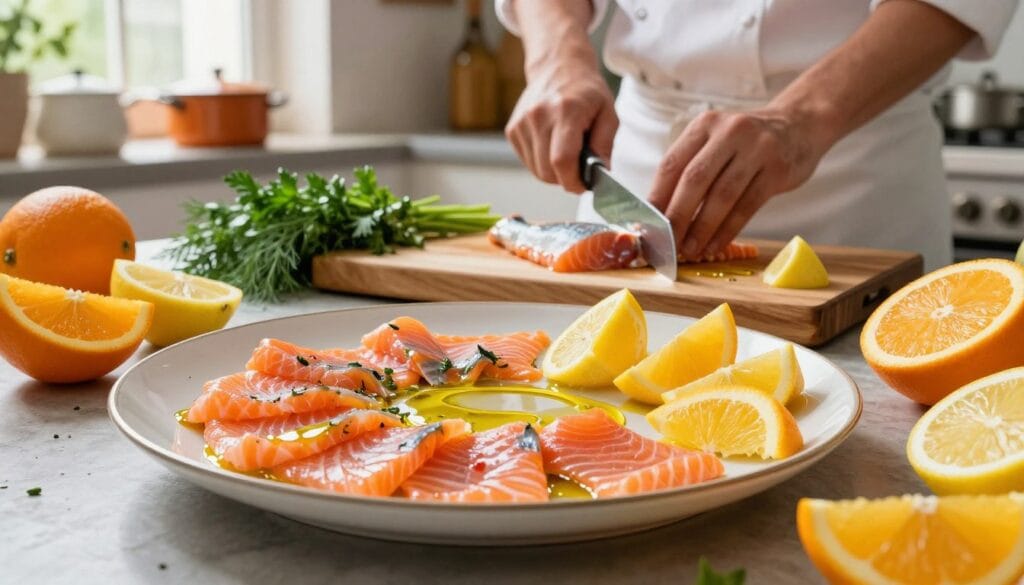
- Celebrates premium seafood quality without unnecessary additions
- Creates a dining experience that feels elegant and approachable
- Requires mastery of fundamental seafood handling skills
- Delivers impressive results with minimal ingredients
- Suits health-conscious diners seeking nutritious options
The beauty of this dish is its honesty. It doesn’t try to outdo itself with complicated flavors. Instead, it focuses on using the best salmon and treating it with care. This simplicity makes the dish unforgettable.
Home cooks all over America love this dish. It shows confidence and culinary skill. You’re serving seafood at its best, with care and intention.
Comparing Your Plate to a Salmon Carpaccio Alternative
Understanding the differences between crudo and other raw fish preparations helps you choose the right dish for your occasion. While many people use these terms interchangeably, they represent distinct culinary approaches. A salmon carpaccio alternative offers a unique eating experience that differs from traditional crudo in meaningful ways. Learning about these variations prepares you to appreciate each style on its own merits.
Texture Differences Explained
The most noticeable distinction lies in how each dish feels in your mouth. Crudo features slices that are cut to a specific thickness, typically around one-eighth inch. This creates a fish that maintains its structure and gives you a satisfying bite. The slice holds together as you chew, allowing you to experience the salmon’s natural texture.
A salmon carpaccio alternative involves pounding the fish into much thinner, nearly translucent layers. This preparation method creates a completely different sensation. The delicate sheets practically dissolve on your tongue immediately upon contact. The fish becomes almost buttery in consistency, unlike firm.
- Crudo maintains its shape and requires active chewing
- Carpaccio alternative melts instantly without much effort
- Crudo showcases the cut quality through texture
- Carpaccio alternative emphasizes delicate, subtle mouthfeel
Flavor Profile Variations
These texture differences directly impact how flavors develop on your palate. Crudo’s substantial bite lets you taste the salmon’s clean, fresh qualities. Each chew releases oils and natural flavors gradually.
The salmon carpaccio alternative dissolves quickly, delivering flavor all at once. This rapid release creates an intense initial taste that fades faster than crudo’s sustained flavor journey.
| Preparation Style | Texture Experience | Flavor Delivery | Best For |
|---|---|---|---|
| Crudo | Firm, requires chewing | Gradual, sustained | Appreciating fish quality |
| Carpaccio Alternative | Delicate, melts quickly | Intense, immediate | Elegant presentations |
Your choice between these styles depends on your preference. Select crudo when you want to highlight premium salmon cuts and enjoy a more interactive eating experience. Choose the salmon carpaccio alternative when you prefer a refined, melt-in-your-mouth presentation that emphasizes elegance and simplicity.
Safety Tips for Handling Raw Seafood
Working with raw salmon is serious business. Your health and your guests’ well-being depend on it. Raw seafood needs extra care because bacteria can hide in cold dishes. Knowing these steps makes your kitchen safe for making crudo dishes.
Maintaining Proper Sanitation Standards
First, clean your workspace before starting. Wash cutting boards, knives, and countertops with hot, soapy water. Use a bleach solution to disinfect where raw fish will touch.
Use different cutting boards for fish and other foods. This stops cross-contamination. Wash your hands well for 20 seconds before and after handling salmon.
Temperature Control and Storage Practices
Keep salmon cold at 40 degrees Fahrenheit or below. Only take it out when you’re ready to serve. Never let it sit at room temperature.
Buy your salmon from trusted suppliers. Look for sushi-grade or sashimi-grade fish. This means it’s been handled and frozen safely to kill parasites.
| Safety Element | Best Practice | Temperature Range |
|---|---|---|
| Storage Temperature | Keep salmon constantly chilled | 40°F or below |
| Preparation Duration | Work quickly from refrigerator to plate | Minimize time at room temperature |
| Freezing Protocol | Deep freeze at -4°F for 7+ days | -4°F or below |
| Source Selection | Purchase sushi-grade salmon only | Properly frozen prior to purchase |
Essential Safety Checklist
- Use only sushi-grade or sashimi-grade salmon from reputable fish markets
- Sanitize all equipment before and after use
- Maintain constant refrigeration below 40 degrees Fahrenheit
- Work quickly and minimize prep time outside the refrigerator
- Never reuse marinade that touched raw fish
- Wash hands frequently during preparation
- Keep raw fish away from ready-to-eat foods
- Serve immediately after plating your crudo
By following these safety tips, your salmon crudo will be delicious and safe. Your careful handling lets guests enjoy this elegant dish worry-free.
Conclusion
Making salmon crudo at home opens up a world of culinary possibilities. You now know how to pick the best sushi-grade salmon. You also know how to prepare it with confidence.
The techniques you’ve learned help you create a dish that wows your family and guests. Your journey with salmon crudo doesn’t stop here. Use what you’ve learned about balancing citrus and choosing quality olive oil.
Also, pick the right garnishes to make your own signature version. Every gathering is a chance to show off your kitchen skills.
Fresh, high-quality ingredients are key to this Mediterranean dish. Mastering the selection and preparation methods takes your cooking to a new level. Your practice with filleting knives and temperature control shows in every plate you serve.
Start planning your next meal with this elegant raw fish dish. Invite people over and serve it with crisp white wines and thoughtful accompaniments. Your effort in learning these techniques brings rewards that go beyond a simple appetizer. You have everything you need to create something truly special.