Savor the Taste of Smoked Corned Beef
Smoke corned beef at 225°F for 5–7 hours total. Unwrapped until it hits 165°F and builds a dark bark (4–5 hours), then wrapped in butcher paper until internal temperature reaches 195–205°F. Soak the corned beef in cold water for 8–24 hours before smoking to reduce the salt from curing. Use cherry or apple wood. Rest 45–60 minutes before slicing.
Why Smoked Corned Beef Beats Boiled Every Time
Corned beef is one of those cuts with a reputation problem. Most people know it from the pot — simmered for hours in water until it turns tender and gray, served alongside cabbage, carrots, and potatoes. It’s a perfectly fine tradition. But it is not the best version of corned beef you can make.
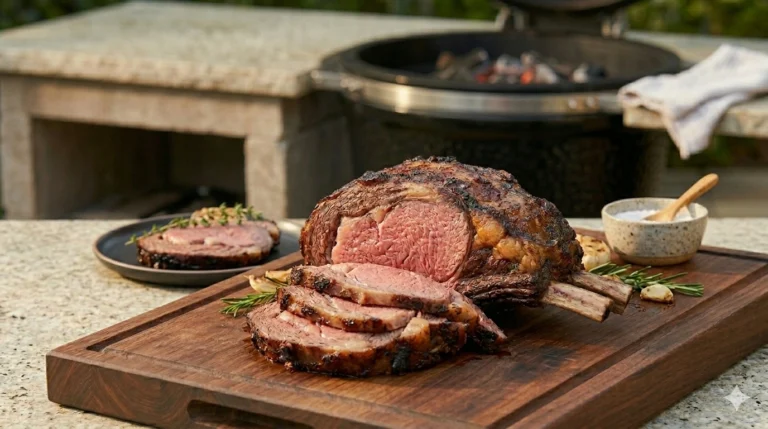
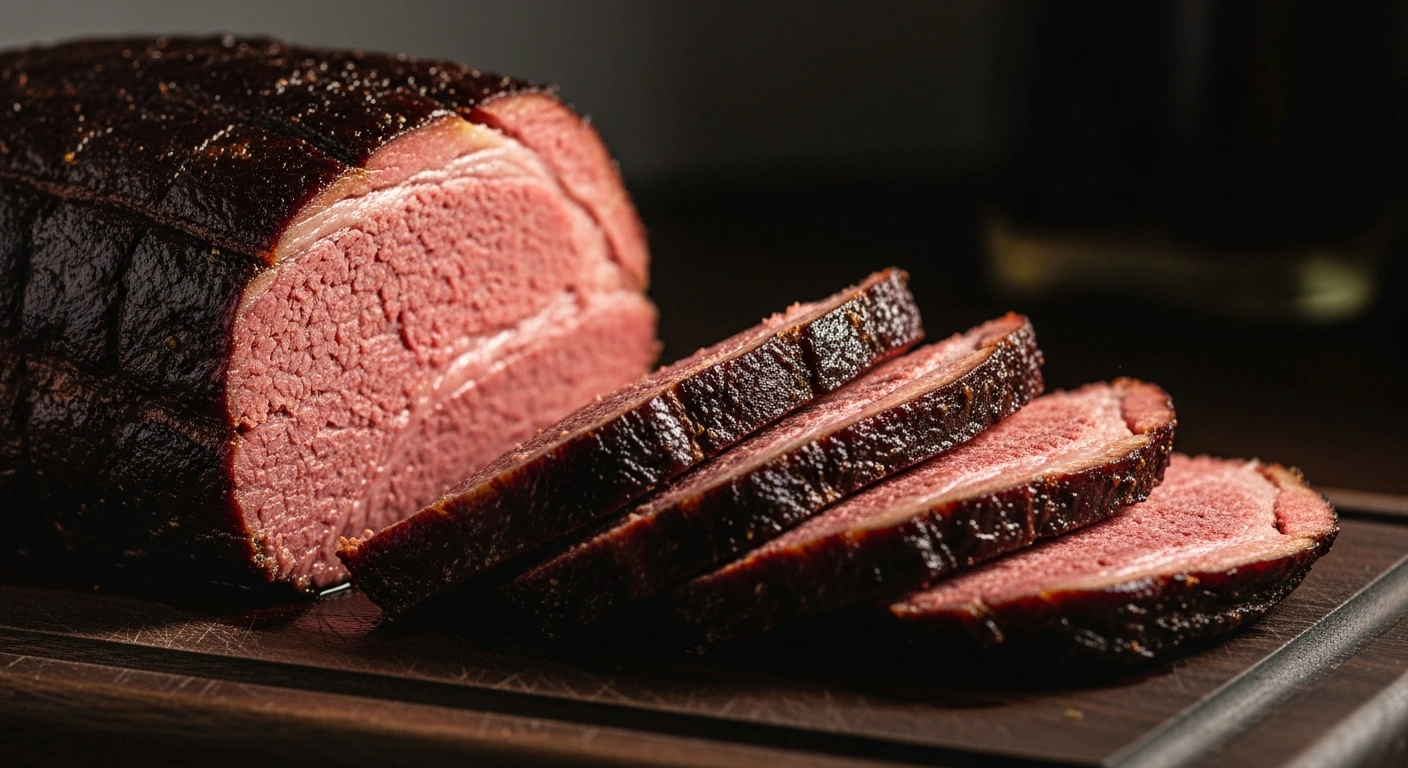
Put that same cured brisket flat on a smoker at 225°F with cherry wood and give it five to seven hours, and something entirely different happens. The outside builds a crackling dark bark. A deep pink smoke ring develops through the first quarter inch of meat. The fat renders slowly into the lean muscle. The result still tastes like corned beef — because it is — but with a depth, texture, and smokiness that the boiling pot cannot touch.
This is not a complicated cook. If you can smoke a brisket, you can smoke corned beef. If you have never smoked anything before, smoked corned beef is one of the best places to start because the curing brine has already done the heavy lifting on seasoning. Your job is to manage temperature and time.
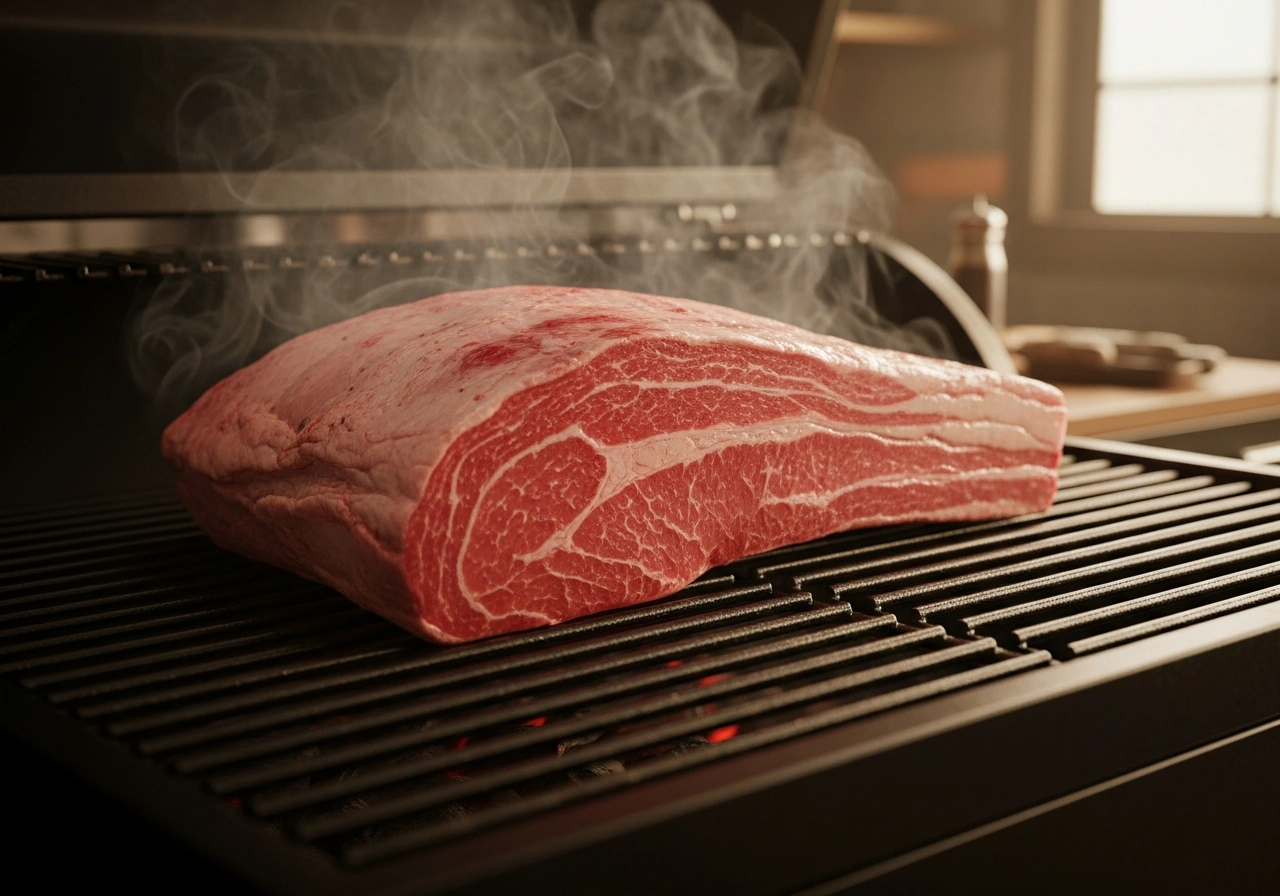
What Is Corned Beef — And Why Does It Smoke So Well?
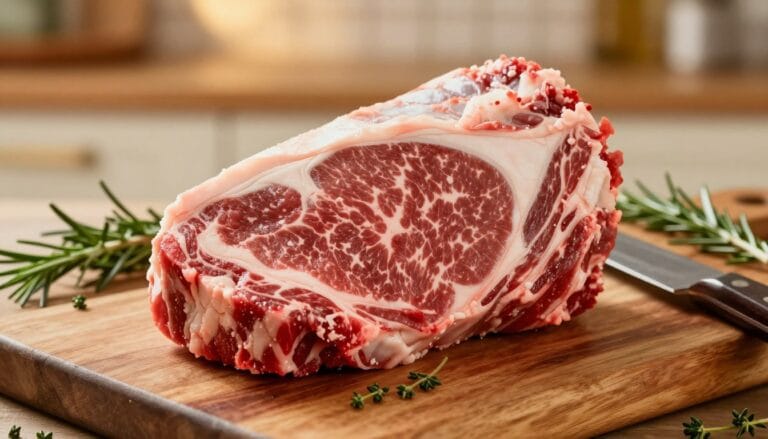
Corned beef is a brisket flat that has been wet-cured in a brine of salt, sodium nitrate, sugar, and pickling spices for 5–10 days. The “corns” in the name refer to the large-grain rock salt historically used in the cure — not corn the vegetable. The curing process seasons the meat deeply, gives it its characteristic pink color, preserves it, and partially breaks down the muscle fibers.
Why does it smoke so well? Three reasons. First, the brisket flat is already a smoke-friendly cut — it has enough intramuscular fat to stay moist through a long cook. Second, the brine has already seasoned the interior, which means you get flavor throughout the entire cut, not just on the surface. Third, the sodium nitrate in the cure reacts with smoke to produce an especially vivid pink smoke ring — the visual hallmark of great smoked meat.
Flat vs Point: Store-bought corned beef is almost always the brisket flat — the leaner, more rectangular section. If you can find a whole packer corned beef with the point still attached, buy it. The point has more fat, more marbling, and produces more flavor when smoked. The flat alone still produces excellent results.
The Non-Negotiable Step: Soaking the Corned Beef
This step surprises most first-time corned beef smokers and separates results dramatically. Store-bought corned beef is aggressively brined — the sodium level is designed for the boiling method, where a pot of water continuously draws out salt during the long cook. When you smoke corned beef without soaking first, that concentrated salt stays in the meat. The result can be almost inedibly salty, especially in the bark where flavors concentrate during smoking.
The fix: soak the corned beef in a large bowl or pot of cold water, fully submerged, for 8 to 24 hours in the refrigerator. Change the water once halfway through. This significantly reduces — but does not eliminate — the sodium, leaving enough for the characteristic corned beef flavor without overwhelming saltiness.
| Soak Time | Sodium Reduction | Flavor Impact | Best For |
|---|---|---|---|
| No soak | 0% | Very salty bark | Not recommended |
| 4 hours | ~15% | Still quite salty | Short notice only |
| 8 hours | ~25% | Noticeably better | Minimum recommended |
| 12–16 hours | ~35% | Balanced, bold | Standard approach |
| 24 hours | ~45% | Mild brine, smoke-forward | If you like pastrami style |
Don’t skip the spice packet: Store-bought corned beef comes with a spice packet. After soaking and patting dry, add those pickling spices on top — they are specifically blended to complement this cut. Alternatively, make your own rub of coarse black pepper, coriander, and garlic powder, which produces the classic pastrami-style exterior.
Best Wood for Smoking Corned Beef
Wood choice matters more with corned beef than with many other cuts because the curing brine is already a dominant flavor. An aggressive wood can compete with and overwhelm the spice profile rather than complement it. Stay with woods that add smoke character without bulldozing everything else on the plate.
Cherry Best
Mild, slightly sweet, produces a beautiful mahogany bark color. Pairs perfectly with the savory brine. The go-to choice for most pitmasters.
Apple Excellent
Similar to cherry — fruity and mild. Produces a slightly lighter bark color. A great alternative if cherry is unavailable.
Hickory Good
Stronger, more assertive smoke. Works well if you want a more pronounced smoky character, but use less of it than you would cherry. Risk of bitterness if over-smoked.
Mesquite Avoid
Too aggressive for corned beef. The intense, sharp smoke overpowers the brine and spice rub. Reserve mesquite for shorter cooks like steaks and fajitas.
On a pellet grill, use cherry or apple pellets. The consistent temperature control of a pellet grill is actually ideal for this cook — corned beef benefits from steady 225°F with no wild temperature swings. For a full comparison of pellet grill smoking techniques, see our pork shoulder pellet grill guide which covers setup, wood choice, and wrap timing using the same method.
🔥 Texas-Style Smoked Corned Beef
Ingredients
Instructions
- Soak: Place corned beef in a large bowl, cover with cold water, and refrigerate 8–24 hours. Change water once. Remove and pat completely dry.
- Season: Apply a thin coat of yellow mustard as a binder. Mix coarse black pepper, garlic powder, smoked paprika, and coriander and press firmly onto all surfaces.
- Fire the smoker: Preheat smoker or pellet grill to 225°F. Load cherry or apple wood.
- Smoke unwrapped: Place corned beef fat-side up directly on the grate. Smoke for 4–5 hours until internal temperature reaches 165°F and the bark is dark and set.
- Wrap: Remove from smoker, wrap tightly in butcher paper (or foil). Return to smoker.
- Finish: Continue smoking wrapped until internal temperature reaches 195–205°F, approximately 1–2 more hours. Probe should slide in with no resistance — like butter.
- Rest: Keep wrapped and rest in a cooler or on the counter for 45–60 minutes minimum. Do not skip this step.
- Slice: Against the grain in 1/4-inch slices. Serve with mustard, pickles, rye bread, or on its own. Per the USDA safe temperature chart, corned beef must reach at least 145°F for food safety — your target of 195–205°F far exceeds this.
Step-by-Step with Photos
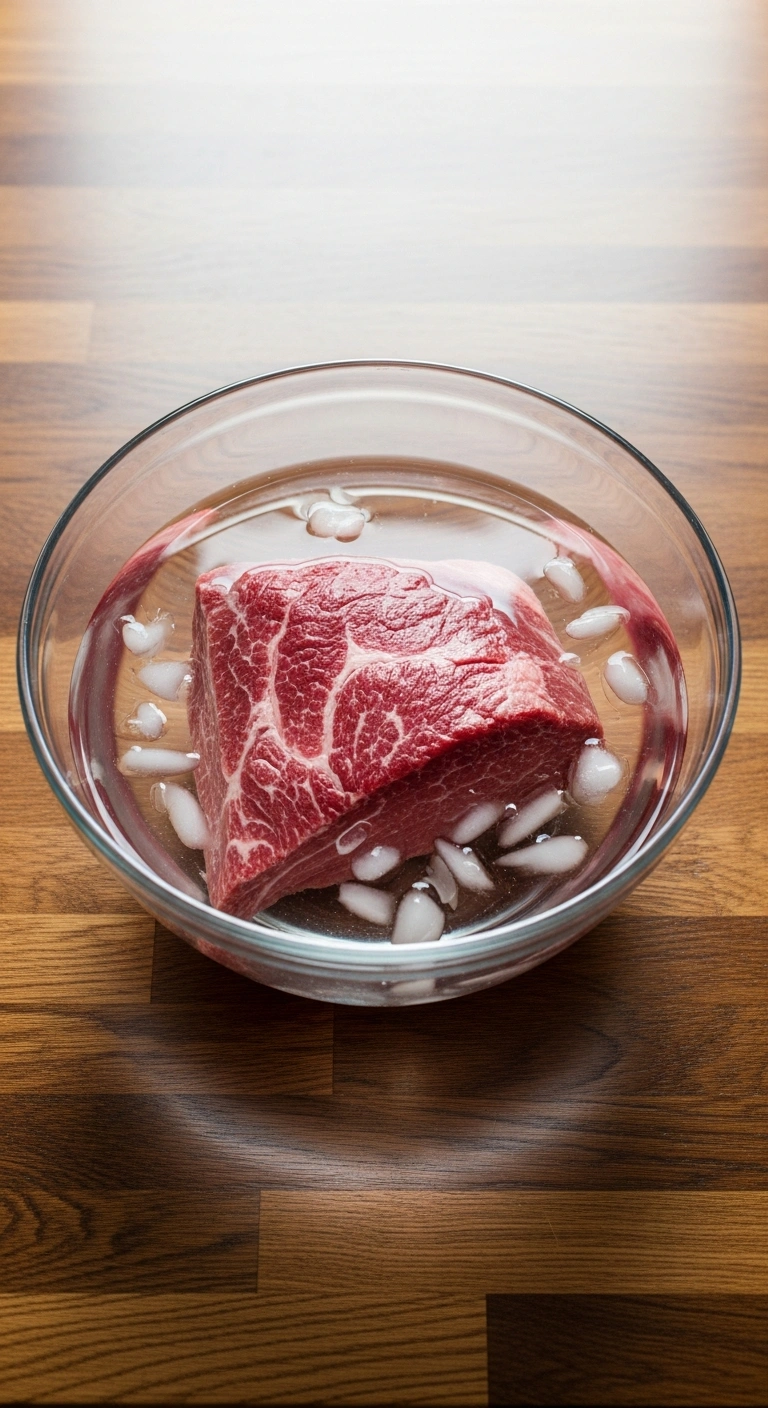
Soak to Control the Salt
Submerge the corned beef flat in a large bowl or pot of cold water and refrigerate for 8 to 24 hours, changing the water once halfway through. This step is the most commonly skipped and the one that causes the most disappointment. Without it, the concentrated curing brine stays in the meat and the bark tastes aggressively salty. After soaking, remove the beef and pat every surface completely dry with paper towels before seasoning. Surface moisture prevents bark formation.
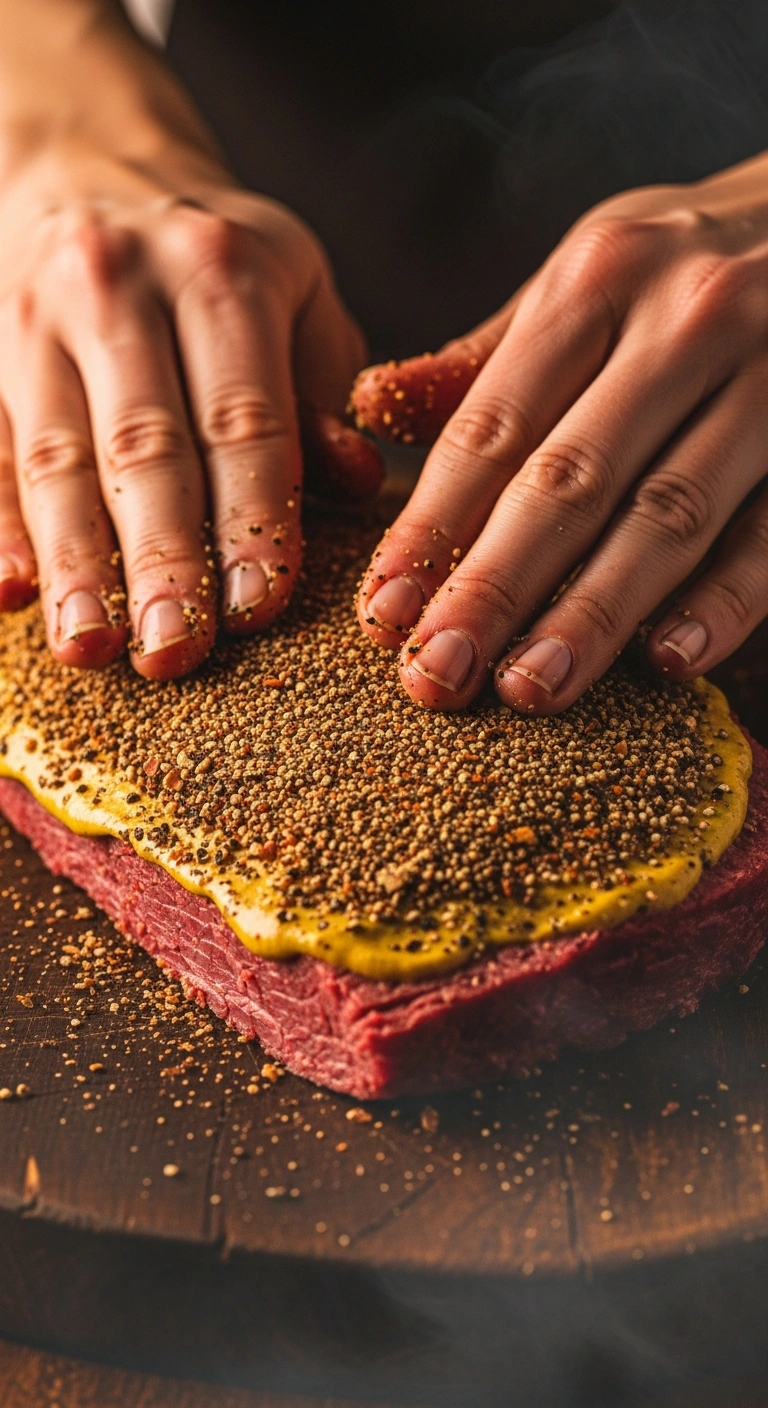
Apply the Rub
Rub a thin layer of yellow mustard over the entire surface of the corned beef — this acts as a binder to help the dry rub adhere. The mustard flavor cooks off completely during smoking; you will not taste it in the final product. Combine coarse black pepper, garlic powder, smoked paprika, and ground coriander and press the mixture firmly onto all sides. The corned beef’s spice packet can also be used here sprinkled on top of the rub for an extra layer of pickling spice character.
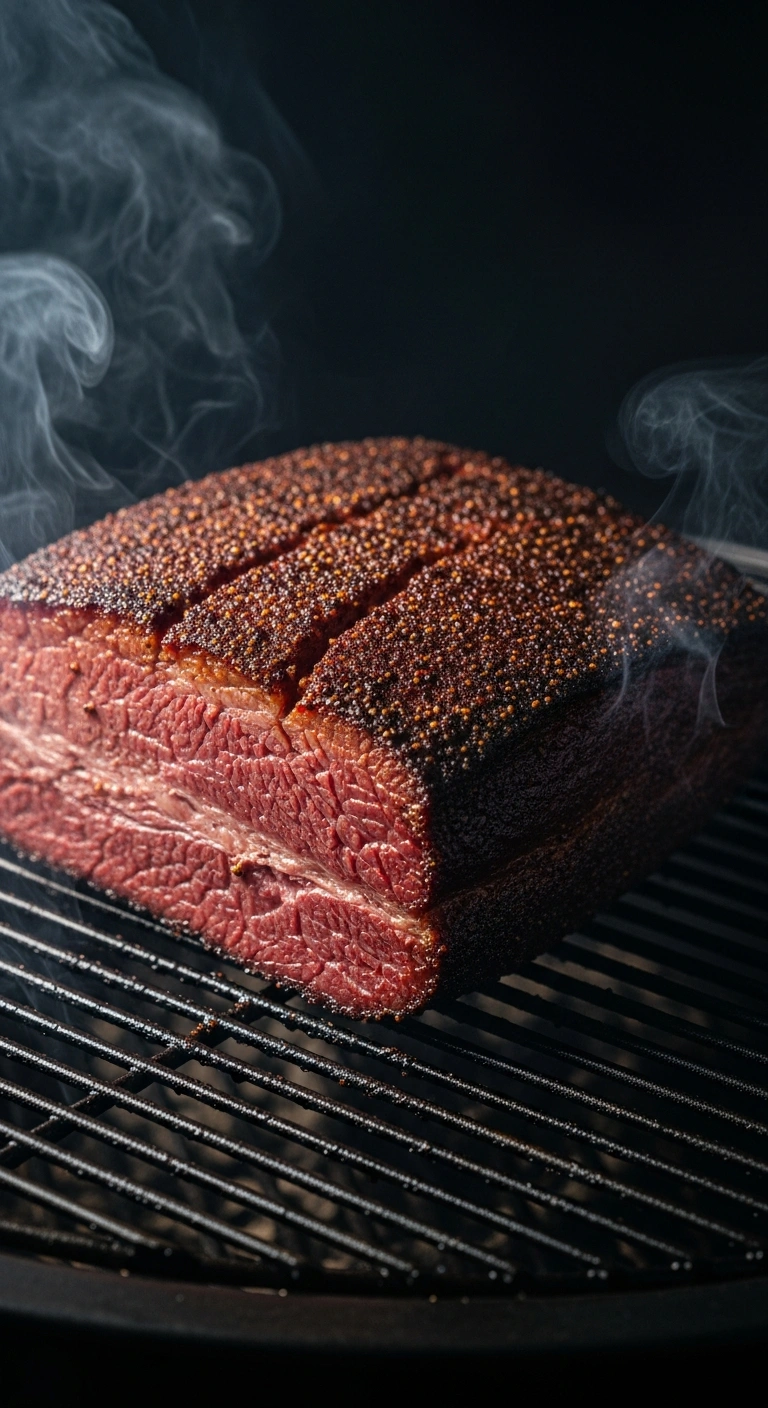
Smoke Unwrapped to Build the Bark
Place the seasoned corned beef fat-side up directly on the smoker grate. Fat-side up allows the rendering fat to baste the meat as it slowly liquefies downward through the muscle. Smoke at 225°F for 4 to 5 hours without opening the smoker. You’re looking for a dark mahogany bark that is set and doesn’t smear when you touch it, and an internal temperature of 165°F. The smoke ring — that pink layer just below the surface — will be more vivid on corned beef than on regular brisket because of the nitrates in the curing brine.
Wrap in Butcher Paper
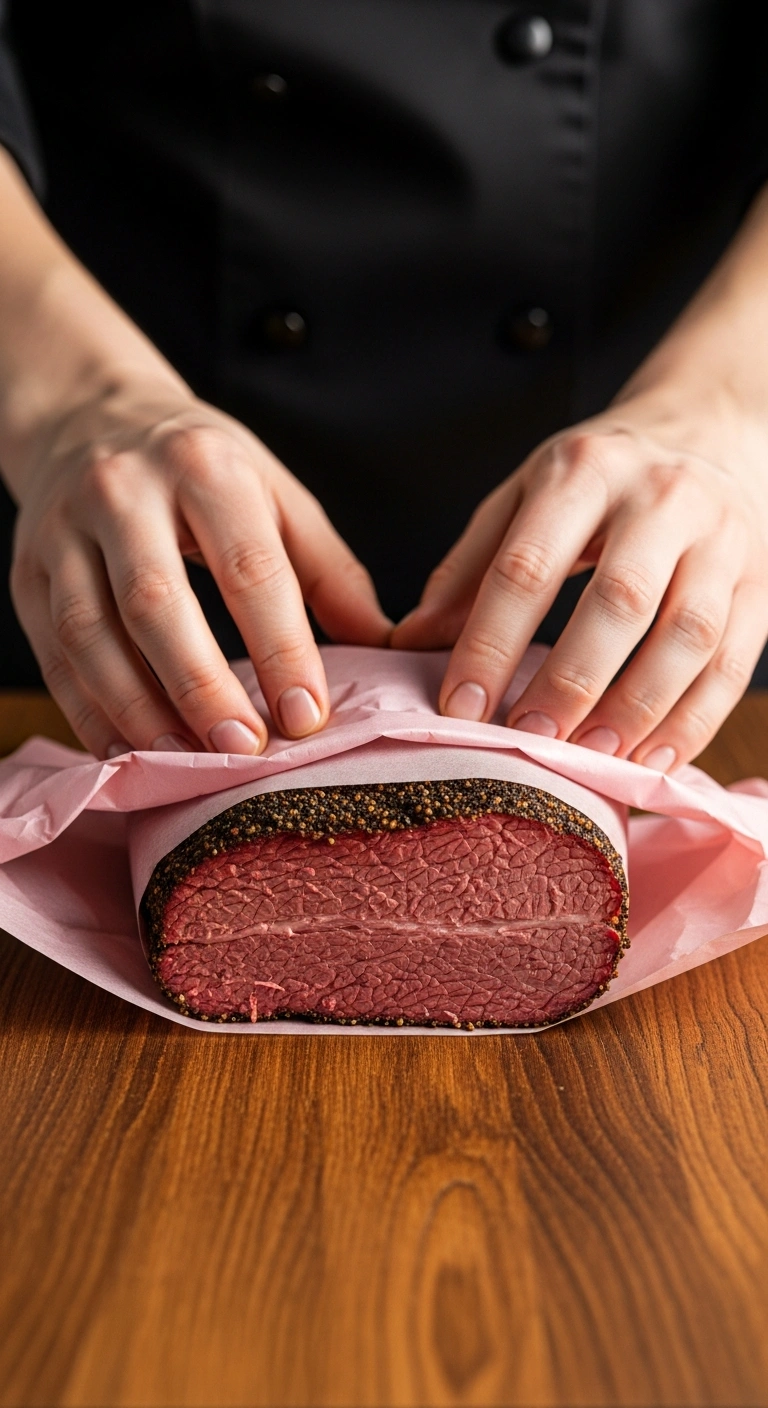
Once the internal temperature reaches 165°F and the bark is locked in, remove from the smoker and wrap tightly in two layers of pink butcher paper. Butcher paper is preferred over foil because it allows some moisture to escape while still protecting the bark from the steam that builds up inside. Foil works too, but the bark will soften slightly. Wrap as tight as you can, folding the ends in firmly. Return to the smoker and continue cooking until the internal temperature reaches 195–205°F — about 1 to 2 more hours.
Rest, Slice Against the Grain
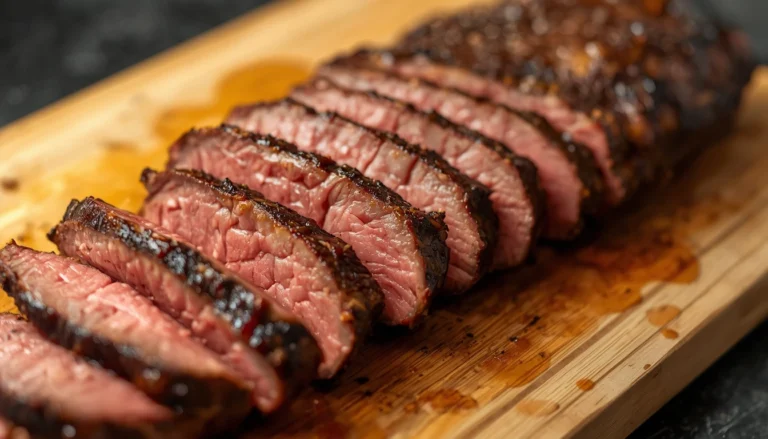
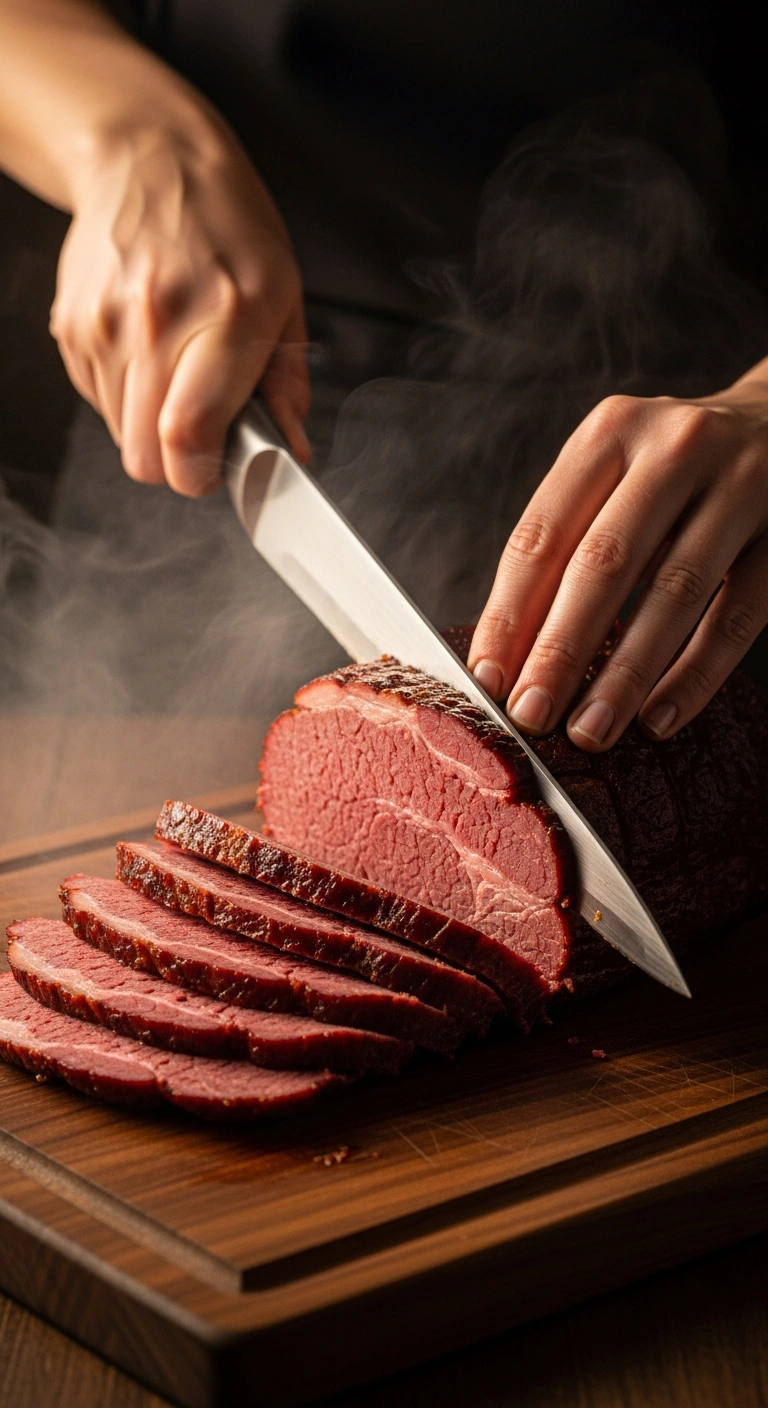
After reaching 195–205°F, keep the corned beef wrapped and rest it for 45 minutes to 1 hour. Place it in a cooler or wrap it in towels to maintain the temperature. This rest is critical — the collagen that converted to gelatin during the long cook needs time to redistribute through the muscle fibers. Cutting too early produces a dry result. When you’re ready, unwrap and slice against the grain in 1/4-inch slices. The smoke ring will be a vivid pink band around each slice. Serve with coarse mustard, pickles, and rye bread or your preferred sides.
Temperature Timeline — What Happens at Each Stage
Understanding what is happening inside the meat at each temperature range helps you make better decisions throughout the cook, especially when the temperature stalls.
The corned beef goes on the smoker. Surface begins absorbing smoke immediately. Bark formation has not started yet.
The nitric oxide from cherry wood smoke reacts with the myoglobin and nitrates in the cure. The vivid pink smoke ring develops in this window. Once the surface exceeds ~140°F, smoke ring formation stops.
Evaporative cooling from moisture leaving the surface can hold temperature steady for 1–2 hours. This is normal. Do not raise the smoker temperature. Wrap here if the bark is set.
Tough collagen proteins begin converting to gelatin. The meat starts to become probe-tender. The wrapped steam accelerates this process significantly.
Full gelatin conversion. The probe slides in with no resistance at the thickest point. This is the pull window. Remove and rest — temperature will rise 3–5 degrees more during the rest.
Pitmaster Tips for Perfect Smoked Corned Beef
Plan for the Stall
The temperature stall at 160–170°F can last 1–2 hours. Budget 7–8 hours total for a 3–4 lb flat if you want flexibility. Start early and use a cooler to hold the finished product warm.
Probe, Don’t Trust Time
The “done” signal is texture, not temperature alone. Probe the thickest part of the flat. When the thermometer probe slides in and out with zero resistance — like pushing through warm butter — it’s done. Temperature is a guide; feel is the confirmation.
Butcher Paper > Foil
Pink butcher paper allows some breathability during the wrapped phase, which preserves more bark integrity than foil. Foil traps all steam and softens the bark significantly. Both work — but butcher paper gives better texture.
Against the Grain Is Non-Negotiable
Corned beef flat has a clear grain direction. Slicing with the grain gives you long chewy fibers. Slicing against the grain gives you short, tender, pull-apart pieces. Look at the grain direction before cutting and slice perpendicular to it.
Don’t Open the Smoker
Every time you open the smoker lid you lose 15–20 minutes of cook progress as temperature drops and restabilizes. Corned beef is a set-it-and-monitor-by-probe cook. Use a wireless thermometer and leave the lid closed until wrap time.
The Point Is Better Than the Flat
If you can find a whole packer corned beef with the point attached, buy it. The point section is fattier, more forgiving, and more flavorful. On its own, the flat requires careful monitoring. With the point, you have more margin for error and the result is richer.
Serving, Storage & What to Make with Leftovers
Serving
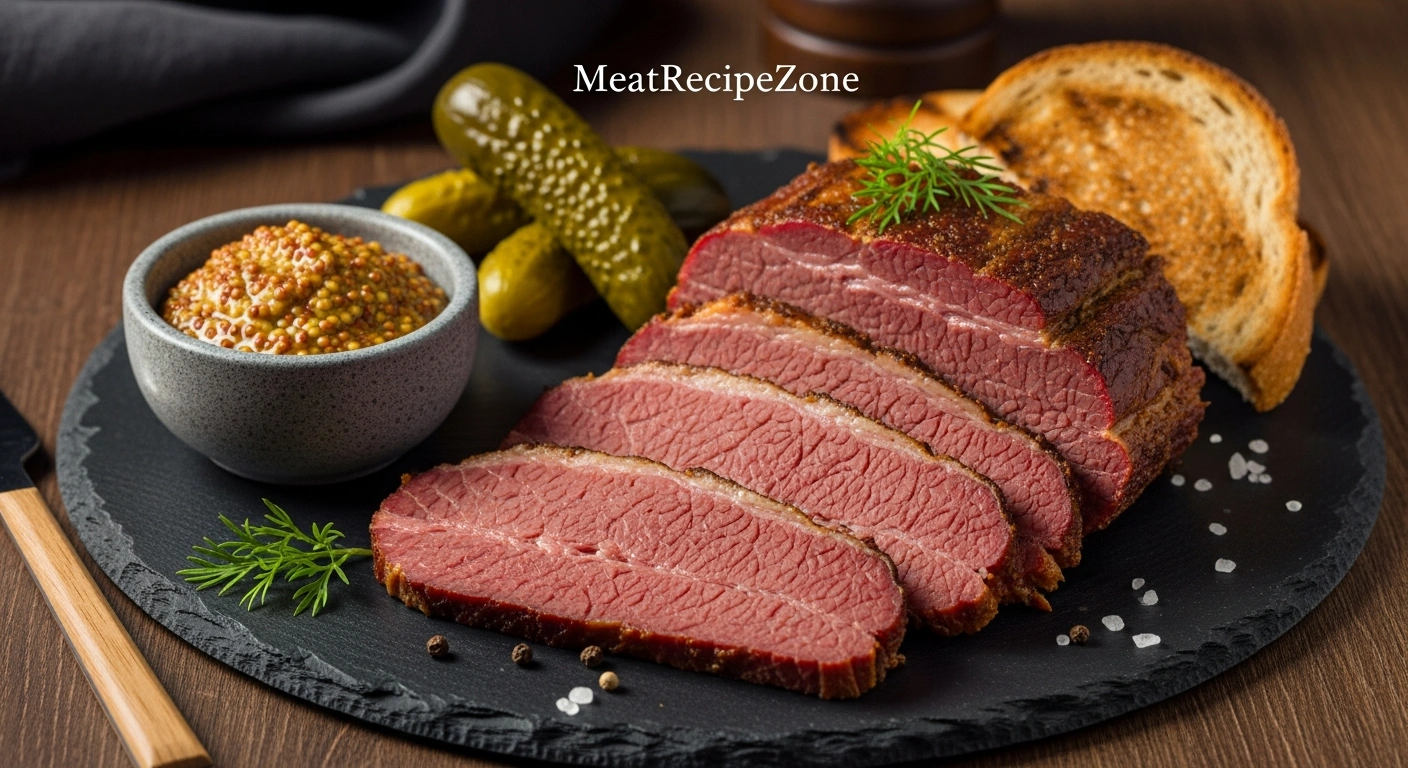
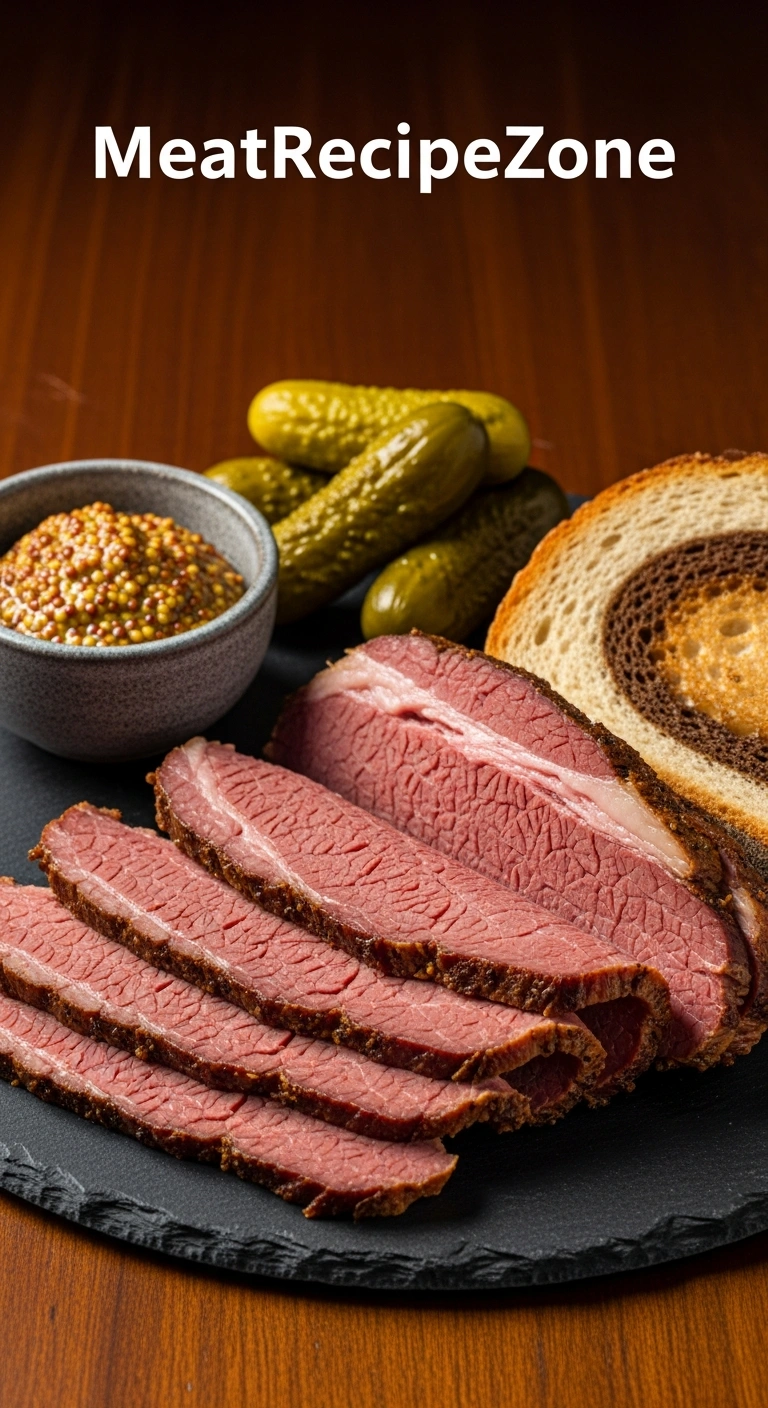
Smoked corned beef is exceptional on its own with coarse-grain mustard and pickle spears. Build it into a smoked Reuben: rye bread, Swiss cheese, sauerkraut, and Russian dressing, toasted in a skillet. Chop it fine and use it in a smoked corned beef hash with potatoes and eggs. Slice it thick and serve it over mashed potatoes with a pan juice reduction. It pairs beautifully with the braised cabbage and carrots that typically accompany the boiled version.
Storage
Leftover smoked corned beef keeps refrigerated for up to 4 days in an airtight container. For longer storage, slice and freeze in vacuum-sealed portions for up to 3 months. Per the USDA leftovers and food safety guide, cooked smoked meats should be refrigerated within 2 hours of cooking and reheated to 165°F. For more ideas on using smoked beef leftovers creatively, see our leftover meat recipes guide.
Reheating
Reheat sliced smoked corned beef in a skillet over medium-low with a splash of beef broth, covered, 3–4 minutes. This restores moisture without drying the already-lean flat. For whole slabs, reheat wrapped in foil at 275°F in the oven until internal temperature returns to 140°F. Avoid the microwave — it causes the lean flat to tighten and lose the texture you worked hours to develop.
🔢 Nutrition Estimator
Estimate approximate calories, protein, and fat for smoked corned beef by weight.
Please enter a valid amount (1–9999).
Approximate values. Sodium in smoked corned beef is high due to curing — typically 800–1,200mg per 3 oz serving even after soaking.
Frequently Asked Questions
At 225°F, a 3–4 lb corned beef flat takes 5–7 hours total. The unwrapped phase to 165°F takes 4–5 hours. The wrapped phase to 195–205°F takes 1–2 more hours. Budget generously — better to finish early and hold in a cooler than to rush the cook.
Yes — strongly. Store-bought corned beef is brined for boiling, which continuously draws salt out in the water. When smoking, there’s no dilution. Soaking 8–24 hours in cold water (changing once) reduces sodium by 25–45% and makes the final product dramatically more balanced in flavor.
Target 195–205°F for the best texture. This is the range where collagen has fully converted to gelatin and the flat is genuinely probe-tender. The USDA minimum for safety is 145°F, but a corned beef flat pulled at 145°F will be tough and chewy — not something you want after a 5-hour smoke.
Cherry is the top choice — mild, slightly sweet, and produces a beautiful dark bark color. Apple is an excellent alternative. Hickory works if you want a stronger smoke presence but use it sparingly. Avoid mesquite entirely; it is too aggressive and will compete with the brine seasoning.
Yes — and a pellet grill is arguably ideal for this cook. Set it to 225°F with cherry or apple pellets and follow exactly the same method. The consistent temperature control of a pellet grill removes one variable from a multi-hour cook. Results are excellent. See our pellet grill guide for smoker setup tips that apply here.
Almost nothing. Pastrami is corned beef that has been soaked, rubbed in a heavy black pepper and coriander crust, then smoked. The base product is identical — a brined brisket flat. The rub is heavier on pastrami and the coriander is more prominent. If you use the rub in this recipe and increase the black pepper and coriander, you have made pastrami. They are the same cook with slightly different seasoning intentions.
💬 Reader Comments
4 CommentsThe soaking tip is everything. First time I made this I skipped it and it was way too salty. Second time I soaked 12 hours and the result was completely different — perfect bark, incredible smoke ring. Never boiling corned beef again.
Made this on my Traeger with cherry pellets and it came out better than any pastrami I’ve ordered at a deli. The smoke ring was unreal. My husband said it’s the best thing I’ve ever made on the grill.
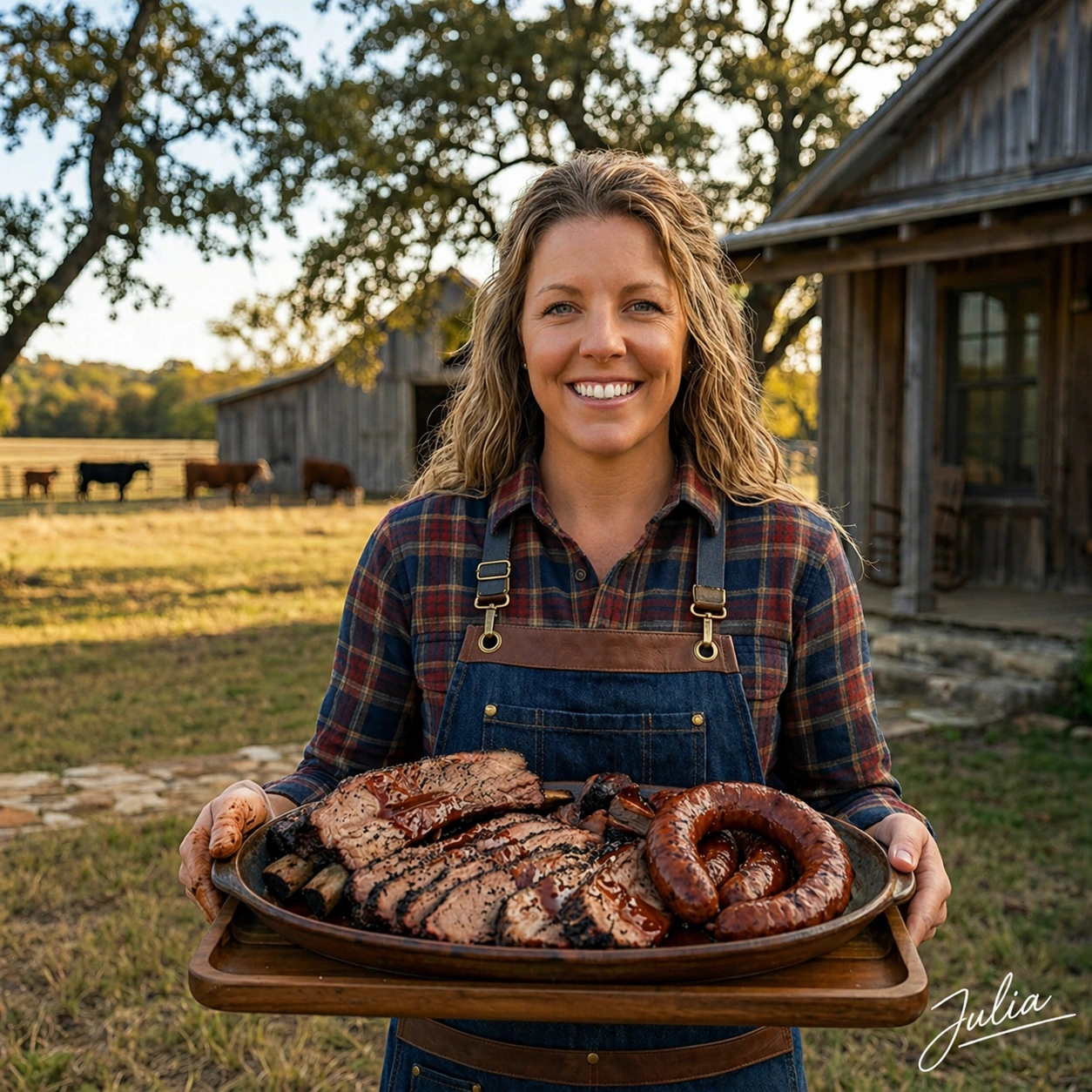
Hit the stall at 163°F for almost 2 hours and panicked. Wrapped it like Julia said and it pushed through to 200°F in about 90 minutes. Probe went in like butter. Would’ve ruined it if I’d cranked the heat up.
Used this for smoked Reubens the next day with leftover slices. Swiss cheese, sauerkraut, Russian dressing on rye. Best sandwich I’ve made in years. The smokiness takes a Reuben to a completely different level.