8 Oz Steak: Calories & Protein (What You Really Get!)
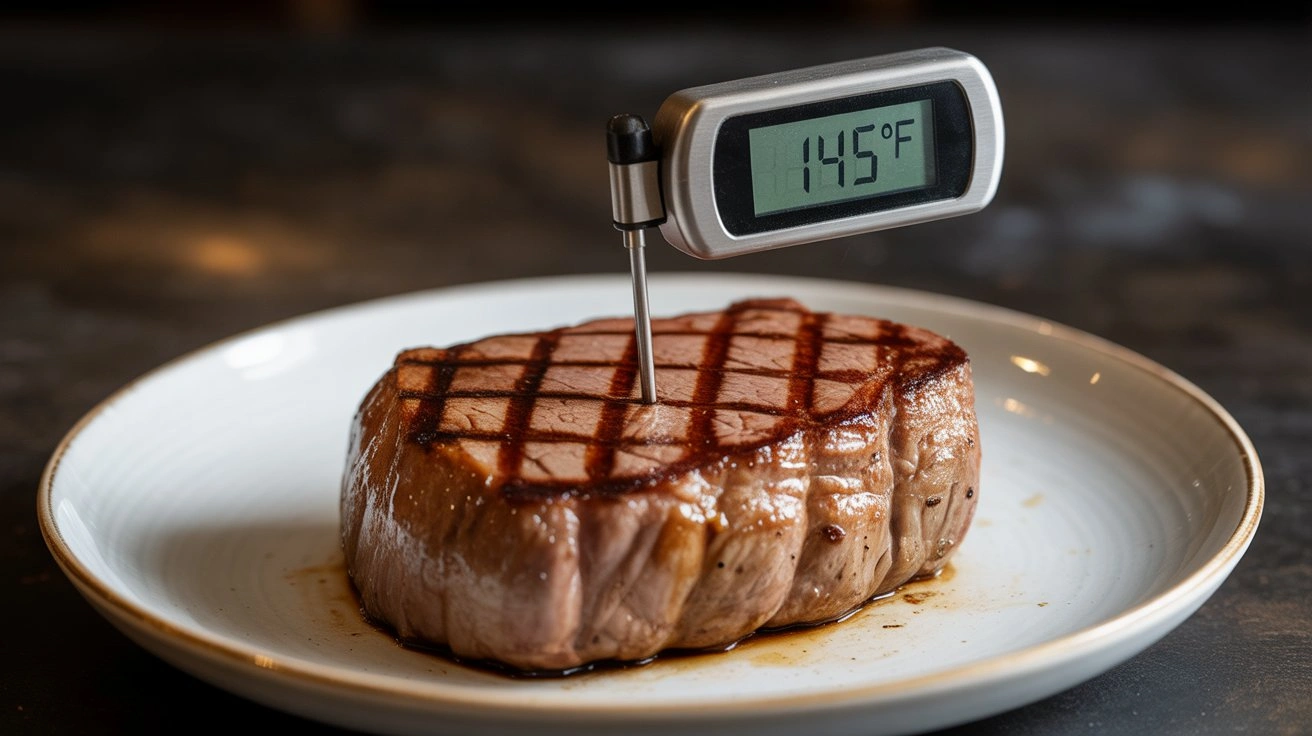
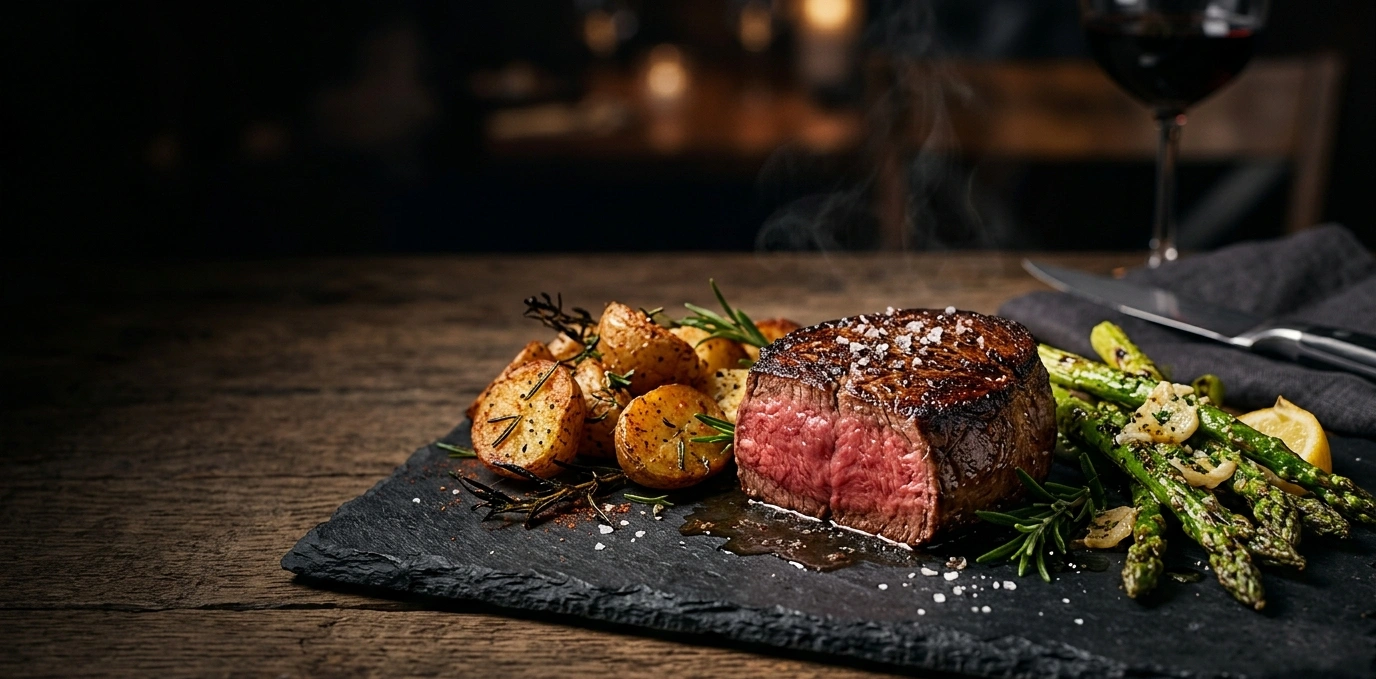
An 8 oz sirloin steak contains approximately 496 calories and 56 grams of protein. It has 29g of fat and less than 1g of carbohydrates. Compared to most high-protein foods, an 8 oz steak delivers an exceptional protein-to-calorie ratio — one of the highest of any whole food. The exact numbers shift by cut: a ribeye runs higher in fat and calories, a filet mignon lower.
8 oz Steak Nutrition Facts — The Complete Breakdown
The nutrition of an 8 oz steak varies significantly by cut. Sirloin is the standard reference point because it represents the middle ground — leaner than ribeye, more flavorful than filet, and widely available. Here is the complete breakdown for an 8 oz sirloin cooked to medium:
Values for 8 oz (225g) cooked sirloin steak. Raw weight is approximately 10–10.5 oz before cooking due to moisture loss.
Macronutrient Distribution
Fat contributes 9 kcal per gram vs 4 kcal for protein — which is why fat contributes more calories despite being a smaller number in grams than protein.
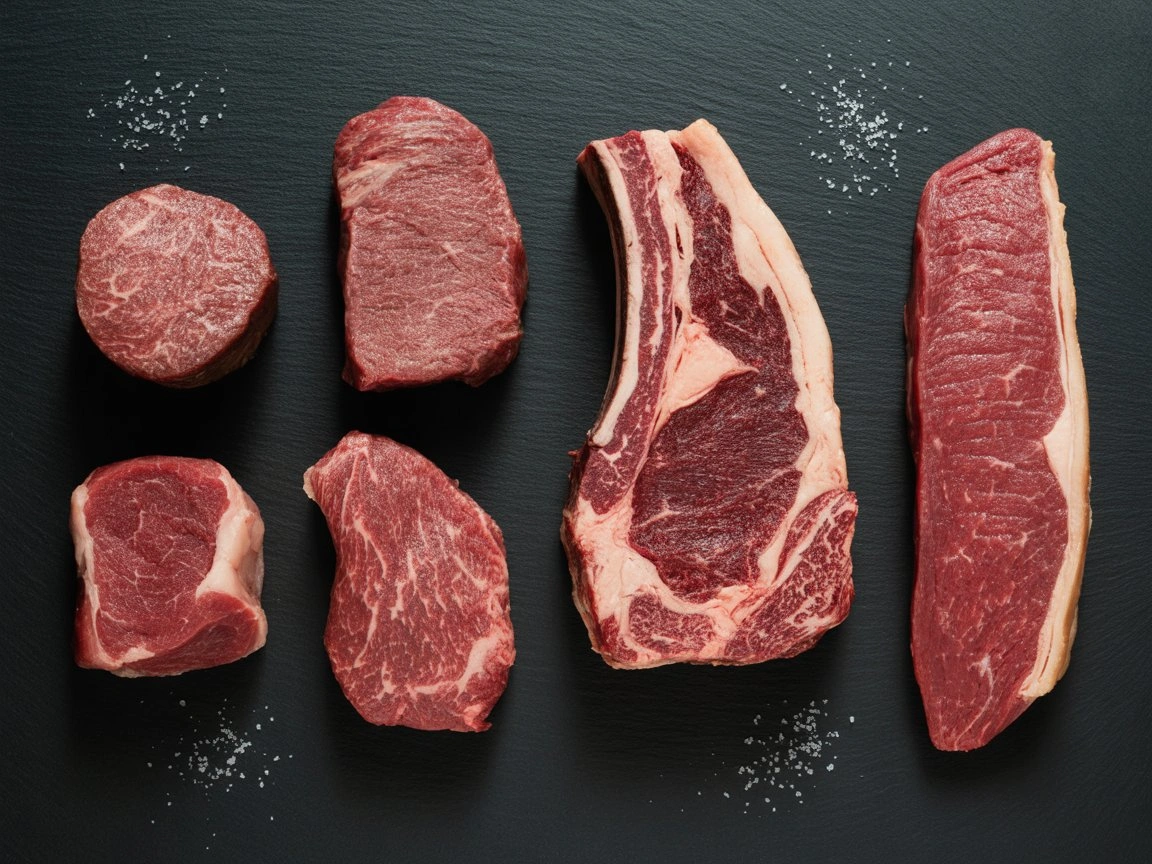
8 oz Steak Calories by Cut — Full Comparison
The cut of beef determines the fat content, and the fat content determines the calorie count. Protein levels are relatively consistent across cuts (steak is steak), but fat ranges from 8g in a very lean flank steak to over 40g in a richly marbled ribeye.
| Cut (8 oz cooked) | Calories | Protein | Fat | Sat Fat | Best For |
|---|---|---|---|---|---|
| Filet Mignon | 440 kcal | 54g | 22g | 9g | Lean, elegant |
| Sirloin | 496 kcal | 56g | 29g | 11g | Best protein ratio |
| Flank Steak | 420 kcal | 58g | 18g | 8g | Leanest option |
| Skirt Steak | 460 kcal | 52g | 26g | 10g | Bold flavor, lean |
| NY Strip | 528 kcal | 54g | 34g | 13g | Rich & tender |
| Ribeye | 612 kcal | 50g | 44g | 18g | Most indulgent |
| T-Bone | 540 kcal | 52g | 36g | 14g | Steakhouse classic |
Best protein-to-calorie ratio: Flank steak wins on pure protein efficiency — 58g of protein at 420 calories. Sirloin is a close second and easier to find. If you are optimizing for protein intake without excess calories, flank or sirloin are the clear choices over ribeye.
Protein in 8 oz Sirloin Steak — Why It Matters
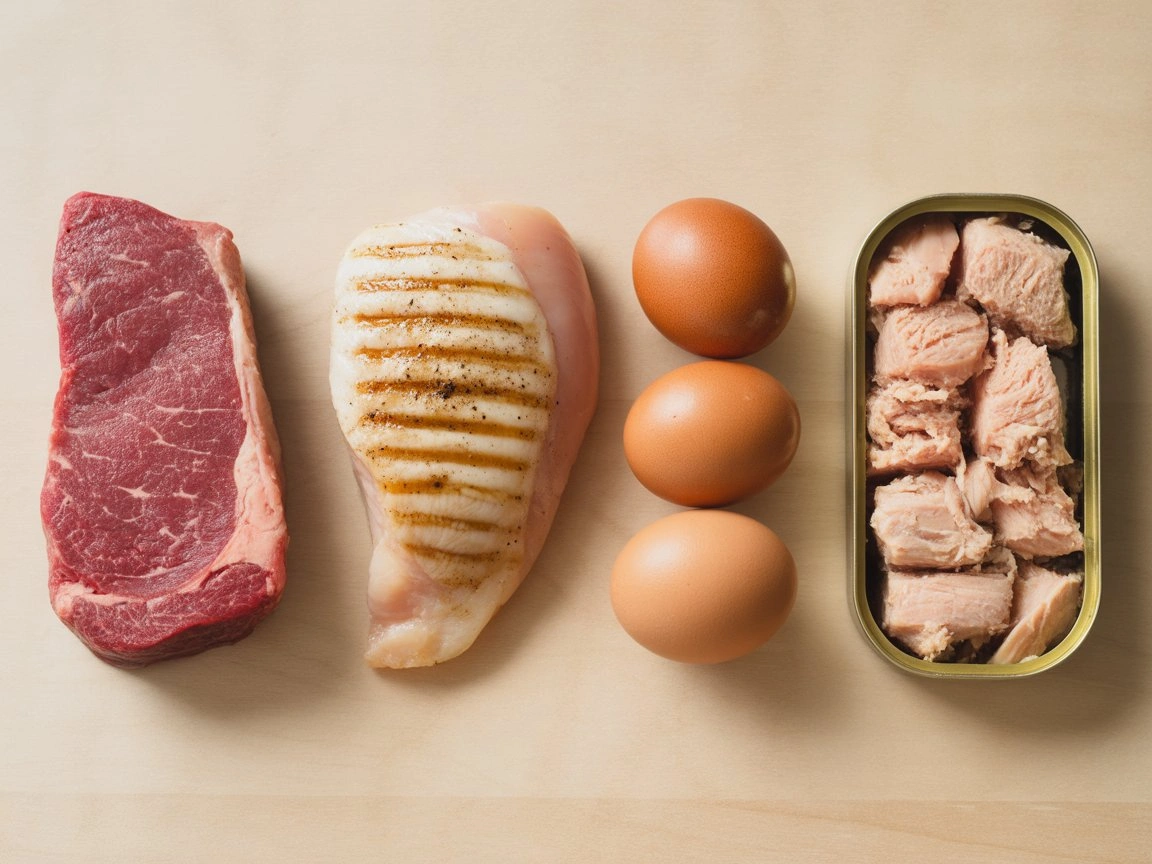
An 8 oz sirloin steak delivers approximately 56 grams of complete protein — meaning it contains all nine essential amino acids in adequate proportions. This is the protein profile that matters for muscle maintenance, recovery, and growth. Compare this to other common protein sources:
| Protein Source | Serving Size | Protein | Calories | Complete? |
|---|---|---|---|---|
| 8 oz Sirloin Steak | 8 oz | 56g | 496 kcal | ✓ Yes |
| Chicken Breast | 8 oz | 54g | 330 kcal | ✓ Yes |
| Whole Eggs | 4 large | 28g | 280 kcal | ✓ Yes |
| Greek Yogurt | 1 cup | 17g | 130 kcal | ✓ Yes |
| Canned Tuna | 5 oz can | 33g | 150 kcal | ✓ Yes |
| Black Beans | 1 cup cooked | 15g | 227 kcal | ✗ No |
| Whey Protein | 1 scoop (30g) | 25g | 120 kcal | ✓ Yes |
Steak is not the leanest protein source, but it is one of the most nutrient-dense. Beyond protein, an 8 oz sirloin delivers significant amounts of zinc (critical for immune function), iron (heme iron, the most bioavailable form), B12 (exclusively from animal sources), and creatine (naturally occurring in beef, supporting energy production in muscle tissue).
🔢 Steak Nutrition Calculator
Select your cut, weight, and unit. The calculator estimates calories, protein, and fat based on USDA nutritional data for cooked beef.
Please enter a valid weight (1–9999).
Based on USDA nutritional data for cooked beef. Values are approximate and vary by exact fat content and cooking method.
🔥 Perfect Pan-Seared 8 oz Sirloin
Ingredients
Instructions
- Bring to room temp: Remove the sirloin from the refrigerator 30 minutes before cooking. Pat completely dry with paper towels — a dry surface is essential for a proper sear. Season all sides generously with salt, pepper, and garlic powder.
- Preheat the skillet: Place a cast-iron skillet over high heat for 3 full minutes until it is smoking. Add the oil and swirl to coat the surface.
- Sear: Lay the steak in the skillet. Do not move it for 3–4 minutes. A deep brown crust should form. Flip once and sear the second side 3–4 minutes. For a 1-inch sirloin, this produces medium-rare.
- Baste with butter: Add butter, smashed garlic, and the herb sprig. Tilt the pan and spoon the butter over the steak repeatedly for 60 seconds. This bastes the top with flavor and helps the fat side render.
- Check temperature: Insert an instant-read thermometer into the thickest part. Target: 130–135°F for medium-rare, 140–145°F for medium. Per the USDA safe temperature chart, 145°F is the minimum safe internal temperature for whole beef cuts.
- Rest and slice: Transfer to a wire rack and rest 5 minutes uncovered. Slice against the grain and serve. The rest period adds 3–5 degrees of carryover cooking and redistributes the juices throughout the cut.
Step-by-Step: Cooking the Perfect 8 oz Sirloin
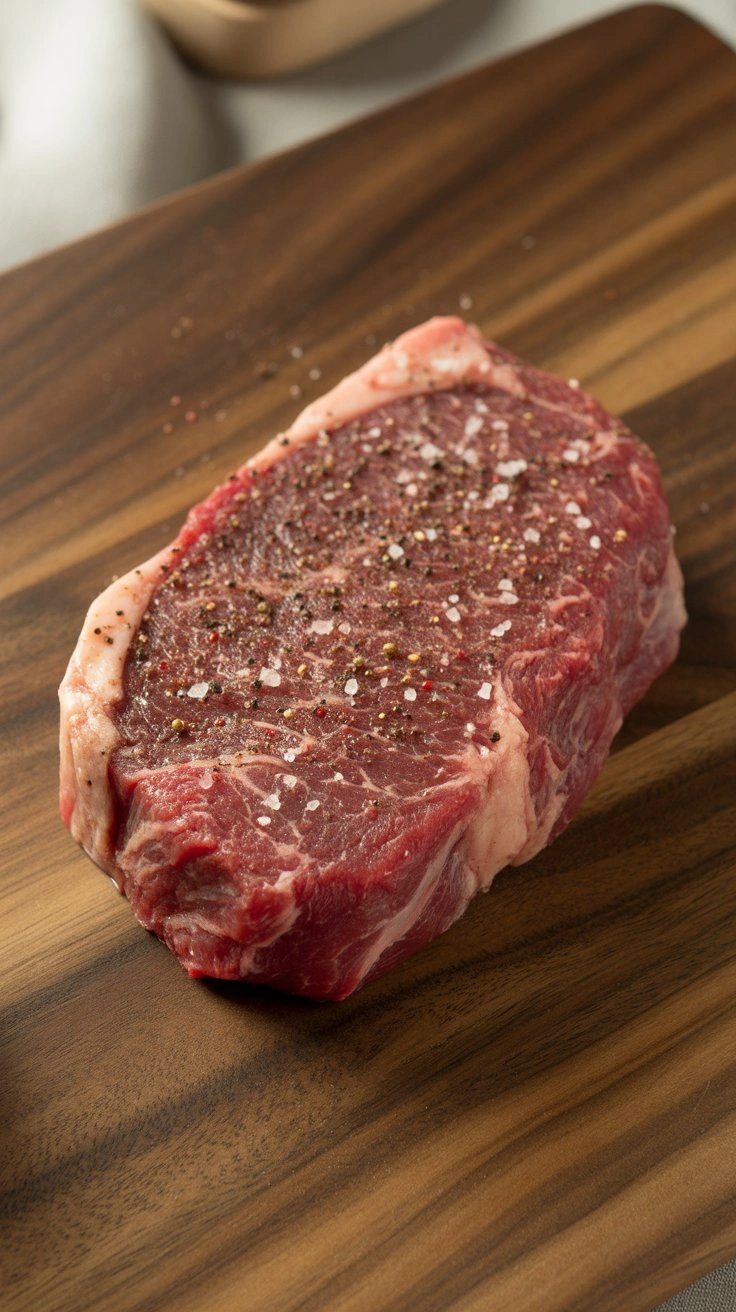
Season and Dry the Surface
Pat the sirloin completely dry on all surfaces and edges — this step alone determines whether you get a sear or a steam. Season generously with kosher salt, black pepper, and garlic powder on both sides and the fat cap. Let the steak sit at room temperature for 30 minutes if time allows. A cold steak hitting a hot pan drops the temperature dramatically and can result in uneven cooking through the 8 oz thickness.
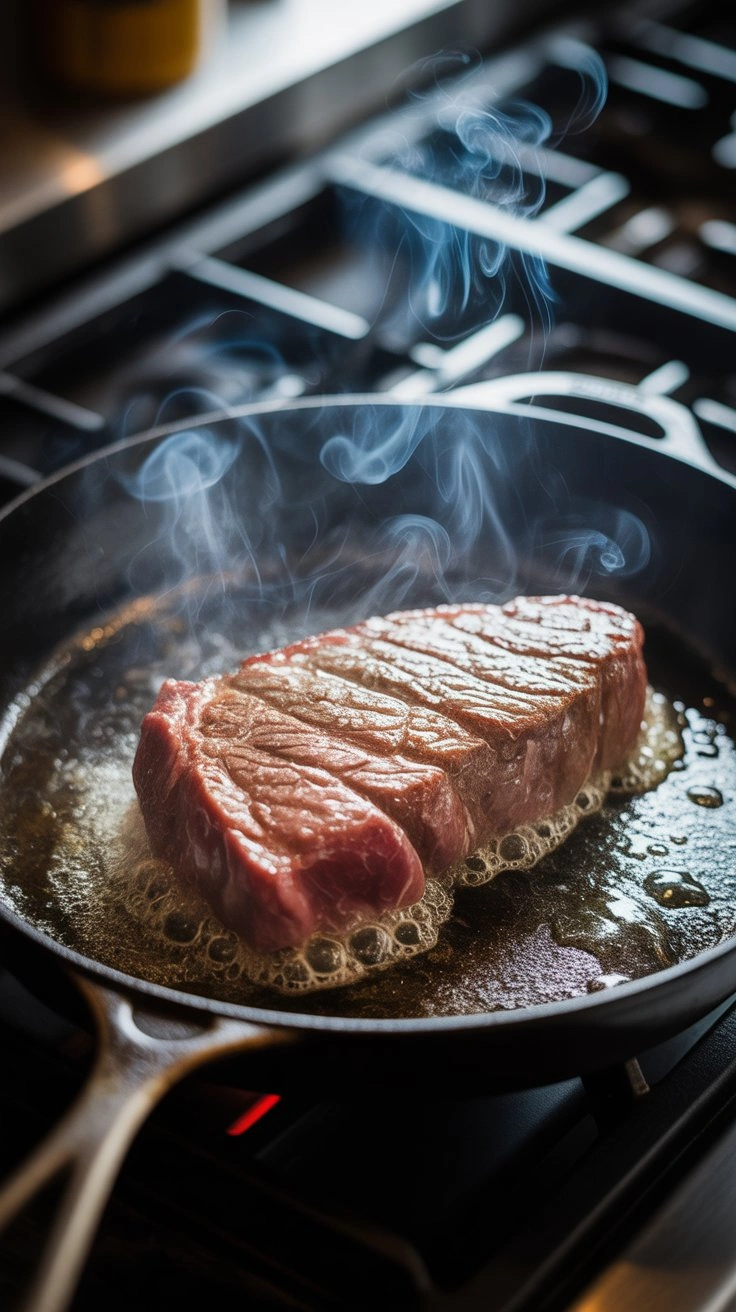
Sear in a Screaming-Hot Pan
The cast-iron skillet must be smoking before the steak goes in. Lay the sirloin away from you to avoid oil splash. Within 30 seconds you should hear strong sizzling and see the edges of the steak changing color upward from the pan. Do not move the steak — leave it completely undisturbed for 3–4 minutes. Lifting too early breaks the Maillard crust before it has set. Flip once. The first side should show deep mahogany-brown with clearly defined sear marks.
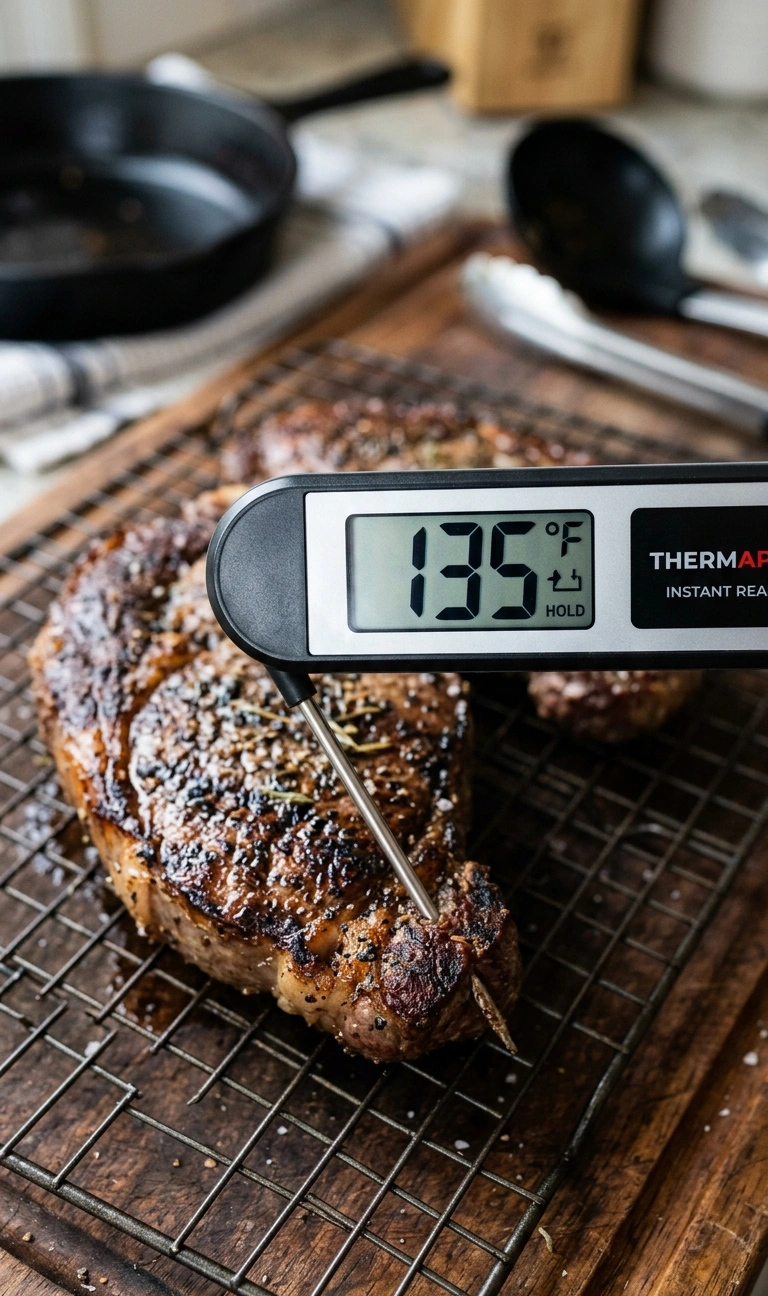
Check Temperature — Don’t Guess
For an 8 oz sirloin at 1 inch thick, use an instant-read thermometer rather than timing alone. Insert it horizontally into the thickest point of the steak. 130–135°F: medium-rare, pink through the center. 140–145°F: medium, slightly pink. 150–155°F: medium-well. At 8 oz, the difference between medium-rare and medium-well can be as little as 2 additional minutes — checking temperature removes the guesswork entirely.
Is an 8 oz Steak Healthy? The Honest Answer
The honest answer is that it depends on context, and the context is almost always favorable for active adults. An 8 oz sirloin is not a low-fat food — it has 29g of fat and approximately 10g of saturated fat. But it is also one of the most protein-dense, micronutrient-rich whole foods you can eat.
Current dietary research has significantly shifted from the blanket anti-red-meat position of the 1990s. The consensus among sports nutrition researchers and many registered dietitians is that unprocessed red meat (steak, not deli meats or hot dogs) in the context of an otherwise balanced diet is not associated with meaningful increased health risk for most people. A 2020 meta-analysis in Annals of Internal Medicine found that reducing unprocessed red meat consumption produced minimal measurable health benefit for healthy adults.
Where context matters: The concern with red meat is primarily with processed products (bacon, sausage, deli meats) which contain added sodium, nitrates, and preservatives. An 8 oz sirloin with no added ingredients is not in the same category. If you have specific cardiovascular concerns or are managing cholesterol, discuss red meat frequency with your healthcare provider.
For meal planning around an 8 oz steak, pair it with one of the steak sides in our must-try steak sides guide to build a nutritionally complete plate. Adding roasted asparagus or broccoli adds fiber and micronutrients that the steak alone does not provide. For timing the steak properly on a grill, our steak grilling timing guide covers 8 oz cuts specifically.
Frequently Asked Questions
An 8 oz steak contains 420–612 calories depending on the cut. An 8 oz sirloin has approximately 496 calories. A leaner flank steak has about 420 calories. A fatty ribeye at 8 oz has approximately 612 calories. All figures are for cooked weight — raw steak loses 20–25% of its weight during cooking.
An 8 oz cooked sirloin steak contains approximately 56 grams of protein. This is complete protein — all nine essential amino acids in adequate amounts, including leucine which triggers muscle protein synthesis. It is roughly equivalent to the protein in 8 oz of chicken breast (54g) but with significantly more micronutrients including zinc, heme iron, and B12.
8 oz (225g) is the standard steakhouse serving size and appropriate for most active adults. It provides approximately 56g of protein, which covers a substantial portion of daily protein needs. For sedentary individuals aiming to reduce calories, a 6 oz sirloin (~372 calories, ~42g protein) may be more appropriate. For athletes, 8 oz or more is a reasonable single-meal protein target.
The leanest 8 oz cuts are flank steak (420 kcal, 58g protein, 18g fat) and filet mignon (440 kcal, 54g protein, 22g fat). Sirloin offers the best overall balance of protein density, flavor, and moderate fat. If minimizing saturated fat is the goal, avoid ribeye — at 8 oz it has nearly twice the saturated fat of a sirloin.
An 8 oz sirloin or strip at 1 inch thick takes 3–4 minutes per side in a smoking-hot cast-iron skillet for medium-rare, or 4–5 minutes per side for medium. Total active cook time is 8–10 minutes. Always rest the steak for 5 minutes after cooking before slicing. Internal temperature: 130–135°F for medium-rare, 145°F for medium (USDA safe minimum).
The USDA Dietary Guidelines suggest 5.5 oz of protein foods per day as a general baseline. An 8 oz steak exceeds this but fits well within the needs of active adults and athletes. The USDA food safety guidelines recommend refrigerating any leftover cooked steak within 2 hours and consuming within 3–4 days.