This pork loin roast recipe Is So Juicy, It Should Be Illegal
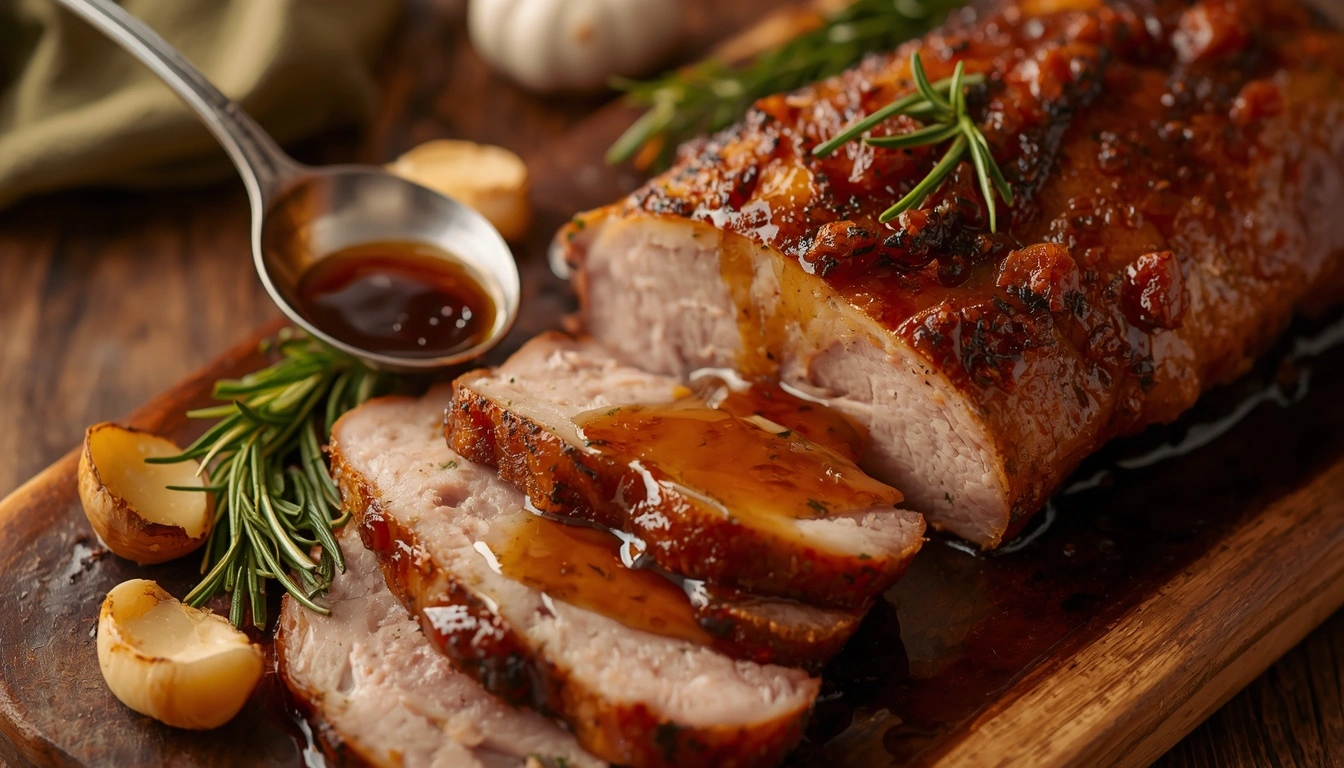
This pork loin roast recipe stays juicy because it uses a flavorful garlic-herb paste, a steady 375°F oven, a small amount of pan broth, and one non-negotiable rule: pull the roast when the thickest part reaches 145°F, then rest before slicing. For most 3–4 lb pork loin roasts, that means about 50–75 minutes in the oven.
Pork Loin Roast Recipe: The Juicy Method
Pork loin looks forgiving because it is a large roast, but it behaves like a lean cut. That means it can go from tender and juicy to dry and chalky faster than people expect. The fix is not complicated: season boldly, roast with control, check temperature early, and let the roast rest before cutting.
This guide walks through cooking pork loin in the oven with clear timing, pork loin temp oven guidance, slicing tips, storage advice, and a simple recipe block you can use any weeknight or holiday meal.
Why Pork Loin Gets Dry So Easily
Pork loin is a lean roast cut from the back of the pig. It is much larger than pork tenderloin, but it does not have the heavy marbling or connective tissue of pork shoulder. That is why pork loin is best cooked like a controlled roast, not like a low-and-slow pulled pork cut.
The roast needs enough oven heat to brown the outside, but it also needs careful temperature monitoring so the center does not overshoot. For a deeper pork doneness reference, this internal temperature for pork guide is a useful companion while you cook.
The real secret: Pork loin does not need more time. It needs better timing. Once it reaches 145°F in the center, the roast should come out and rest.
How Long to Cook a Pork Loin in the Oven
The most useful planning range is about 20 minutes per pound, but pork loin shape matters. A short, thick roast cooks differently from a long, narrow roast even if both weigh the same.
For this roasted pork loin recipe, start checking early with an instant-read thermometer. Time helps you plan dinner. Temperature tells you when dinner is actually ready.
| Pork Loin Weight | Oven Temp | Approx. Roast Pork Oven Time | Pull Temp |
|---|---|---|---|
| 2 lb | 375°F | 40–50 min | 145°F |
| 3 lb | 375°F | 50–65 min | 145°F |
| 4 lb | 375°F | 65–75 min | 145°F |
| 5 lb | 375°F | 75–90 min | 145°F |
FoodSafety.gov lists pork loin roast as a fresh pork roasting cut and provides a useful public roasting chart for general timing references. For doneness, always confirm with the USDA safe temperature chart.
Best Pork Loin Temp Oven Setting
The best pork loin temp oven setting for this method is 375°F. It gives the roast better surface color than a very low oven, while still giving the center enough time to cook evenly.
You can roast pork loin at 350°F, especially for a larger roast, but 375°F gives a better balance of browning and moisture for most 3–4 lb boneless roasts. If you prefer to compare official timing ranges, the FoodSafety.gov meat and poultry roasting charts are a helpful reference.
| Oven Temp | Result | Best Use |
|---|---|---|
| 350°F | Gentler cooking, lighter browning | Large roasts or cautious cooking |
| 375°F | Good browning and juicy center | Best all-purpose oven setting |
| 400°F | Faster color, smaller margin for error | Smaller roasts with close monitoring |
Pork Loin vs Pork Tenderloin
Pork loin and pork tenderloin are not the same cut. Pork loin is wide, firm, and roast-sized. Pork tenderloin is narrow, delicate, and cooks much faster. Mixing them up is one of the easiest ways to ruin dinner.
If you like pork cut comparisons, this guide to pork chop vs loin explains how loin-based cuts show up in different forms at the butcher counter.
Do not use this timing for pork tenderloin. Tenderloin is much smaller and usually cooks in a fraction of the time. This article is for pork loin roast.
Video: Pork Loin Roast Reference
Use this video as a visual reference for handling and roasting pork loin. Follow the temperature and timing guidance in this article when cooking.
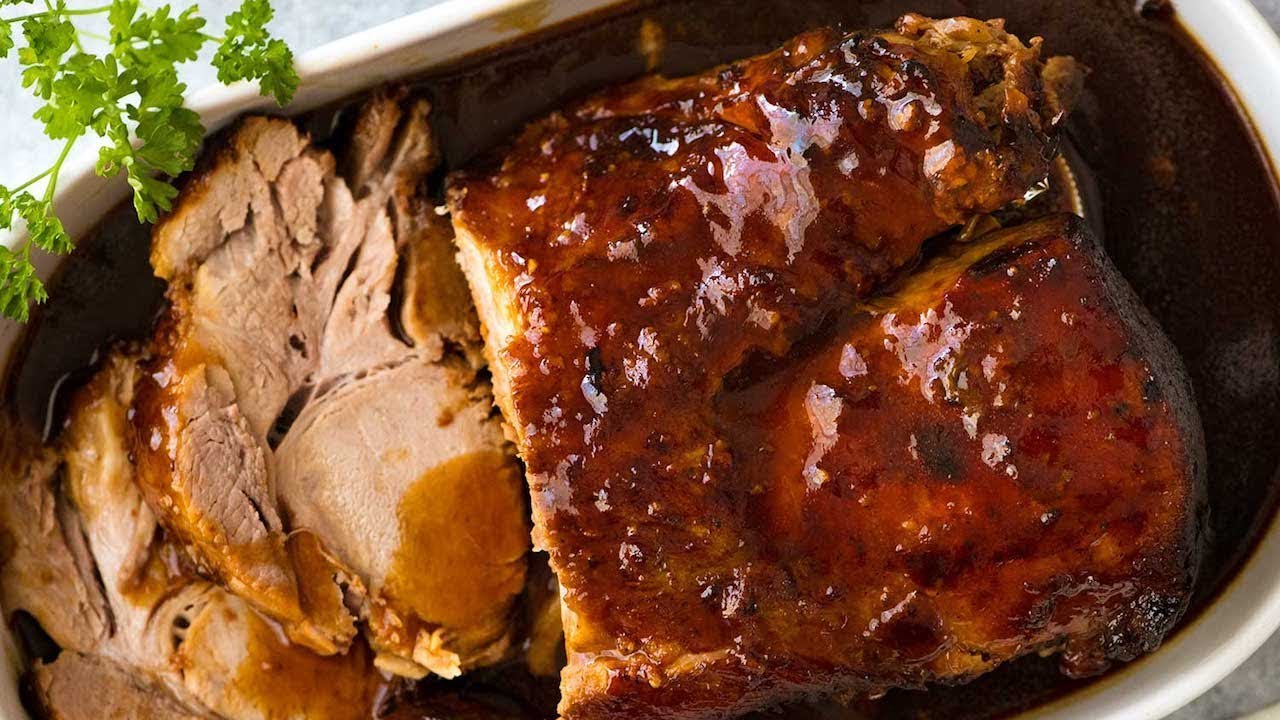
🥩 Juicy Oven Pork Loin Roast
Ingredients
Instructions
- Dry the roast: Pat the pork loin dry on all sides. If there is a thick fat cap, trim it lightly but do not remove every bit of fat.
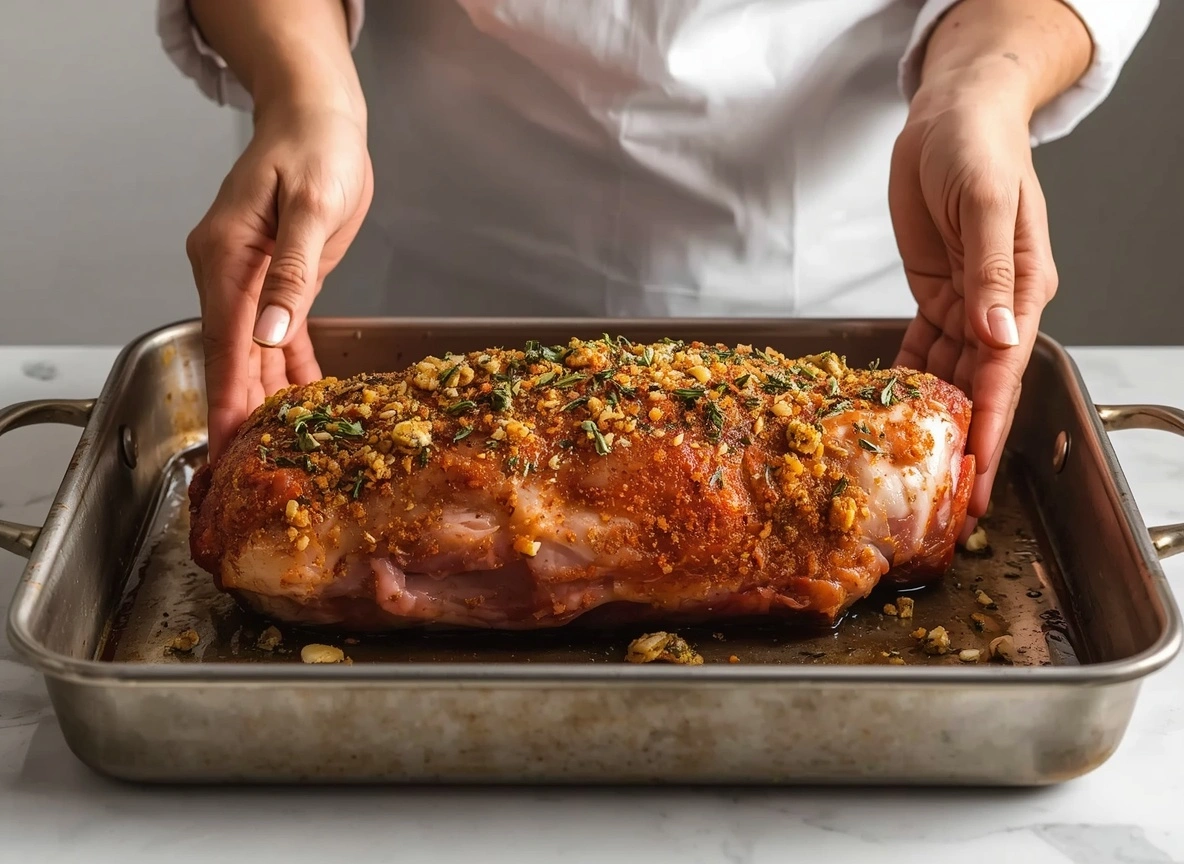
- Make the seasoning paste: Mix olive oil, Dijon mustard, garlic, softened butter, kosher salt, black pepper, smoked paprika, thyme, and rosemary.
- Season generously: Rub the paste over the entire roast, including the sides and ends. Place the pork in a roasting pan with chicken broth underneath.
- Roast: Cook at 375°F until the thickest part reaches 145°F. Start checking early so the roast does not overshoot.
- Rest: Move the roast to a cutting board and rest for at least 10 minutes. Tent loosely with foil if needed.
- Slice: Slice across the grain into medium-thick pieces and spoon pan juices over the top.
Step-by-Step: Cooking Pork Loin in the Oven
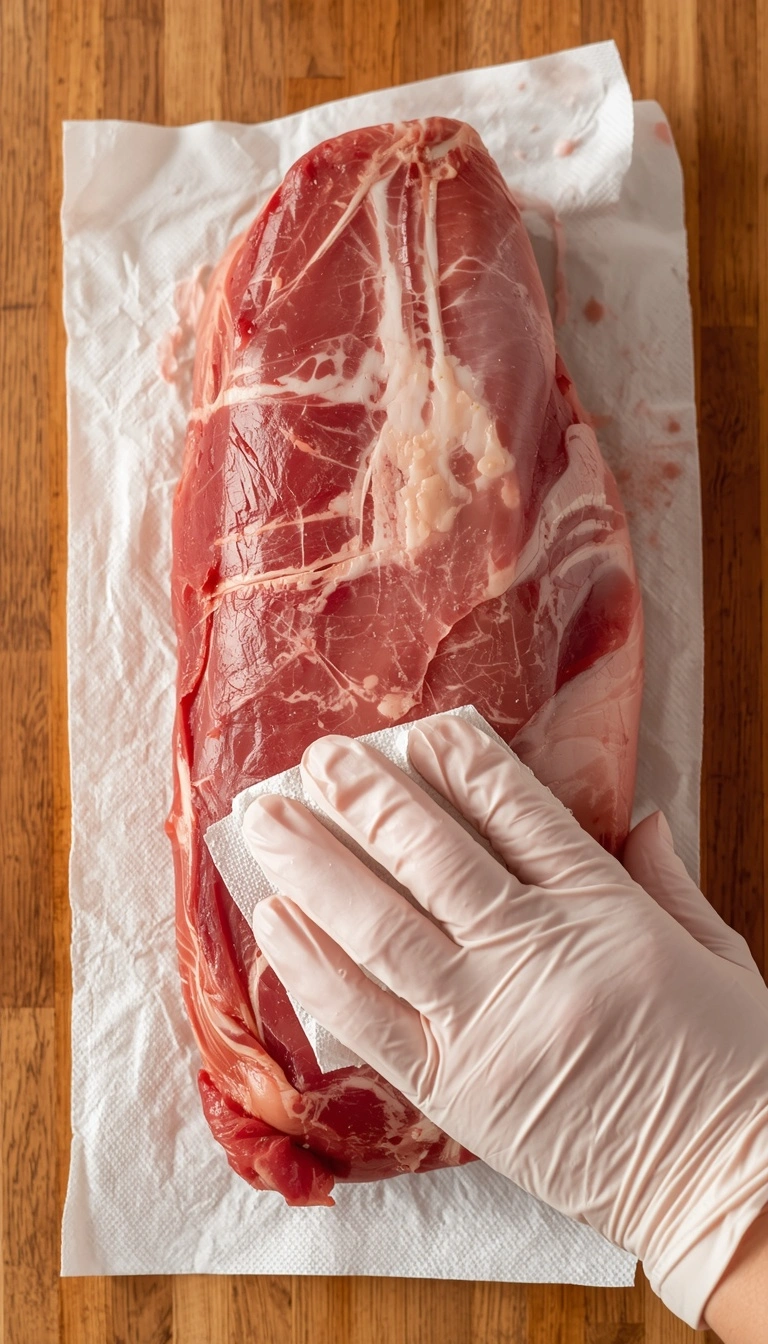
Pat the Pork Loin Dry
Moisture on the surface prevents the outside from roasting properly. Dry the pork loin well with paper towels before adding the seasoning paste. This small step helps the crust build flavor instead of steaming.
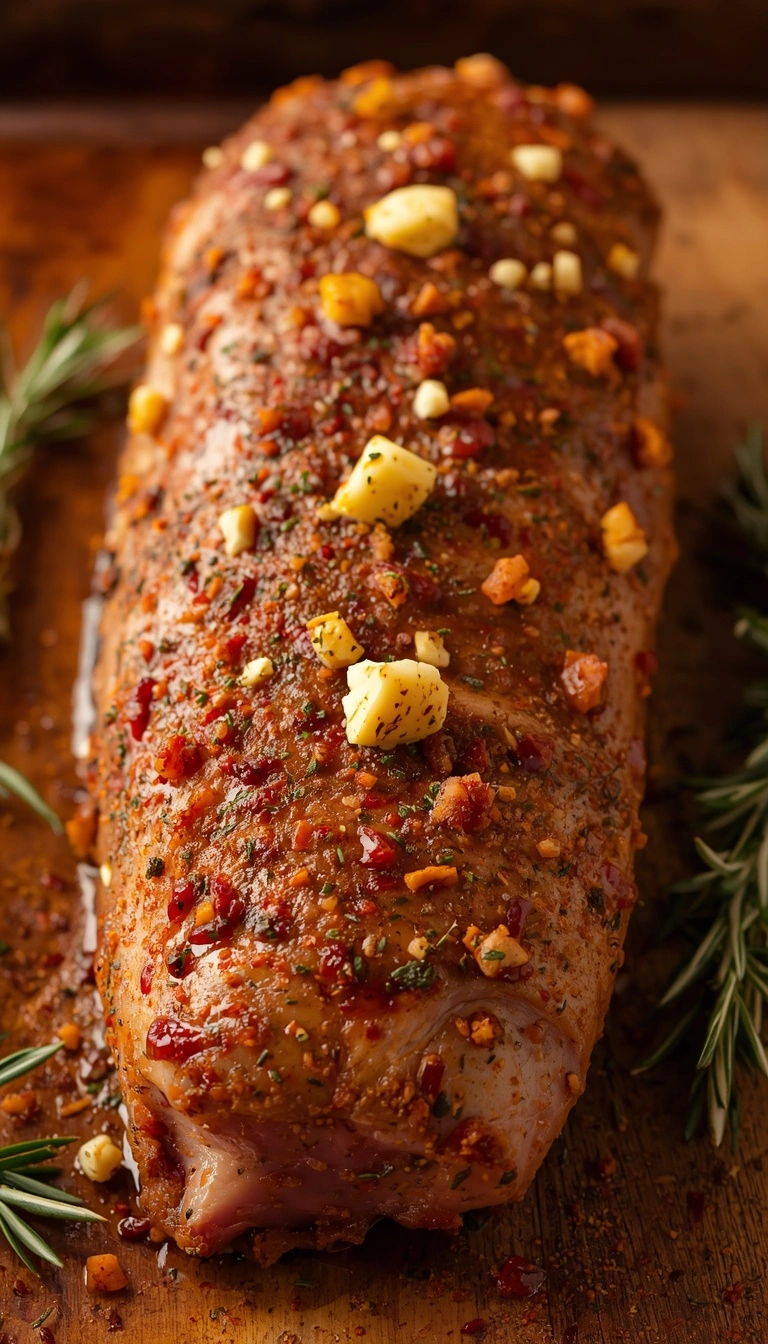
Rub with Garlic, Mustard, Herbs, and Butter
The seasoning paste does more than add flavor. It helps carry fat across the lean surface of the roast. Press the paste into the sides and ends so every slice has a seasoned edge.
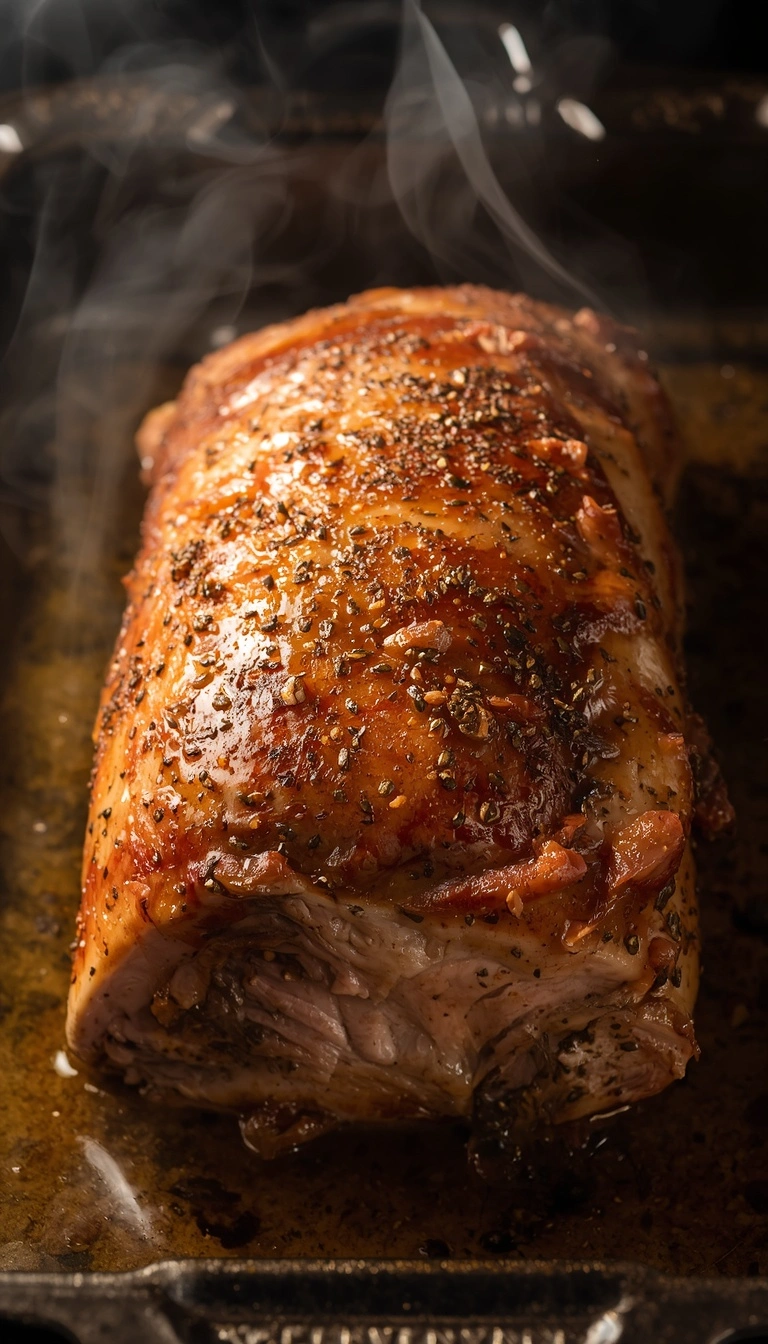
Roast at 375°F
Place the pork loin in the oven with broth in the bottom of the pan. The broth should not cover the roast. It is there to protect the pan juices and help with moisture, not to boil the meat.
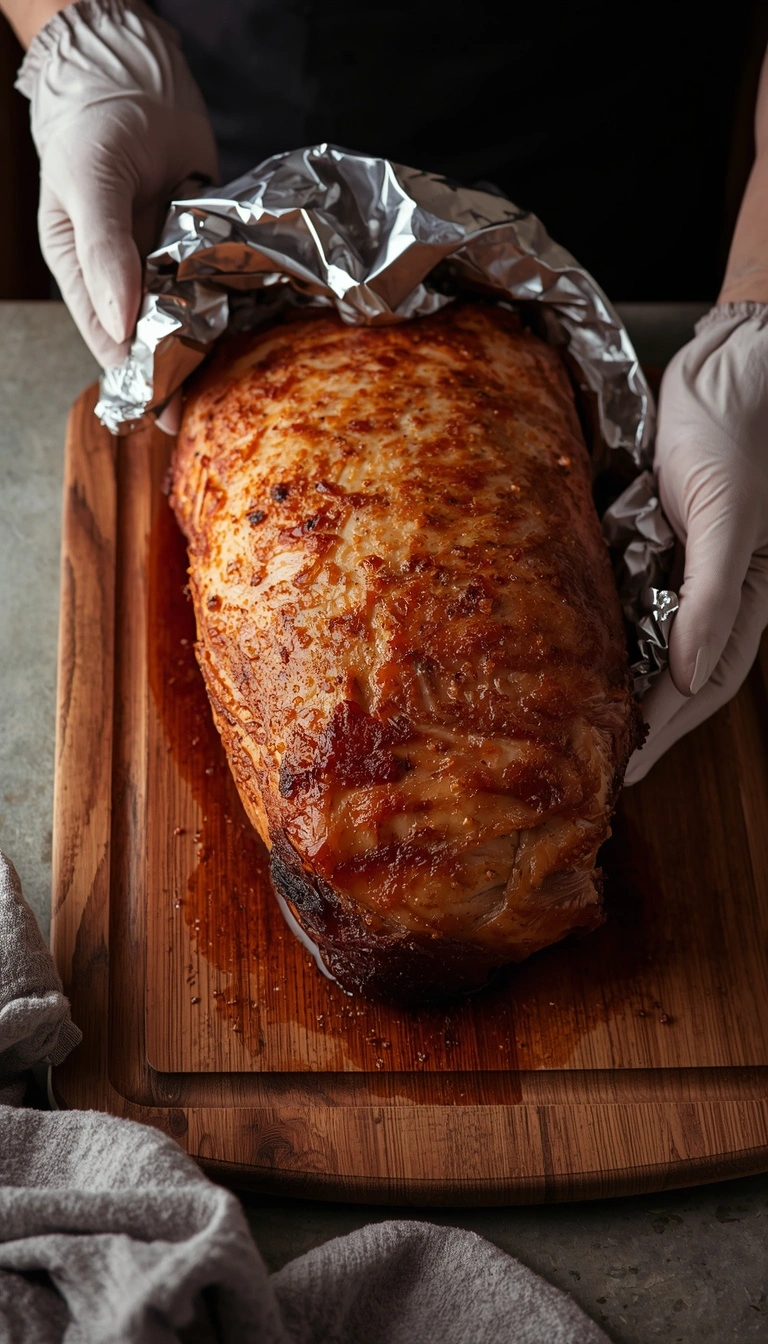
Rest Before Slicing
Resting is not optional with pork loin. The roast needs time for the juices to settle. If you slice immediately, much of the moisture ends up on the cutting board instead of inside the meat.
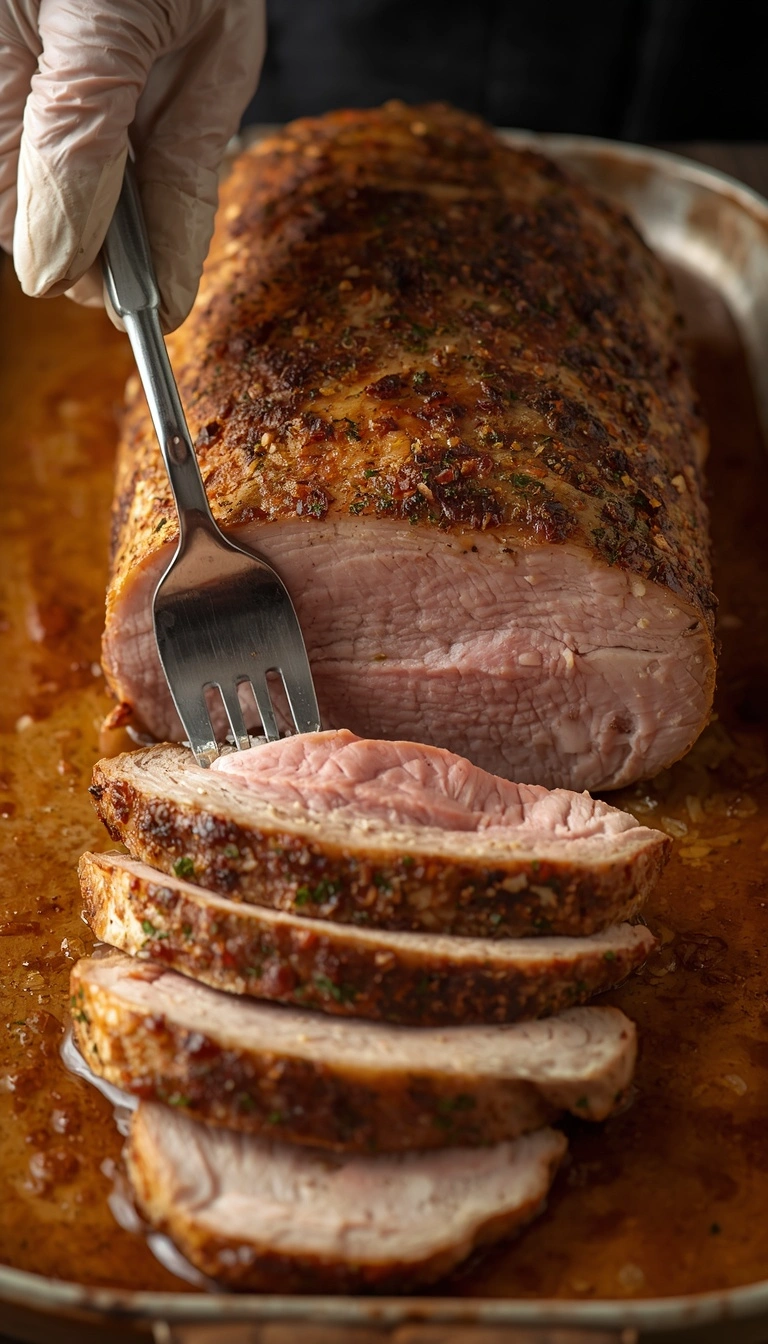
Slice Across the Grain
Slice the roast into medium-thick pieces across the grain. Very thin slices can dry out quickly, while overly thick slices feel less tender. Spoon warm pan juices over the top just before serving.
Expert Tips for a Juicy Pork Loin Roast
Use Temperature, Not Guesswork
A thermometer is the most important tool for pork loin. Pull at 145°F and rest. Time alone is only a rough guide.
Do Not Over-Trim
A little surface fat helps protect the roast and improves flavor. Trim thick hard fat, but do not strip it completely bare.
Add Broth to the Pan
A small amount of broth keeps the pan drippings from burning and gives you a simple spoon-over sauce after roasting.
Start Checking Early
Begin checking 10–15 minutes before the low end of the time range. Lean pork can finish faster than expected.
Use a Sharp Knife
A sharp slicing knife gives clean slices without tearing the roast. Ragged slices lose juices faster.
Serve with Pan Juices
Even perfectly cooked pork loin benefits from pan juices. Spoon them over the slices right before serving.
Common Pork Loin Roast Mistakes
- Cooking too long: Pork loin is lean. Extra time does not make it more tender; it makes it dry.
- Skipping the thermometer: The roast can look done on the outside before the center is ready.
- Slicing immediately: Resting protects the juices and improves texture.
- Using tenderloin timing: Pork tenderloin is a different cut and cooks much faster.
- Not seasoning enough: Pork loin is mild, so the outside needs a confident rub.
For more pork dinner ideas that cook faster than a roast, browse these quick pork chop recipes.
What to Serve with Pork Loin Roast
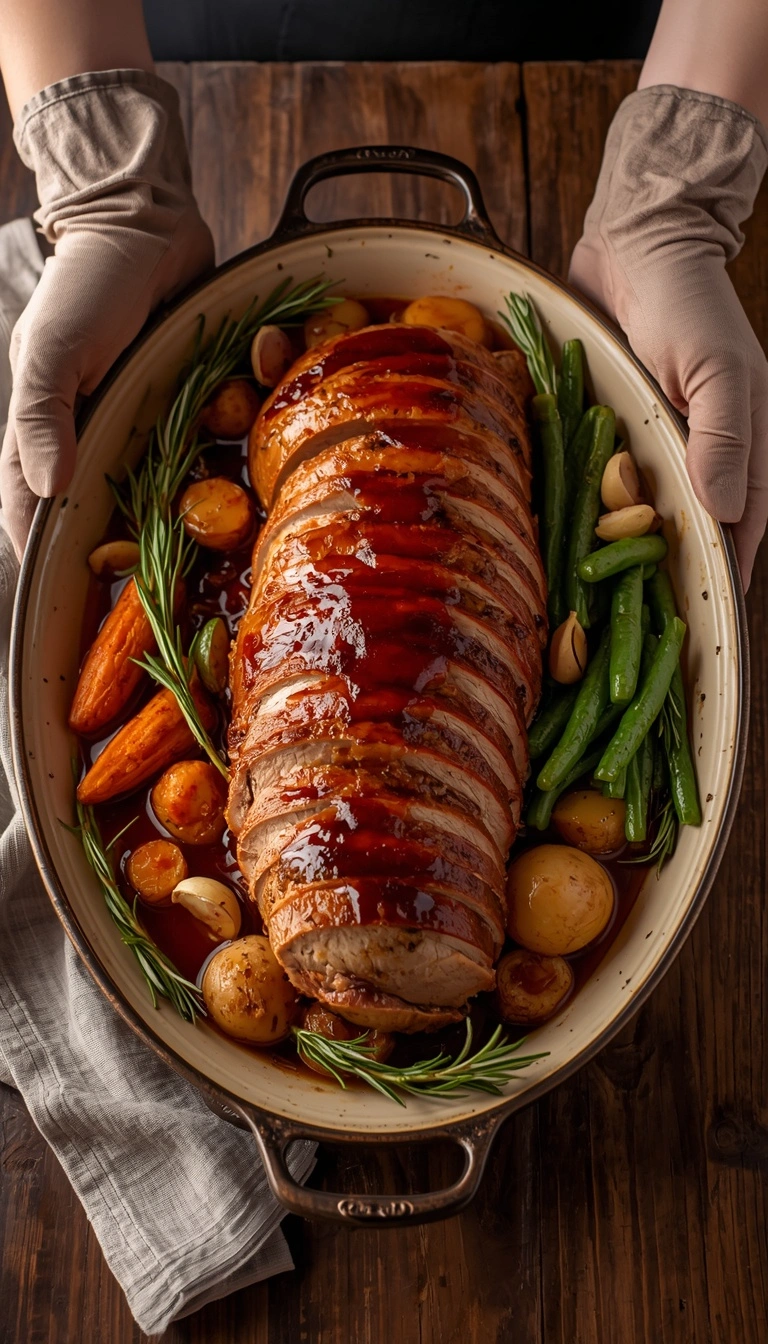
Pork loin roast pairs well with mashed potatoes, roasted carrots, green beans, applesauce, rice pilaf, Brussels sprouts, or a crisp salad. The flavor is savory but flexible, so you can take the meal in a comfort-food direction or keep it lighter.
If you want a different pork technique for another night, this pork cutlet recipe is a good next read because it uses a quicker pan-cooking method instead of roasting.
Storage and Reheating
Storage
Cool leftover pork loin, then refrigerate it in an airtight container with a spoonful of pan juices or broth. This helps protect the slices from drying out.
Reheating
Reheat sliced pork loin gently in a covered skillet with a splash of broth. Low heat is better than high heat. A hot pan can tighten the meat and make it taste dry even if it was cooked correctly the first time.
Leftover safety
For cooked meat leftovers, the USDA leftovers and food safety guide is the best official reference for cooling, storing, and reheating.
🔢 Pork Loin Nutrition Estimator
Estimate approximate calories, protein, and fat for cooked pork loin portions. Values are for cooked pork loin and do not include every spoonful of pan juices or added sides.
Please enter a valid amount (1–9999).
Approximate values. Actual nutrition varies by trimming, roast size, fat cap, seasoning, and pan juices.
Frequently Asked Questions
A 3 to 4 pound pork loin usually takes about 50 to 75 minutes at 375°F, but the best method is to cook by internal temperature. Pull the roast when the thickest part reaches 145°F, then rest before slicing.
375°F is a strong all-purpose oven temperature for pork loin because it gives the outside good color without drying the lean center too quickly.
Pork loin should reach 145°F in the thickest part, followed by a rest. Use an instant-read thermometer because time alone is not reliable for lean roasts.
Roast pork loin uncovered for better color. If the top browns too quickly before the center is done, tent it loosely with foil near the end.
Pork loin is lean, so it usually turns dry when it is overcooked, sliced too soon, or roasted without enough seasoning fat or pan moisture.
No. Pork loin is larger, wider, and better for slicing as a roast. Pork tenderloin is smaller, thinner, and cooks much faster.