Coulotte Steak vs Picanha: Are They the Same Cut !
 Julia
May 3, 2026 · 9 min read
★★★★★
(312 ratings)
Julia
May 3, 2026 · 9 min read
★★★★★
(312 ratings)
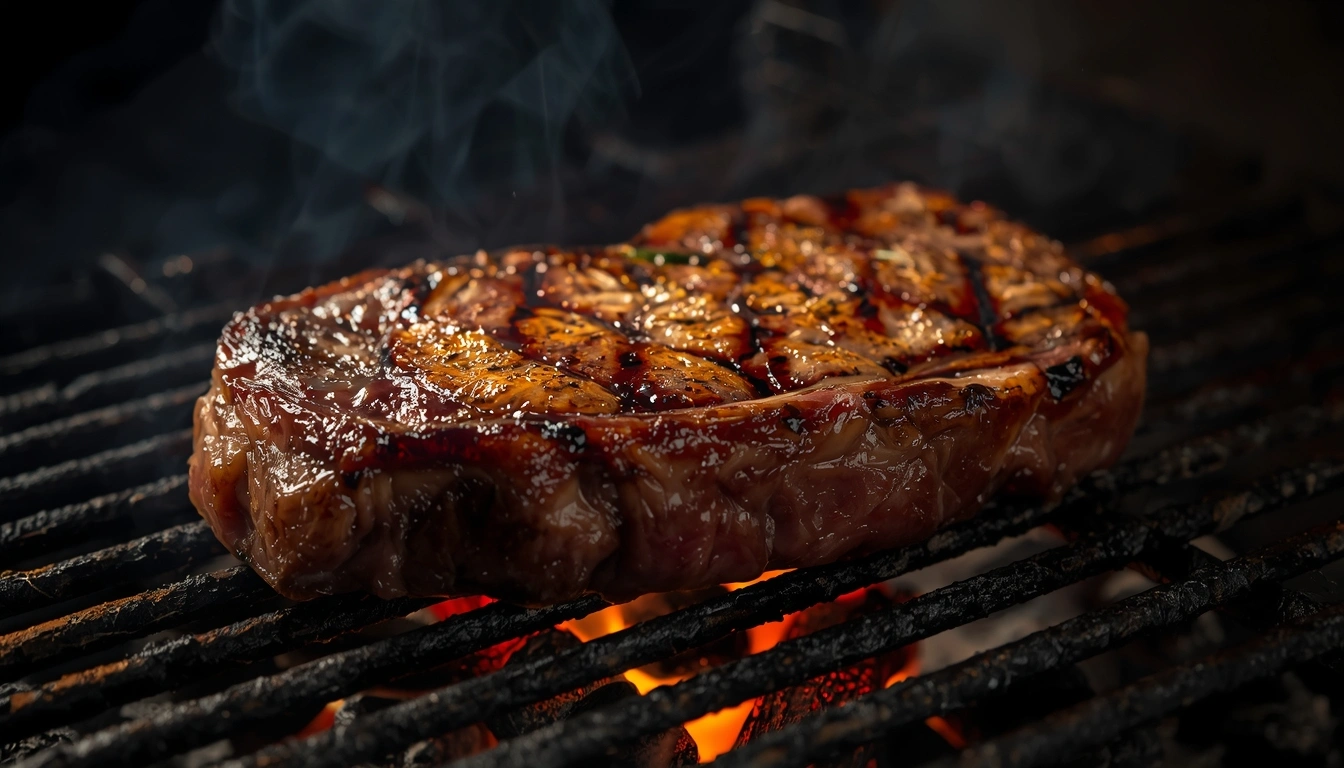
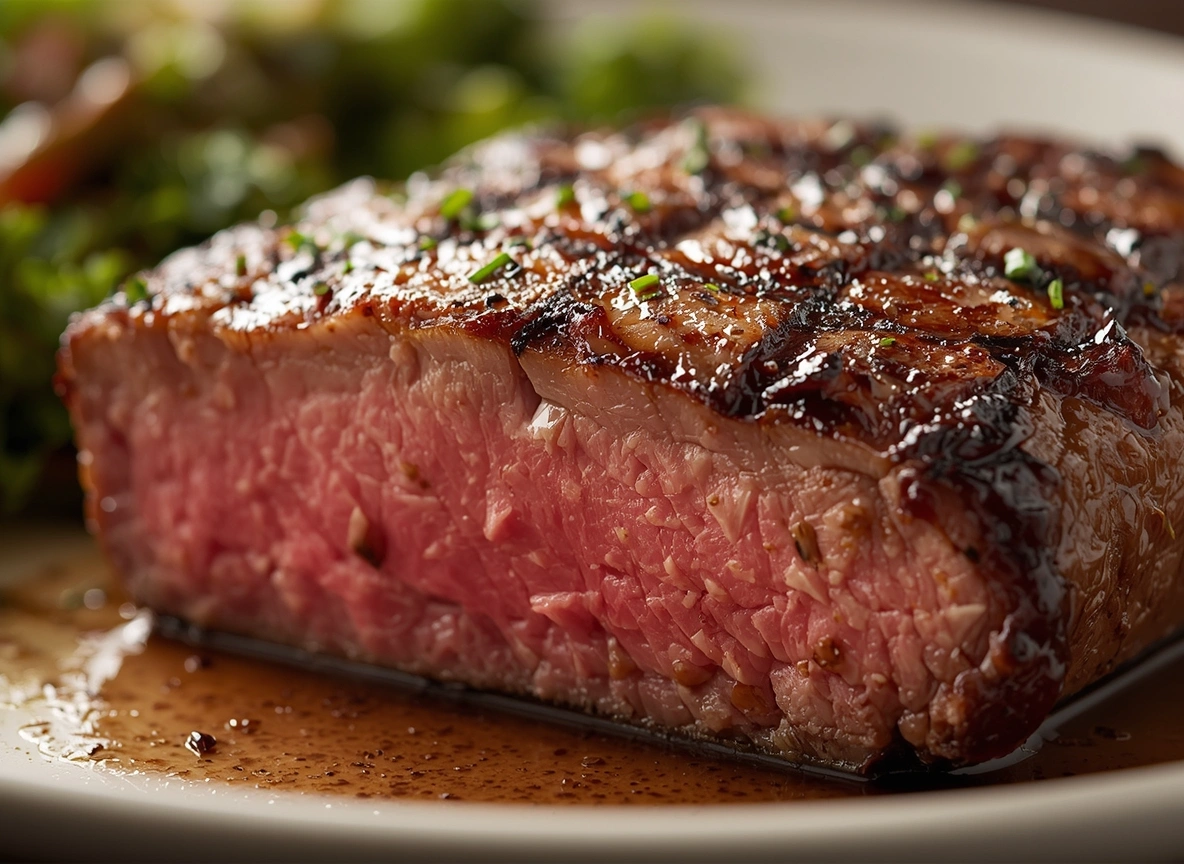
Coulotte steak (top sirloin cap) — the same cut sold as picanha in Brazil — grilled to medium-rare perfection.
Coulotte steak and picanha are the same cut of beef. Both come from the gluteus medius muscle, located on top of the sirloin primal near the rump. The name difference is purely regional — coulotte is the French and American term, picanha is Brazilian. What changes between the two isn’t the muscle; it’s how the cut is butchered, seasoned, and cooked.
What Is Coulotte Steak?
The word coulotte comes from French and loosely translates to “cap” or “back of the hip.” In American butchery it goes by several names: top sirloin cap, sirloin cap, or top cap sirloin. No matter what your butcher calls it, you’re looking at the same specific muscle — the gluteus medius — which sits on top of the sirloin primal, just above the rump.
What makes coulotte steak unmistakable is its thick fat cap — typically ½ to ¾ inch of pure, creamy fat running across the entire top surface of the muscle. This fat cap isn’t decorative. It renders during cooking and continuously bastes the meat from above, producing the deep, nutty, beefy flavor that makes this cut so memorable.
A whole coulotte cap weighs between 1.5 and 3 pounds. At most American butcher counters and specialty grocery stores, it’s sold pre-sliced into individual steaks about 1 inch thick. Each steak has a crescent-shaped fat cap along one edge — that’s your visual ID. Flavor-wise, coulotte lands between top sirloin and ribeye: leaner than a ribeye, but with far more personality than a standard sirloin.
Price-wise, coulotte punches well above its weight. It typically runs $10–$14 per pound at specialty butchers — considerably cheaper than ribeye, and the flavor competes comfortably. Understanding budget-friendly beef cuts like these is how home cooks get restaurant-quality results without restaurant prices.
What Is Picanha?
Picanha holds a near-sacred place in Brazilian food culture. Walk into any churrascaria — a Brazilian steakhouse — and the servers circling the dining room with those long skewers almost certainly have picanha on them. It’s the crown jewel of Brazilian churrasco, the tradition of slow-grilling meat over live fire.
In Brazil, picanha is sold as a whole cap, never pre-sliced. The fat cap is always left completely intact. Before grilling, the cap is folded into a C-shape — fat side out — then skewered lengthwise. Placed over hardwood charcoal, the fat faces the heat first, rendering and dripping onto the coals to create the characteristic high flames and smoky char that define the churrasco experience.
Traditional Brazilian seasoning for picanha is exactly one ingredient: coarse sea salt. Nothing else. The philosophy is straightforward — when the beef and the rendered fat are this good, they need no help. More complex seasonings would only compete with what’s already there.
Outside Brazil, the word “picanha” has become increasingly trendy in the US over the last decade, especially as Brazilian steakhouses expanded across American cities. The problem is that most American supermarkets don’t stock it under that name. If you’ve been hunting for picanha with no luck, the next section explains exactly why — and how to find it immediately.
Same Cut, Different Name — The Full Comparison
The simplest answer: coulotte steak vs picanha is not a debate between two different cuts. It’s a debate between two different butchering traditions working with the same muscle. Here’s exactly how they stack up:
| Feature | Coulotte | Picanha |
|---|---|---|
| Name Origin | French / American | Brazilian Portuguese |
| Same Muscle? | ✓ Gluteus medius | ✓ Gluteus medius |
| Same Primal? | ✓ Sirloin primal | ✓ Sirloin primal |
| Fat Cap | Sometimes trimmed in US | Always kept, never trimmed |
| How It’s Sold | Usually pre-sliced steaks (~1 inch) | Whole cap (1.5–4 lbs) |
| Typical Cooking | Grilled steaks or cast iron | Whole on skewer over charcoal |
| Seasoning Tradition | Salt, pepper, garlic, herbs | Coarse sea salt only |
| Typical Weight | 1.5–3 lbs (whole cap) | 2–4 lbs (whole cap) |
| US Availability | Specialty butchers, some supermarkets | Brazilian markets, specialty stores |
| Price Range (US) | $10–$14 / lb | $12–$18 / lb |
| Target Doneness | Medium-rare (130–135°F) | Medium-rare (130–135°F) |
The bottom line: if you can get your hands on a whole, unsliced top sirloin cap with the fat cap intact from your local butcher — whether they call it coulotte or not — you can cook it exactly like picanha. The cut is identical.
Picanha’s Many Names Around the World
One of the biggest reasons this cut causes so much confusion is the sheer number of names it carries depending on where you are. If you know all of them, you’ll never struggle to find it again:
| Country / Region | Name | Notes |
|---|---|---|
| 🇧🇷 Brazil | Picanha | National icon; whole cap, coarse salt, charcoal |
| 🇫🇷 France / USA | Coulotte | From French for “cap”; often sold pre-sliced in US |
| 🇬🇧 UK / 🇦🇺 Australia | Rump Cap | Widely available; common in supermarkets |
| 🇺🇸 USA (market label) | Top Cap Sirloin / Sirloin Cap | Most common US butcher name; ask for this |
| 🇦🇷 Argentina | Tapa de Cuadril | Classic cut for Argentine asado |
| 🇵🇹 Portugal | Picanha / Alcatra | Same Brazilian name, widely understood |
| 🇩🇪 Germany | Hüftdeckel | Literally “hip cap”; specialty cut at butchers |
Practical tip for US shoppers: At most American grocery stores, ask the meat counter for “top sirloin cap” or “sirloin cap.” If they have it, they’ll know exactly what you mean — even if the display case doesn’t label it as coulotte or picanha. Many meat counters keep the whole cap in the back and will cut it for you on request.
How Coulotte and Picanha Are Cooked
Brazilian Picanha Style (Churrasco)
The whole cap is left intact with the fat side out. It gets a generous coating of coarse sea salt — nothing else. The cap is then folded into a C-shape (so it fits on a skewer) and threaded on a long metal or wooden skewer, fat side facing the fire. Over hardwood charcoal at very high heat, the fat renders and drips, creating dramatic flare-ups that char the outer surface while the inside stays pink and juicy. The result is sliced tableside directly onto your plate.
American Coulotte Style (Grilled Steaks)
The whole cap is sliced into individual steaks — typically 1 inch thick — each with a crescent-shaped fat cap on one edge. The fat cap is scored in a crosshatch pattern, the steaks are seasoned (usually salt, pepper, and garlic at minimum), and grilled over high direct heat. Start fat-side down to render the cap before searing the meat side. For specific guidance on how long to cook steak on the grill, timing depends on thickness and your heat level.
Which Method Is Better?
Neither method is objectively better — they produce different but equally excellent results. The whole-cap churrasco approach gives you a wider range of doneness in one piece (the edges cook faster than the center), and the smoke from the rendered fat adds complexity that’s hard to replicate any other way. The sliced-steak approach gives you more control over individual doneness and works for smaller households.
Doneness Guide
Both coulotte and picanha shine at medium-rare to medium. Per the USDA FSIS safe temperature chart, whole muscle beef steaks are safe at 145°F with a 3-minute rest. For best texture and flavor, most cooks prefer:
⚠️ At well-done temperatures, the fat cap and muscle both tighten significantly. For the best eating experience, pull this cut at medium-rare.
Which One Should You Cook?
The answer depends on what you can find and how you’re cooking it, not on which “version” of the cut is better — because they’re the same thing.
If your butcher has a whole cap with the fat intact (labeled anything from coulotte to top sirloin cap): keep it whole, season with coarse salt, and grill it picanha-style on a skewer over very high heat. This is the most dramatic and flavorful approach.
If you have pre-sliced coulotte steaks: use the method in the recipe below. Score the fat cap, season well, and grill fat-side down first. You’ll get excellent results in under 20 minutes. This is the better option for weeknight cooking.
If you can’t find either: check your nearest Brazilian or Latin grocery store and ask for picanha. Alternatively, many online butchers ship the whole cap vacuum-sealed. If you’re experimenting with other bold beef cuts, the smoked corned beef technique is another excellent low-and-slow option worth exploring.
Note: if your coulotte comes from the freezer, make sure you know how to safely thaw and cook frozen meat before grilling — especially for thick cuts where even cooking matters most.
This grilled coulotte steak recipe works for any version of the cut — whether your butcher calls it coulotte, top sirloin cap, or sirloin cap. The key moves: score the fat, grill fat-side down first, and always rest before slicing.
 Coulotte Steak
2 lb
Coulotte Steak
2 lb Kosher Salt
2 tsp
Kosher Salt
2 tsp Black Pepper
1 tsp
Black Pepper
1 tsp Garlic Powder
1 tsp
Garlic Powder
1 tsp Olive Oil
1 tbsp
Olive Oil
1 tbsp Fresh Rosemary
2 sprigs
Fresh Rosemary
2 sprigsStep-by-Step Instructions
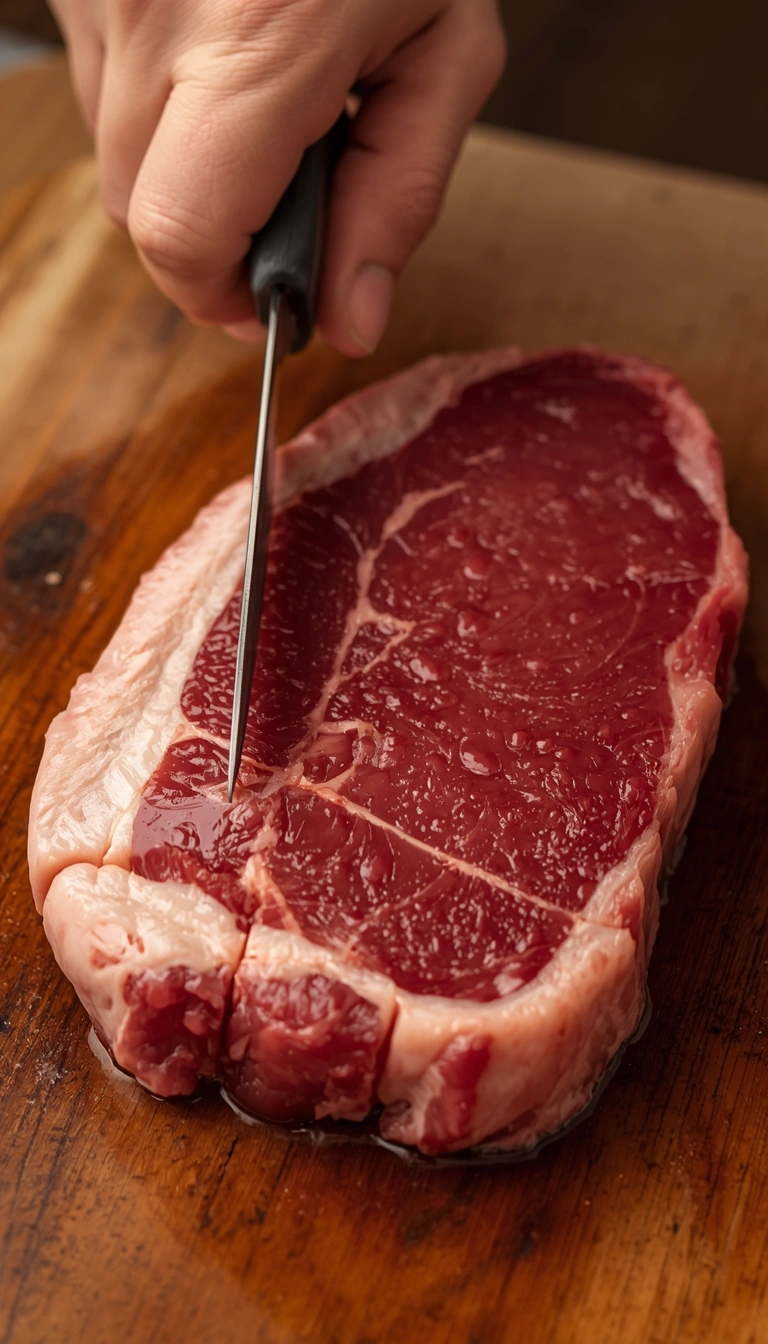
Using a sharp knife, score the fat cap in a crosshatch pattern — cuts about ⅛ inch deep, spaced 1 inch apart. Be precise: you want to penetrate the fat without cutting into the meat below. Scoring allows the fat to render evenly across the entire surface, preventing it from curling as it cooks and ensuring every bite gets basted from above.
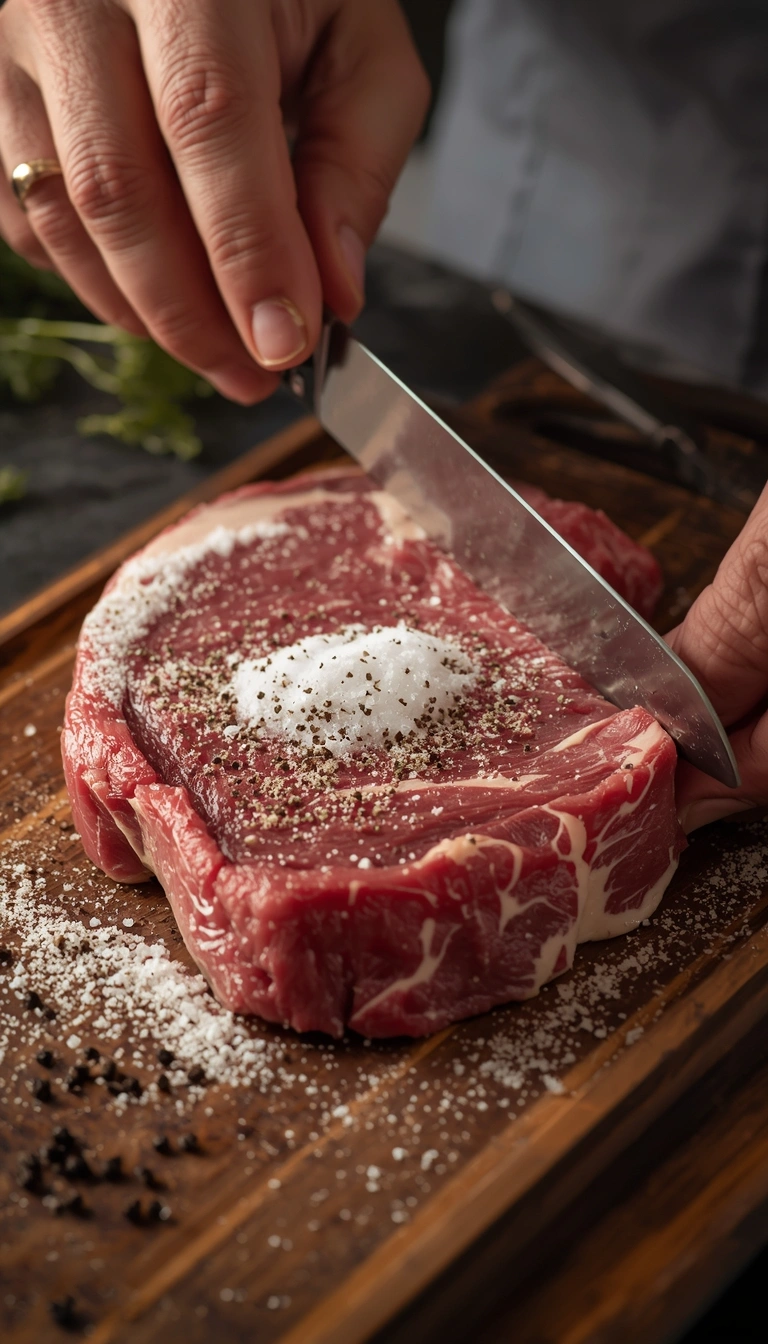
Pat the steak completely dry with paper towels — moisture is the enemy of a good sear. Rub the entire surface (meat side, fat cap, and all edges) with olive oil first, then season with salt, pepper, and garlic powder. Be generous with the salt; this is a thick, dense cut that needs confident seasoning to flavor through to the center. Let the rosemary sprigs rest on top if using — they’ll perfume the meat as it rests.
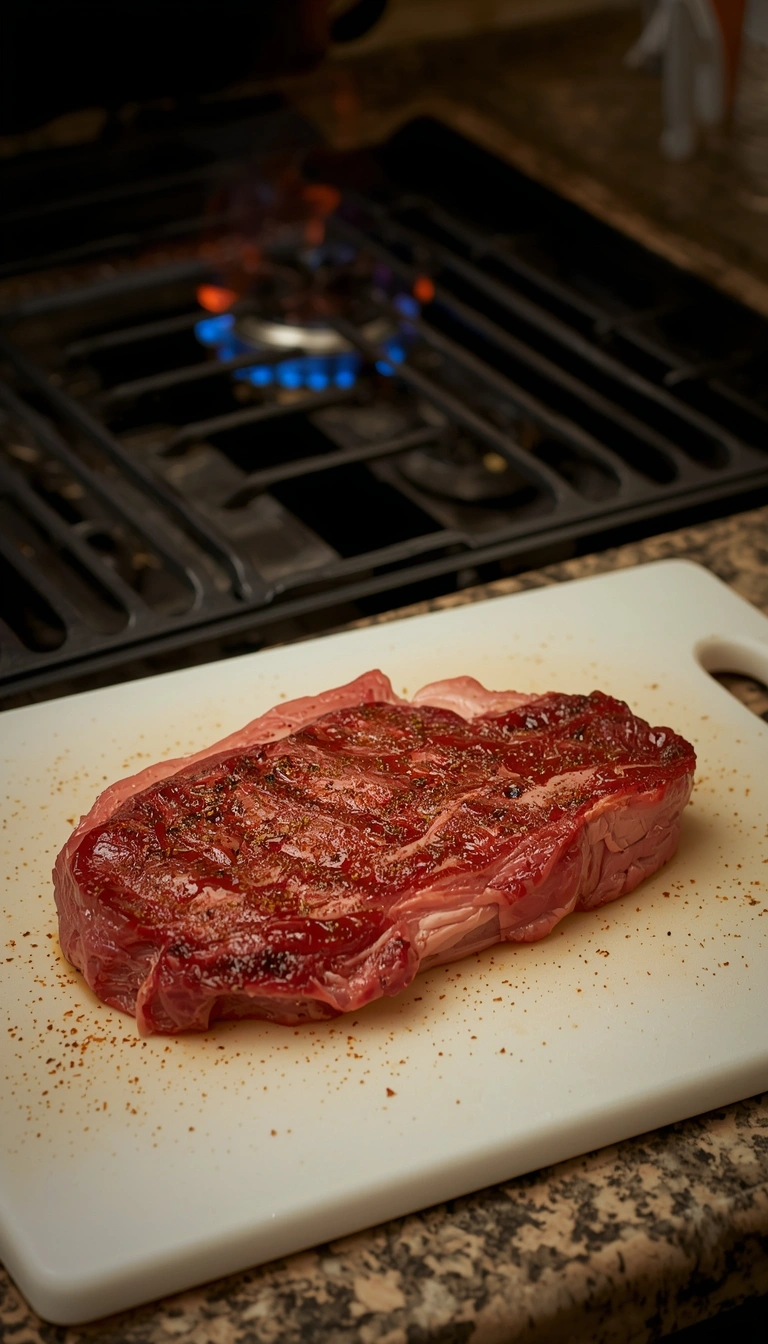
Let the seasoned steak rest uncovered on the counter for 30 minutes. This step matters more than most people realize: a cold steak placed on a hot grill takes longer to cook through, which means the outside overcooks before the inside reaches temperature. While the steak rests, preheat your grill to high — you’re aiming for 450–500°F. Clean the grates and oil them lightly just before cooking.
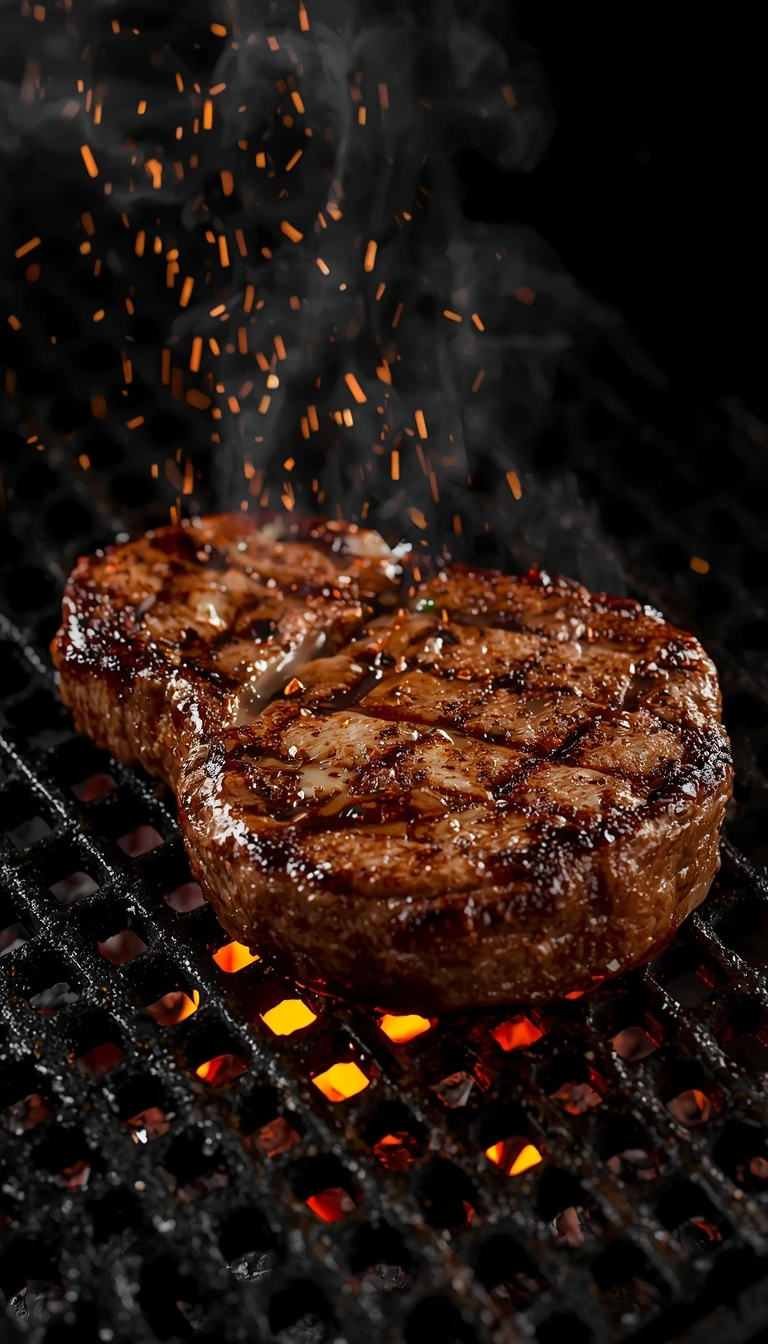
Place the steak fat-cap-side down on the hot grates. Leave it alone for 3–4 minutes. You’re listening for steady sizzling — the fat should be rendering and turning golden. Resist the urge to move it. Flip to the meat side and sear for another 4–5 minutes. After that, turn every 2 minutes, monitoring the internal temperature with a meat thermometer. Pull the steak at 130–135°F for medium-rare, or 140–145°F for medium. For reference, see the safe minimum internal temperatures guide.
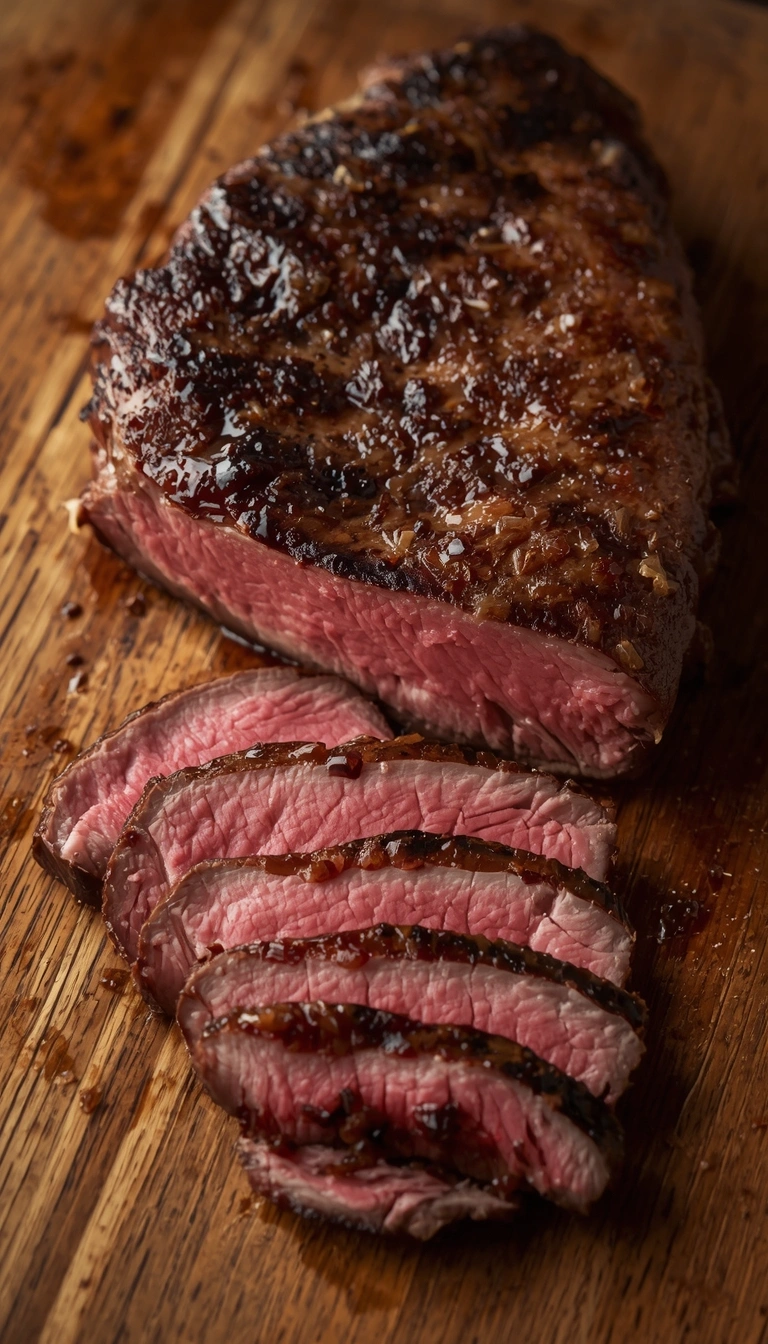
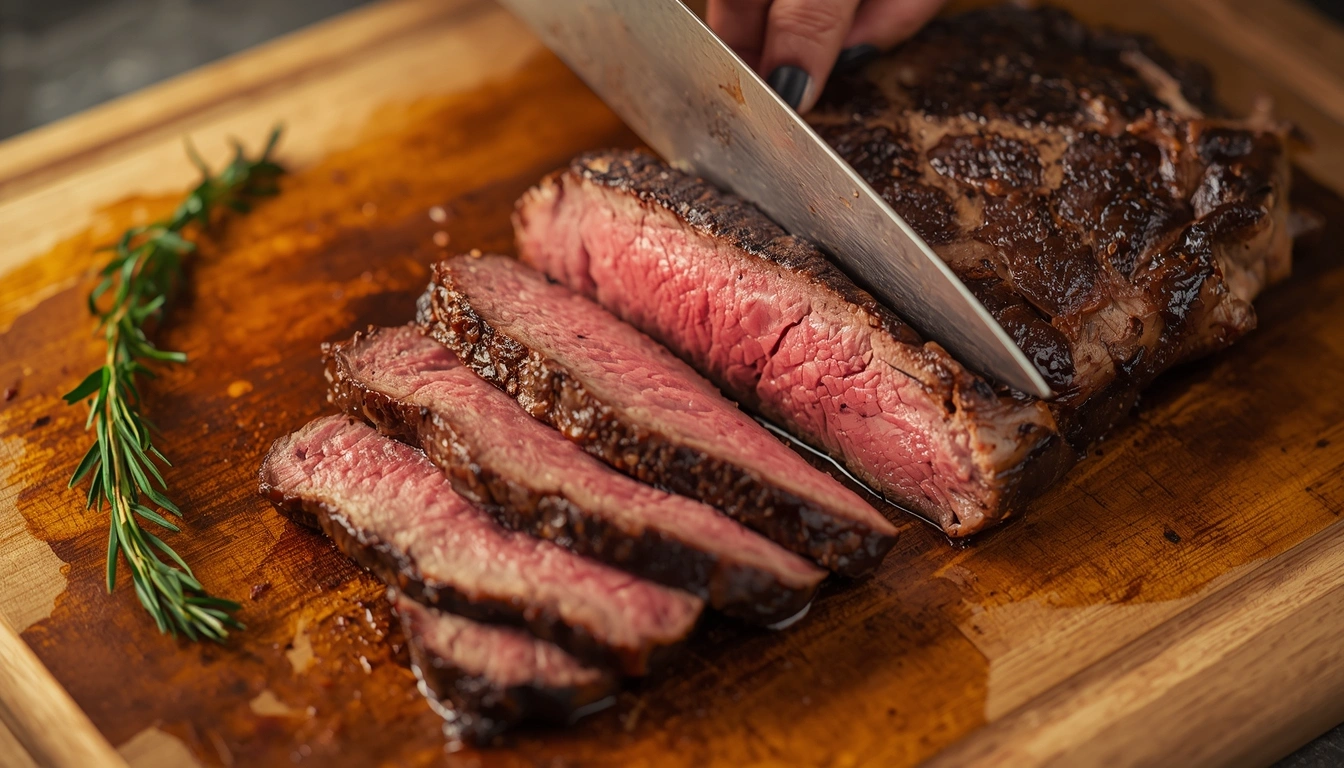
Transfer the steak to a cutting board and tent loosely with aluminum foil. Rest for 8–10 minutes — non-negotiable. During this time the internal temperature rises another 5°F (carryover cooking) and the juices redistribute through the muscle fibers. Skip this step and those juices hit the cutting board instead of your plate. When ready, identify the direction of the muscle fibers (they run at an angle across the cap) and slice thin, across those fibers. Thin slices against the grain is what makes this cut tender enough to eat without a steak knife.
Expert Tips
- Never trim the fat cap before grilling. The fat cap is the soul of this cut. Cooking without it produces a completely different steak — leaner, drier, less flavorful. Even if you don’t eat the fat itself, grill with it on every time.
- Use a meat thermometer, always. Coulotte is a moderately thick steak with an unusual shape — thicker in the center, thinner at the edges. Visual cues like color or finger-feel are unreliable here. A quick-read thermometer takes the guesswork out completely.
- Your grill needs to be genuinely hot. High heat is how you get a proper sear before the interior overcooks. If your grill can’t reach 450°F+, use a cast iron skillet on your stovetop on high heat instead — it’ll give you better results than a lukewarm grill.
- The 30-minute rest before cooking matters. A cold steak on a hot grill creates uneven cooking — the outside chars while the inside stays raw. Room-temperature meat cooks more predictably from edge to center.
- Try the chimichurri pairing. If you want to go the Argentine route, serve with a fresh chimichurri sauce — olive oil, parsley, garlic, red wine vinegar, red pepper flakes. It cuts through the richness of the fat cap beautifully and is the classic accompaniment for grilled beef in South America.
- Slicing direction is everything. The muscle fibers in a coulotte run at an angle. Before you slice, look at the top of the steak and identify which direction the fibers travel. Slice perpendicular to those fibers — not parallel. Parallel slices produce chewy, stringy bites; against-the-grain slices are tender and easy to eat.
Serving & Storage
What to Serve with Coulotte Steak
Coulotte steak is rich and flavorful on its own, so sides that provide contrast or freshness work best. Classic pairings include roasted garlic mashed potatoes, grilled asparagus, a simple green salad, or Brazilian-style farofa (toasted cassava flour seasoned with butter and herbs). For a lighter meal, sliced coulotte also works beautifully over a salad or tucked into warm tortillas — the same way you’d treat skirt steak tacos.
Storage Guidelines
- Refrigerator: 3–5 days
- Freezer: 4–6 months
- Wrap tightly in plastic wrap + foil
- Thaw in refrigerator overnight
- Refrigerator: 3–4 days
- Freezer: 2–3 months
- Store in airtight container
- Reheat low and slow (275°F oven) to avoid drying out
Leftover coulotte steak reheats best in a low oven — high heat will push it past medium and tighten the muscle fibers. Alternatively, slice it cold straight from the fridge and serve over arugula with a lemon vinaigrette. Cold sliced coulotte steak is genuinely excellent.
Frequently Asked Questions