How to Clean Cast Iron: Simple Steps for a Perfect Skillet
How to Clean Cast Iron: The Practical Short Answer
How to Clean Cast Iron is simpler than most skillet myths make it sound: wash the pan, dry it completely, then rub on a thin layer of oil. That rhythm protects the seasoning, prevents rust, and keeps the skillet ready for searing steak, browning burgers, crisping pork chops, or cooking everyday dinners.
For a normal cast iron skillet, use warm water, a brush or non-metal scrub pad, and a small amount of mild soap when needed. The real mistake is not soap; it is soaking the pan, leaving it wet, putting it in the dishwasher, or storing it with moisture trapped on the surface.
What Actually Matters When Cleaning Cast Iron
A cast iron skillet is tough, but the seasoning layer needs simple care. Seasoning is not loose grease sitting on the pan. It is a thin layer of oil that has bonded to the iron through heat. That surface improves with use, but it can still become sticky, rusty, dull, or patchy if the pan is left wet or coated with too much oil.
That is the basic routine for most pans after cooking. Keep it simple and consistent.
Water is the main reason cast iron rusts. Dry the pan completely before putting it away.
A small amount of mild dish soap can help after greasy or sticky meals.
The pan should look lightly polished, not wet. Too much oil can turn sticky.
Tools and Supplies for Cast Iron Care
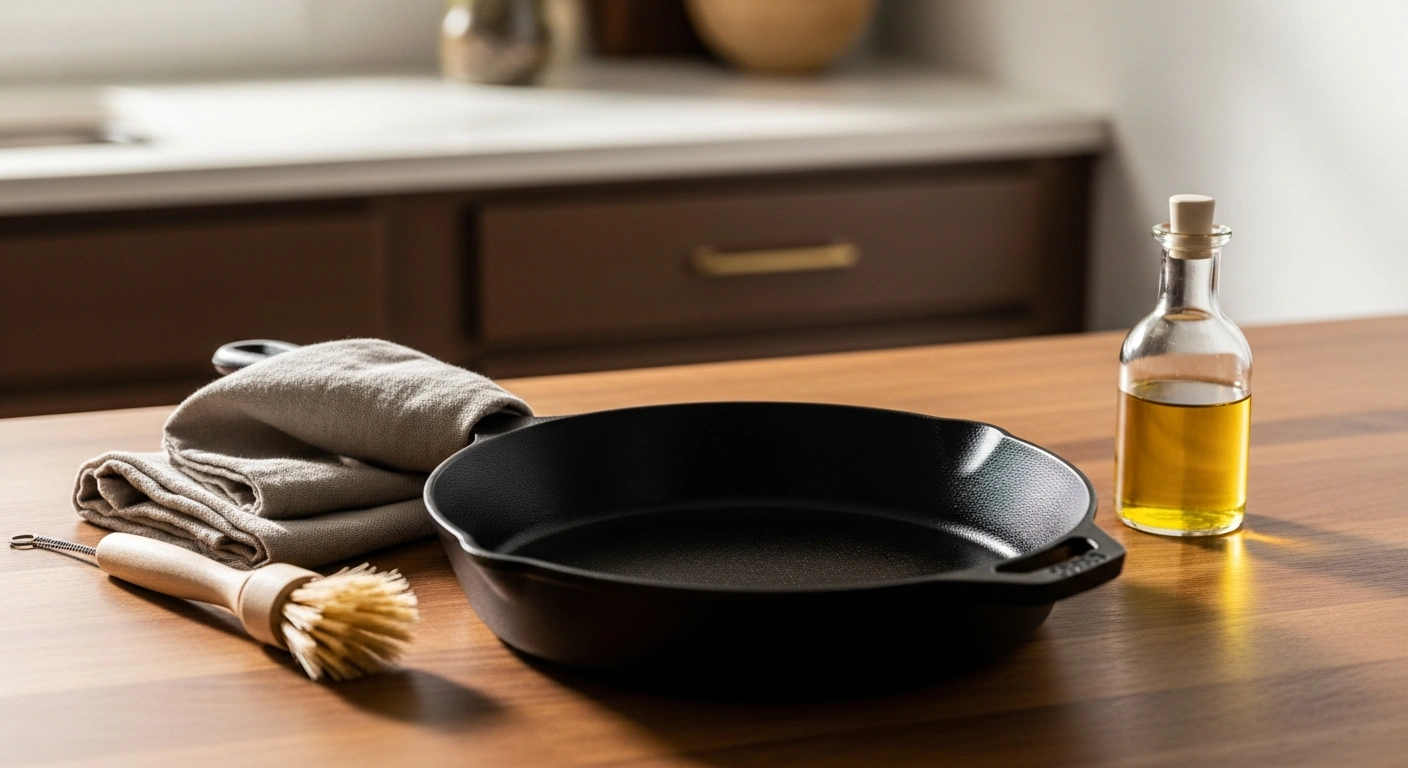
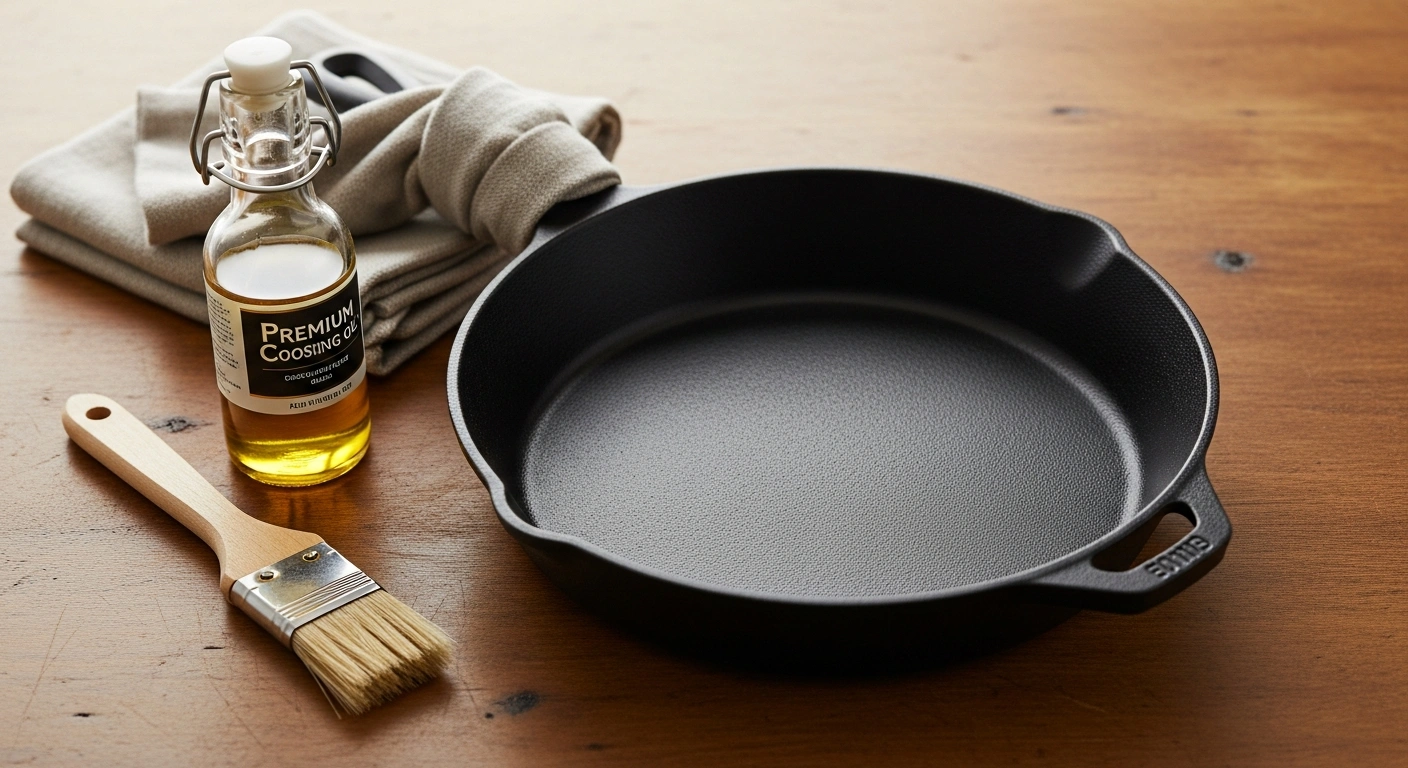
You do not need a complicated kit to clean a cast iron skillet. A few basic tools are enough for everyday care, stuck-on food, and occasional reseasoning.
Use it for normal cleaning. Do not soak the pan.
Use a stiff brush or non-metal pad for daily cleanup.
Useful for stuck bits after steak, burgers, or sauces.
Helpful for greasy residue. Use a small amount.
Dry fully before oiling or storing.
Use a very thin coat after cleaning.
If you are buying your first pan, a classic cast iron skillet is useful for searing and everyday meat cooking, but this guide works for most seasoned cast iron cookware.
Method Block: Clean and Season Cast Iron
This is the everyday care method for a seasoned cast iron skillet, plus the oven reseasoning method when the surface needs more help.
Best for: seasoned cast iron skillets, griddles, and pans used for meat, eggs, vegetables, cornbread, and everyday stovetop cooking.
Not for: enameled cast iron care. Enameled pieces have a different surface and should follow the manufacturer’s care instructions.
Step-by-Step: How to Clean a Cast Iron Skillet
The steps below are written for a normal seasoned cast iron skillet after cooking. Let the pan cool enough to handle safely, but do not leave food or moisture sitting in it for hours.
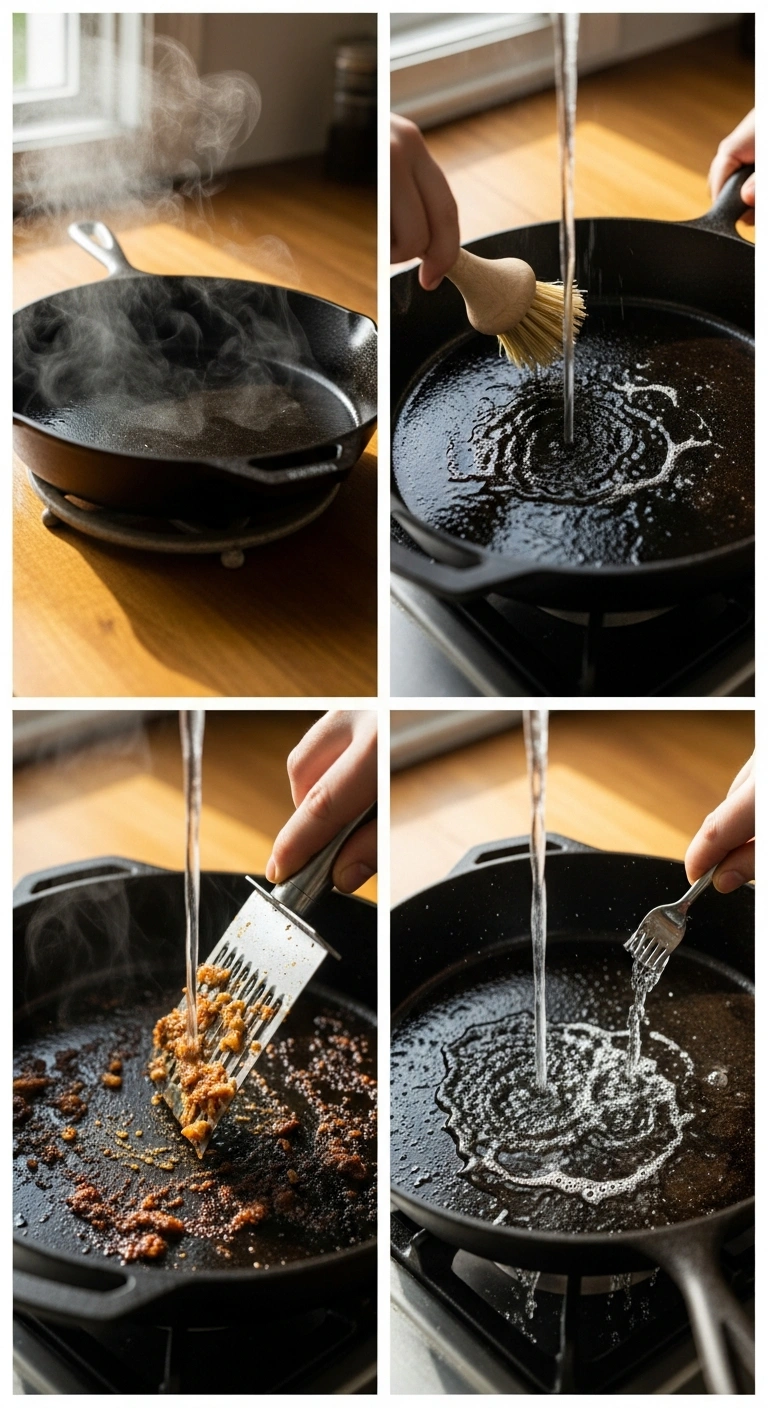
Image 1: Cool, Wash, Scrub, and Rinse
1Cool slightly
Let the skillet cool until it is safe to touch. Avoid shocking a very hot pan with cold water.
2Wash the pan
Use warm water and a brush or scrub pad. Add a small amount of mild soap if the pan is greasy.
3Loosen stuck food
Use a pan scraper. For stubborn bits, simmer a little water for 3 to 5 minutes, then scrape after the pan cools.
4Rinse clean
Rinse away residue without soaking the skillet. The pan should feel clean, not slick with old grease.
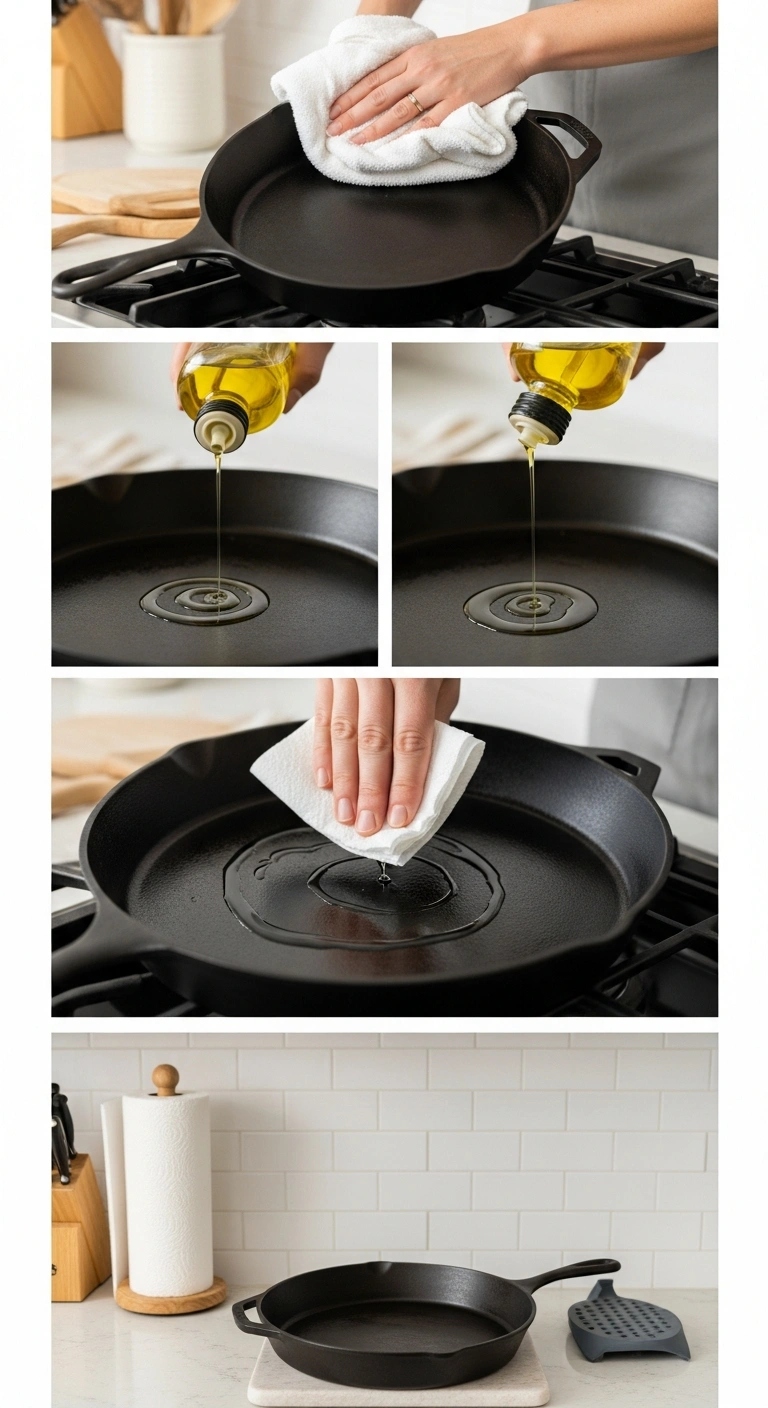
Image 2: Dry, Oil, Wipe, and Store
5Dry completely
Use a lint-free towel or paper towel. Gentle heat on the stove can help remove hidden moisture.
6Add a little oil
Add a few drops of neutral oil. The goal is a thin protective film, not a visible pool.
7Wipe until nearly dry
Rub the oil across the cooking surface and sides, then wipe again. The skillet should look satin, not sticky.
8Store dry
Store in a dry spot. If stacking cookware, place a paper towel or pan protector between pieces.
How to Clean Stuck-On Food Without Stripping the Pan
Stuck-on food usually happens after high-heat searing, sugary sauces, cheese, or protein residue that bonded to a hot surface. Do not start by attacking the pan with harsh abrasives.
Use a pan scraper while the food is softened with warm water. This handles most browned bits.
Coarse kosher salt can act as a gentle scrub for sticky residue. Rinse and dry fully afterward.
A few minutes of simmering can loosen stuck food. Let the pan cool enough to handle before scraping.
Steel wool is useful for restoration, but it is too aggressive for everyday cleanup.
How to Season a Cast Iron Skillet
To season cast iron, you are building a thin, heat-bonded oil layer. You do not need to do this after every wash. Regular cooking with oil helps maintain the surface. Oven seasoning is for a pan that looks dull, patchy, rusty, sticky, or newly restored.
- Wash the skillet and dry it completely.
- Rub a very thin layer of neutral oil over the inside and outside.
- Wipe off excess oil until the pan looks almost dry.
- Place the skillet upside down in a 450–500°F oven.
- Bake for 1 hour, then turn off the oven and let the pan cool inside.
For the manufacturer version of this process, see Lodge’s cast iron seasoning guide.
Common Cast Iron Cleaning Mistakes
Long water exposure is one of the fastest ways to invite rust.
Air drying can leave moisture in seams, pour spouts, and the handle area.
A heavy oil layer can bake into sticky patches instead of smooth seasoning.
Daily steel wool can remove seasoning faster than you rebuild it.
Dishwasher detergent, water exposure, and heat can damage seasoning and cause rust.
Tomato, vinegar, and lemon residue should not sit in the pan after cooking.
How to Care for Cast Iron After Cooking Meat
Cast iron is excellent for meat because it holds heat well. That same heat can leave browned protein, rendered fat, butter solids, and sauce residue on the surface. Clean the pan while the residue is still manageable.
- After steak: scrape browned bits, wash, dry, and oil lightly. For steak timing, see this guide to sous vide steak before the final sear.
- After burgers: pour off excess grease safely before washing. Cast iron is useful for grass fed ground beef smash burgers.
- After pork chops: loosen stuck seasoning with warm water and a scraper. If you cook thin pork often, this thin cut pork chop recipe guide pairs well with skillet care.
What to Do If Cast Iron Gets Rusty
Rust does not mean the skillet is ruined. It means moisture reached bare iron. For light rust, scrub the rusty area, wash the pan, dry completely, oil lightly, and heat. For heavier rust, use steel wool or a rust eraser, then reseason in the oven.
Lodge’s cleaning guide gives a similar sequence: scour rust, wash and dry, apply oil, then reseason when needed. See the Lodge cast iron cleaning guide for the manufacturer’s care reference.
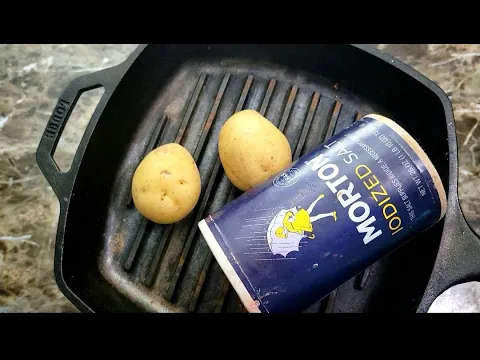
Video: Cast Iron Cleaning Reference
Use this video as a visual reference for cast iron cleaning and care. The written method above remains the main guide so the page stays easy to scan on mobile.
FAQs About Cleaning Cast Iron
Yes. A small amount of mild dish soap is fine for modern cast iron cleaning, especially after greasy cooking. Avoid soaking the pan or using harsh cleaners that strip the seasoning.
Wash and dry the skillet, rub on a very thin layer of neutral oil, place it upside down in a 450–500°F oven, bake for 1 hour, then turn off the heat and let the skillet cool in the oven.
No. A dishwasher can remove seasoning and encourage rust. Cast iron should be hand washed, dried completely, and rubbed with a light layer of oil.
Sticky cast iron usually means too much oil was left on the surface. Wash the pan, dry it well, wipe on a much thinner coat of oil, and heat it until the surface feels dry and smooth.
Do not use steel wool for daily cleaning. It is better reserved for rust removal or a full restoration before reseasoning.
You do not need to oven-season cast iron after every use. Regular cooking with oil helps maintain the seasoning. Reseason when the surface looks dry, patchy, rusty, or sticky after cleaning.

About JULIA
JULIA writes practical meat guides and kitchen-care methods for MeatRecipeZone, with a focus on clear steps, safe handling, and realistic home-kitchen results.
This guide was built around practical cast iron care, manufacturer cleaning guidance, and a mobile-first layout that avoids wide tables.
Last updated: May 24, 2026