
The Secret to Perfect Sous Vide Steak Every Time
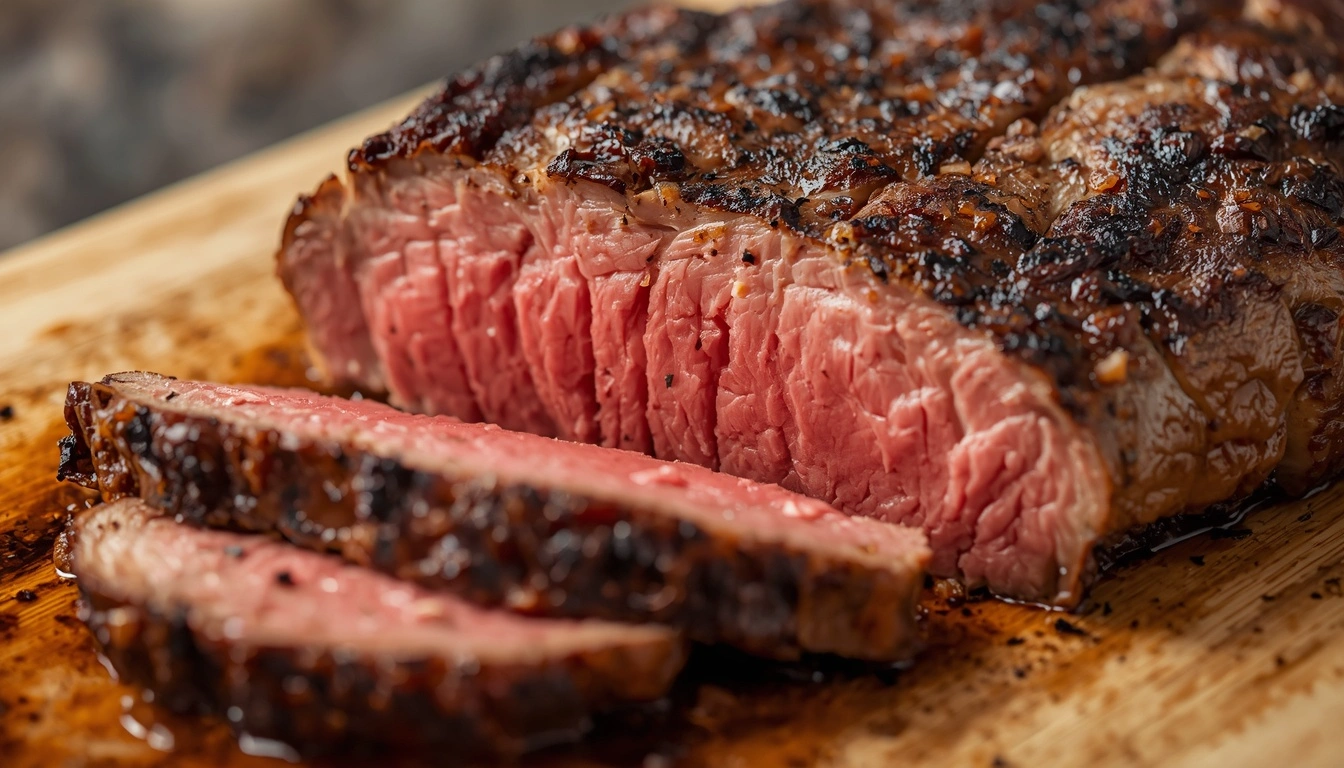
Perfect sous vide steak is not about guessing. Set the water bath, cook by thickness, dry the surface, then sear hard and fast.
The secret to perfect sous vide steak is simple: cook the steak to its final internal temperature in the water bath, then build the crust separately with a very hot sear. The water bath gives you even doneness from edge to edge. The skillet gives you the browned surface. Treat those as two separate jobs and the method becomes reliable.
Sous vide is especially useful when you want steak cooked evenly without the gray band that often forms with traditional pan-searing. It also helps with thinner or leaner cuts because the interior cannot race past your target temperature while you are trying to brown the outside.
This guide explains how to sous vide steak, how long to cook it by thickness, what temperatures make sense for different doneness levels, how to sear it properly, and how to use the same method for a simple sous vide flank steak recipe.
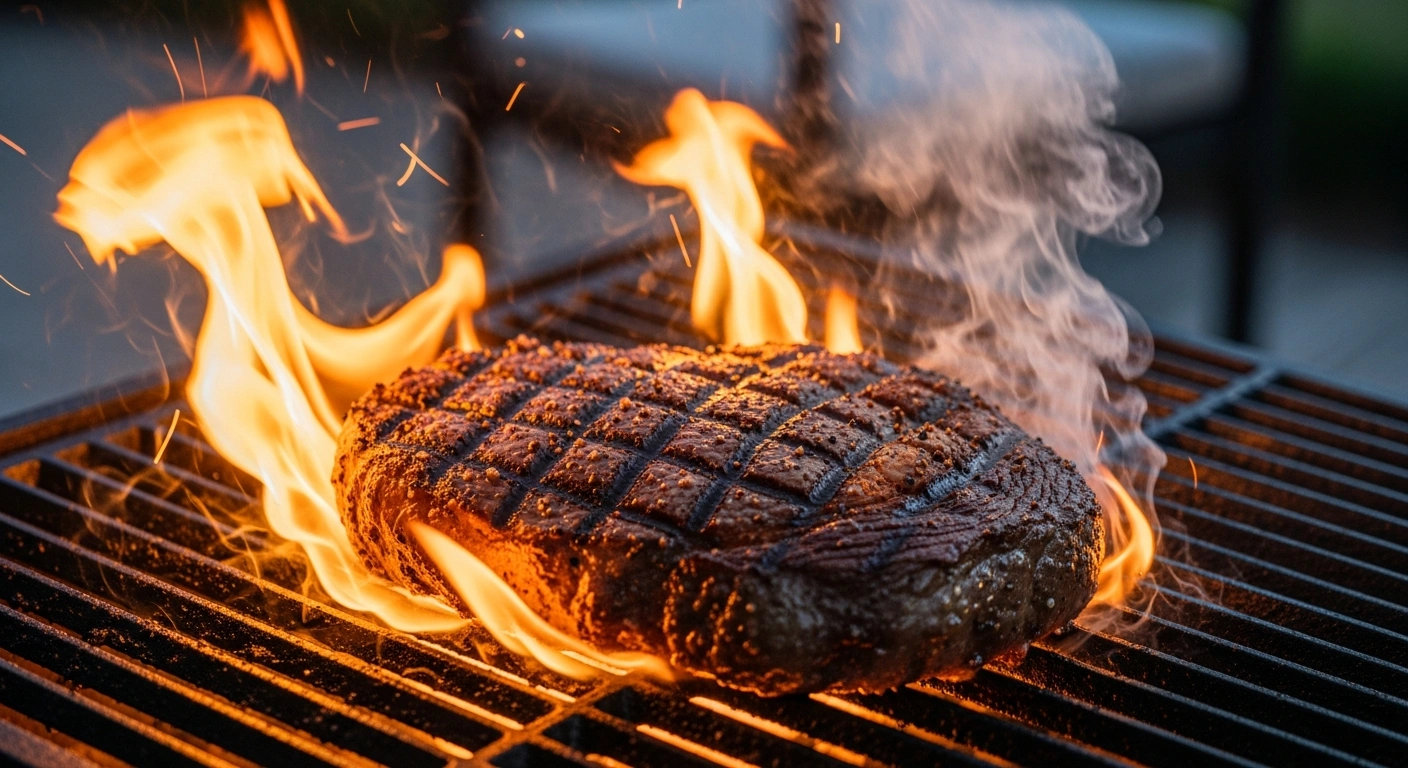
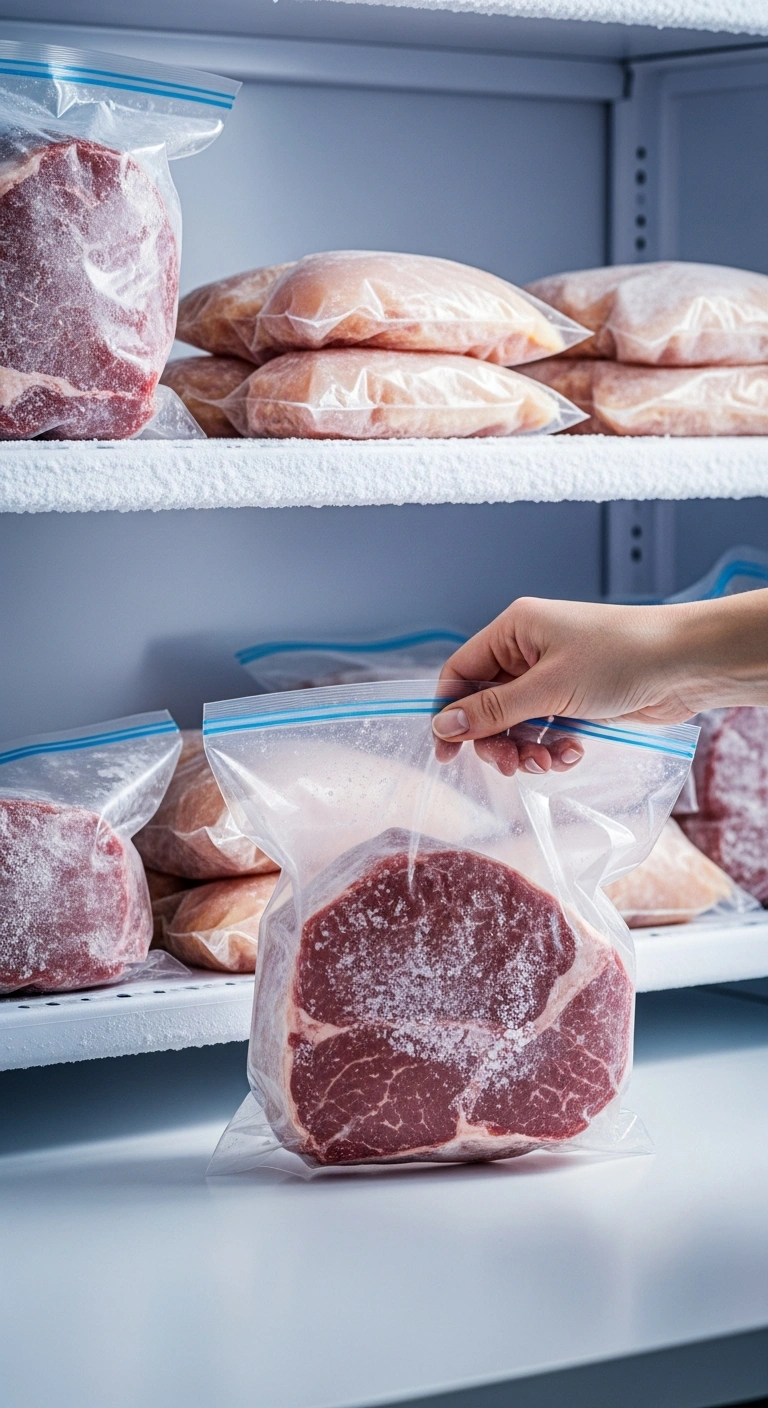
If you prefer live-fire steak, our guide on how long to cook steak on the grill covers the traditional grilling side. For frozen-meat planning, the frozen meat safety guide is a useful companion.
01 Sous Vide Steak at a Glance
For official whole-cut beef safety guidance, see the USDA safe temperature chart. Many sous vide steak recipes use lower target temperatures for texture, so use quality meat, keep your equipment clean, and follow reliable time-temperature guidance.
02 How Long to Sous Vide Steak
The most useful rule is this: thickness controls time, temperature controls doneness. A thicker steak needs longer for the center to reach the same temperature as the water bath. A thin steak reaches temperature faster but still needs enough time to cook evenly.
| Steak Thickness | Suggested Time | Best Use | Texture Note |
|---|---|---|---|
| 1 inch | 1 to 1.5 hours | Quick weeknight steak | Do not sear too long or the center can warm past target |
| 1.5 inches | 1.5 to 2.5 hours | Ribeye, strip steak, sirloin | The most forgiving thickness for sous vide steak |
| 2 inches | 2 to 4 hours | Thick-cut steaks | Long enough to heat through without rushing the center |
| Flank steak | 2 to 4 hours | Thin slicing, tacos, steak salads | Slice across the grain after searing |
03 Best Sous Vide Steak Temperatures
With sous vide, the water bath temperature is the steak temperature. That is what makes the method so repeatable. If you want a medium-rare steak, set the bath in the medium-rare range and give the meat enough time to heat through.
| Doneness | Water Bath Temperature | Result |
|---|---|---|
| Rare | 125–128°F | Very red center, softer texture |
| Medium-Rare | 129–134°F | Warm red-pink center, classic steakhouse texture |
| Medium | 135–140°F | Pink center, slightly firmer bite |
| Medium-Well | 145–150°F | Mostly cooked through with a firmer texture |
| Well Done | 155°F+ | Fully cooked through, firmest texture |
In a skillet or on a grill, the outside of the steak is exposed to very high heat while the center slowly catches up. In sous vide, the water bath is controlled, so the steak cannot move beyond that set temperature. The sear is added after the interior is already where you want it.
04 Why Sous Vide Steak Works So Well
Steak has two separate goals: a juicy interior and a browned crust. Traditional cooking tries to do both at the same time. Sous vide separates them. The water bath handles the interior gently, then the pan handles the crust quickly.
Controlled Doneness
The steak gradually comes to the same temperature as the water bath, giving you consistent doneness from edge to edge.
Less Guesswork
You do not need to keep cutting into the steak or poking it repeatedly. Time and temperature do most of the work.
Better Crust Control
Because the interior is already cooked, the final sear can stay short, intense, and focused only on browning.
Useful for Lean Cuts
Flank steak, sirloin, and other leaner cuts benefit because the method reduces the chance of drying out the center.
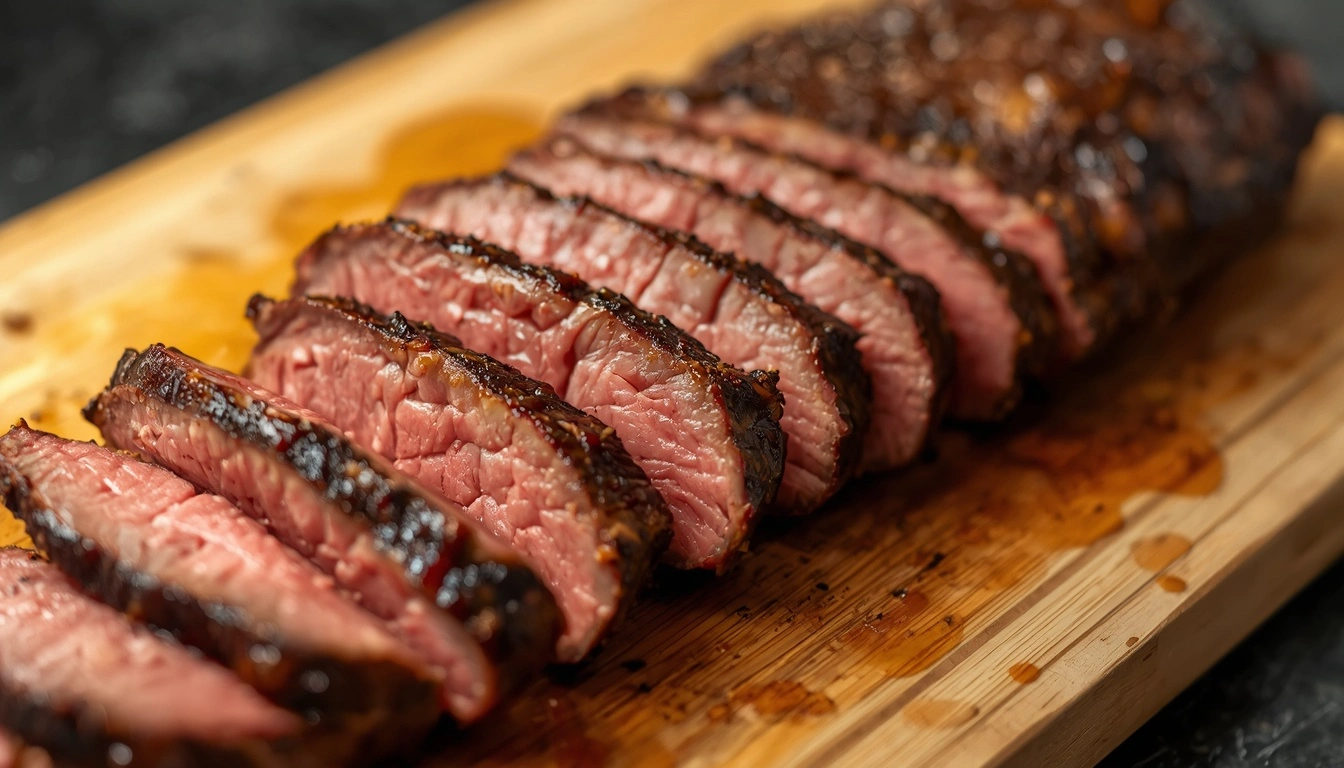
Sous Vide Steak Master Method
This master method works for ribeye, strip steak, sirloin, and flank steak. Use a sous vide immersion circulator, a sealed bag, and a very hot pan for the finish.
05 Ingredients and Tools
Use steaks that are close in thickness so they finish evenly. Ribeye and strip steak are rich and forgiving. Sirloin is leaner and benefits from careful searing. Flank steak works well when cooked evenly, seared quickly, and sliced thinly across the grain.
06 Step-by-Step: How to Sous Vide Steak
Season the Steak
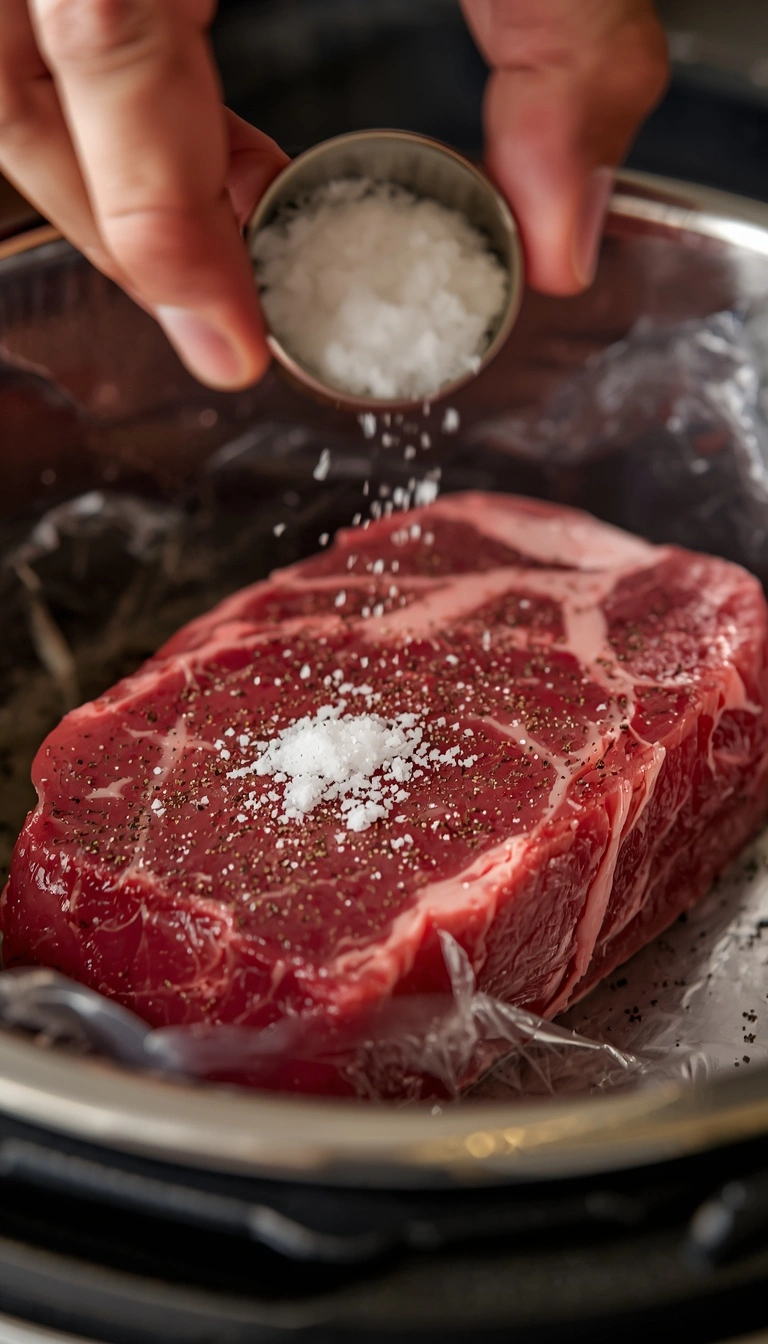
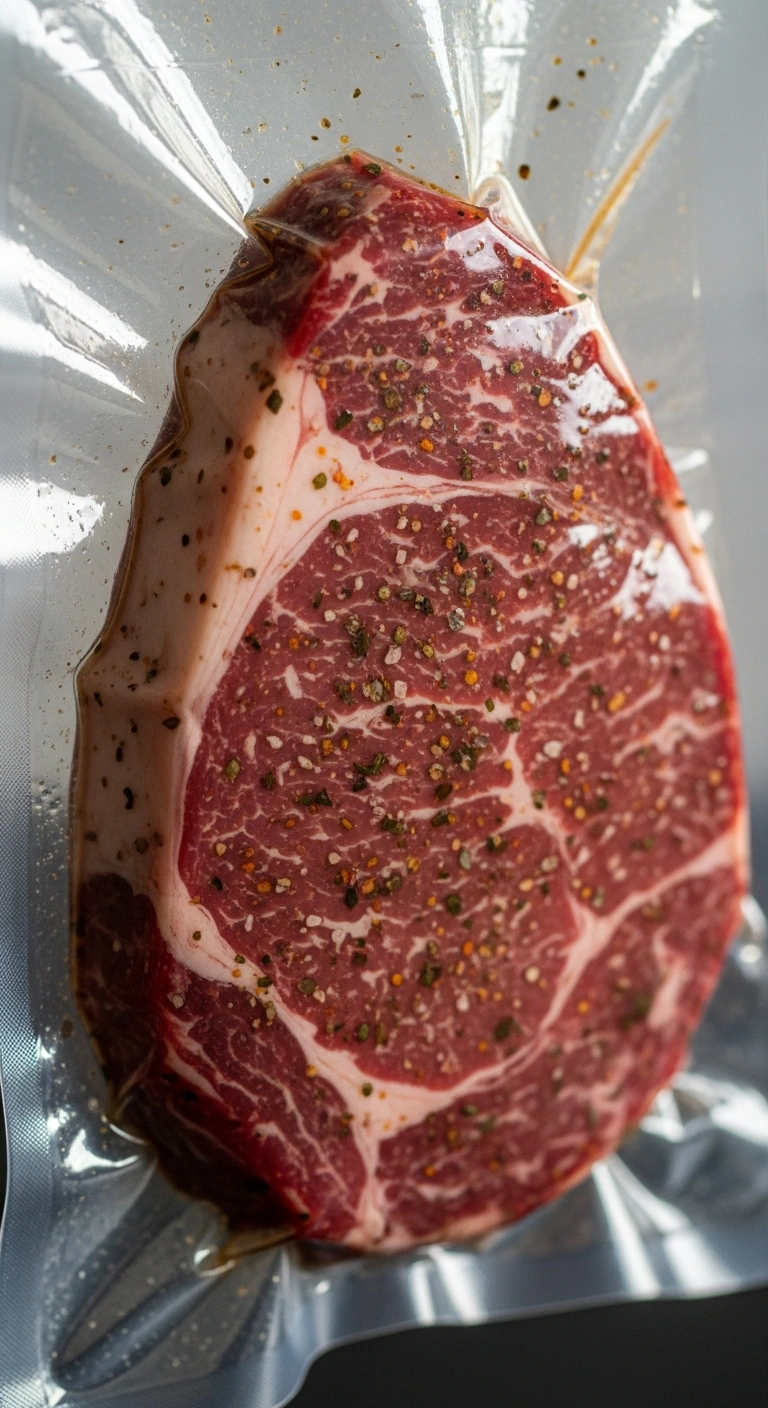
Pat the steak dry and season both sides with kosher salt and black pepper. You can add garlic, rosemary, or thyme to the bag, but keep it restrained. Sous vide intensifies aromatics during the long cook.
Seal the Bag
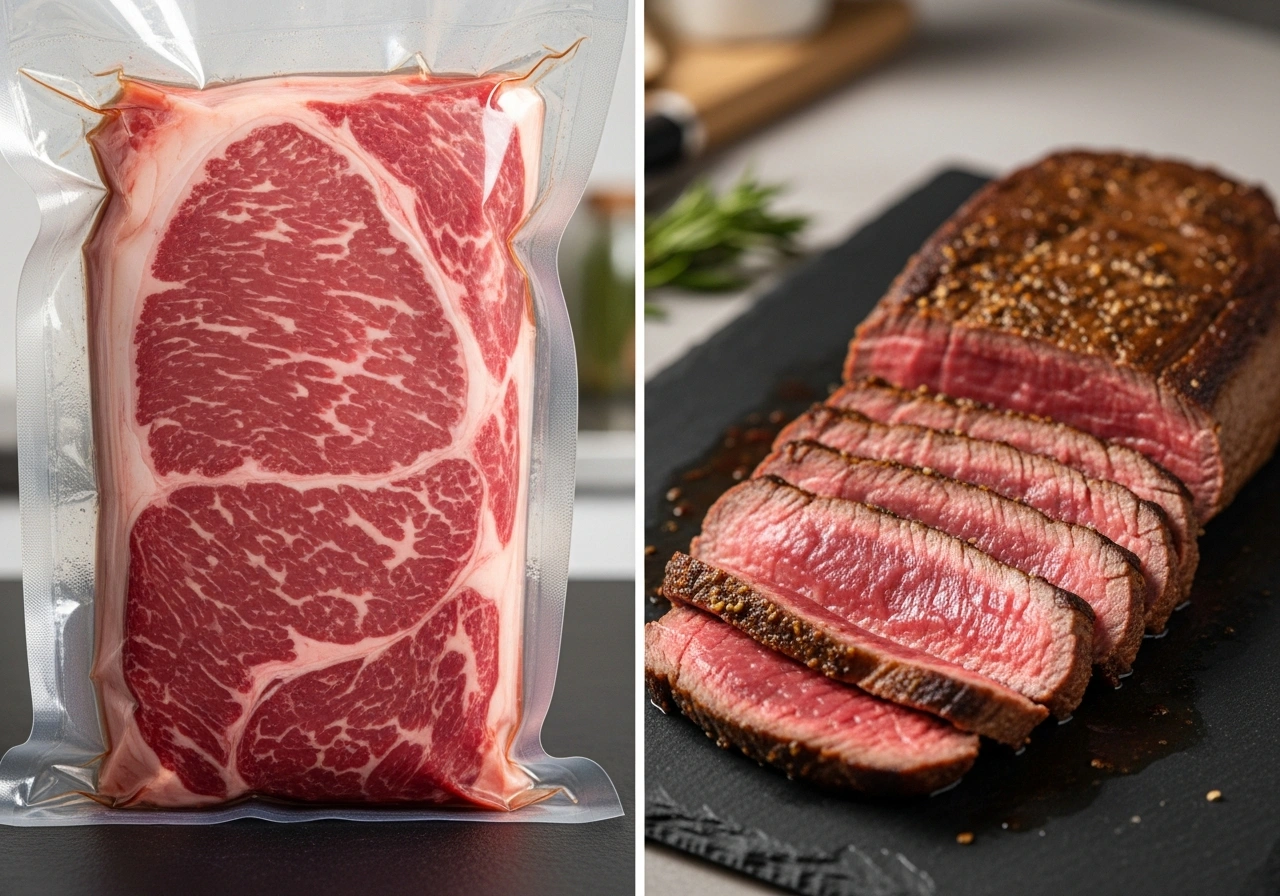
Place the steak in a vacuum bag or freezer-safe zipper bag. Remove as much air as possible so the meat stays fully surrounded by water. If the bag floats, it has too much air inside.
Cook in the Water Bath
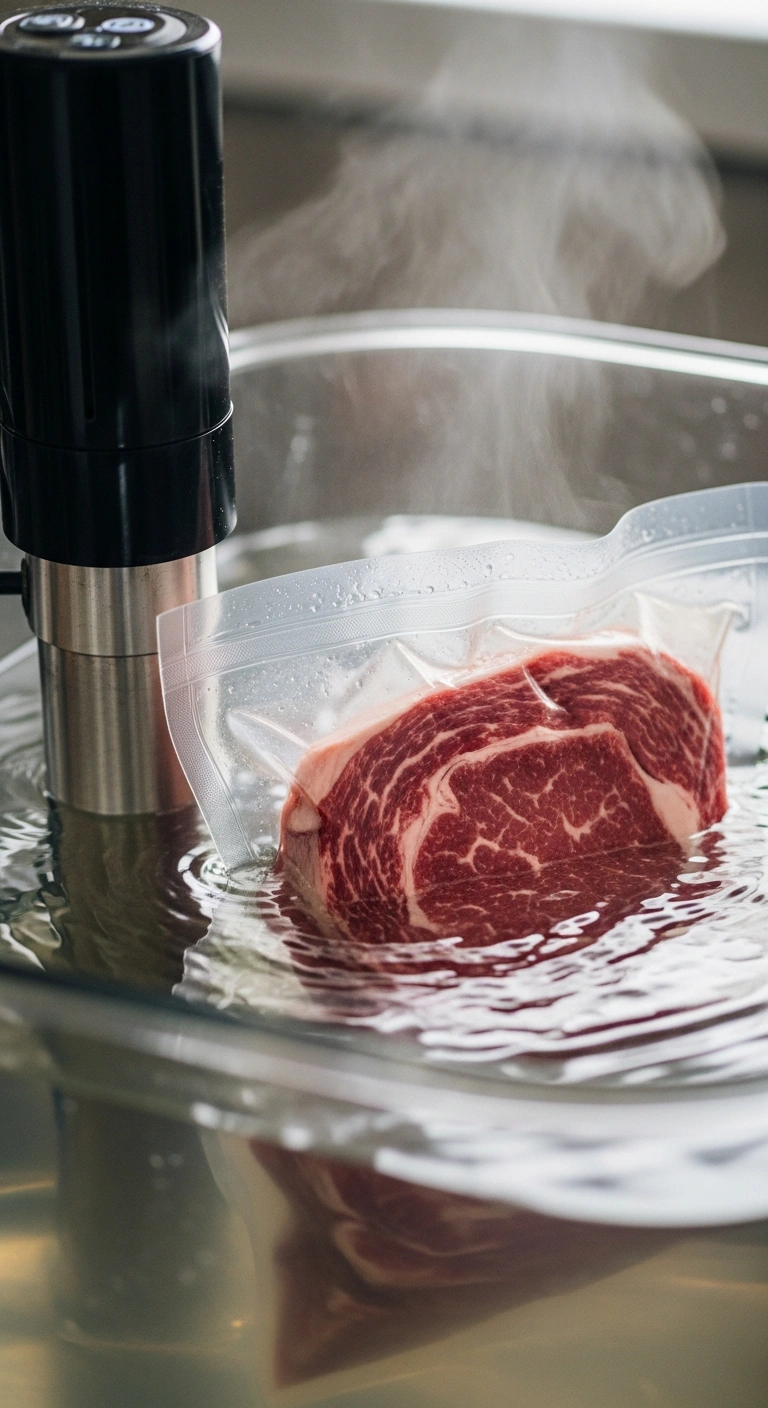
Preheat the water bath to your target doneness. For a classic medium-rare steak, many cooks use 129°F to 134°F. Cook a 1 to 1.5 inch steak for about 1.5 to 2 hours. Thicker steaks need more time.
Dry the Steak Completely
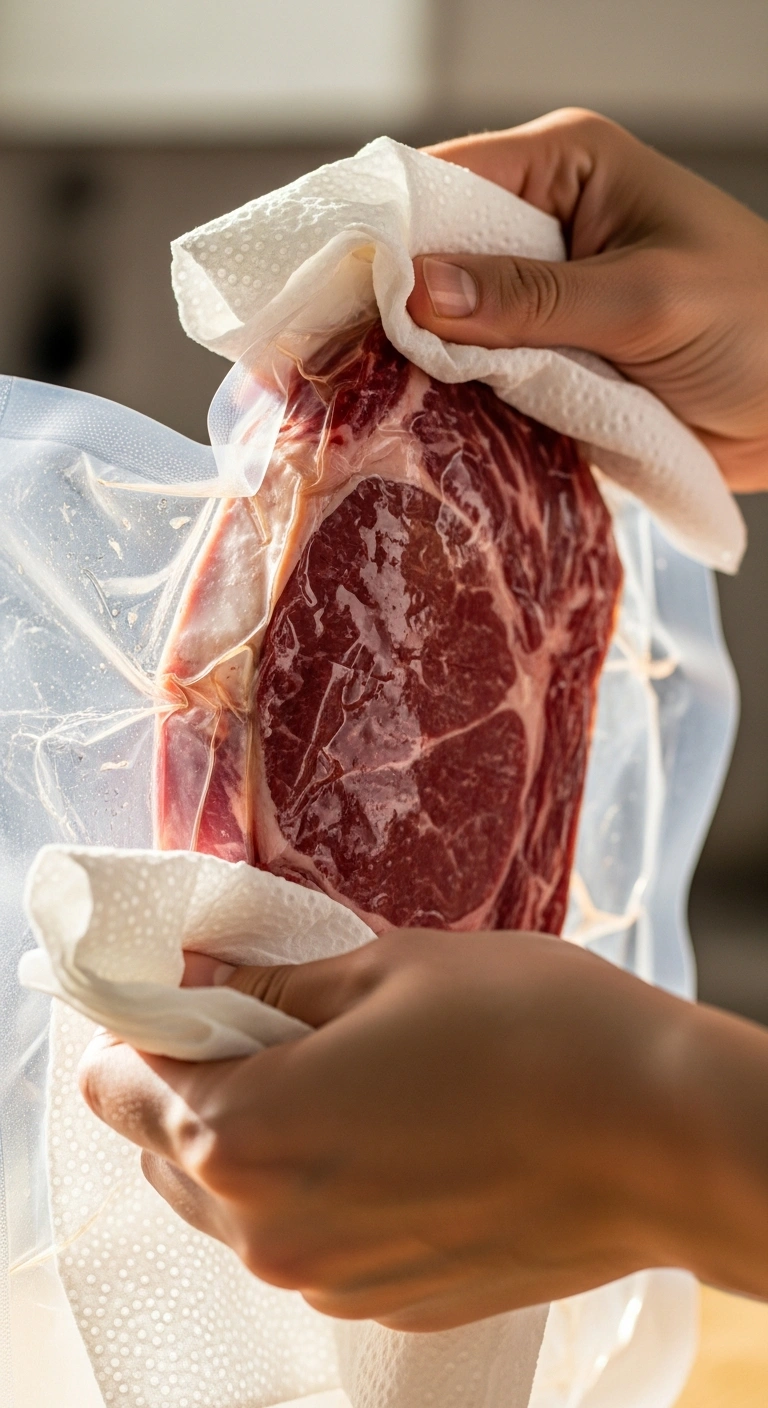
Remove the steak from the bag and pat it very dry with paper towels. This is the step many people rush. Moisture blocks browning. A wet steak steams in the pan instead of searing.
Sear Hard and Fast
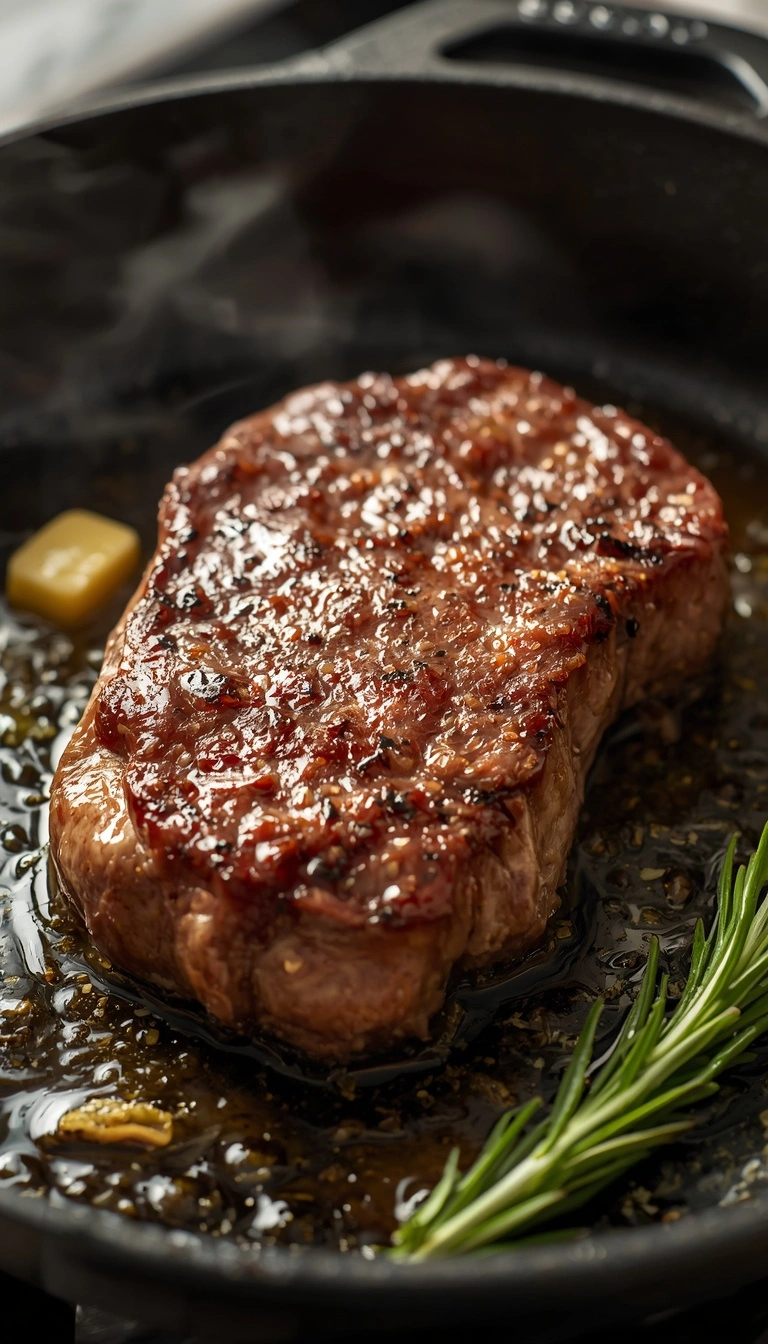
Heat a cast-iron skillet until very hot. Add a thin layer of neutral oil and sear the steak for 45 to 60 seconds per side. Add butter and aromatics at the end if you want extra flavor, but do not keep the steak in the pan too long.
07 Sous Vide Flank Steak Recipe Variation
Sous vide flank steak is one of the best uses for this method because flank is lean, flavorful, and easy to overcook with high heat alone. Sous vide gives the center controlled doneness before a quick sear adds color.
▸ Best setup for flank steak
- Cook at 130°F to 134°F for a medium-rare style result.
- Use 2 to 4 hours depending on thickness and texture preference.
- Season simply with salt, pepper, garlic, and a little oil.
- Sear quickly, then slice thinly across the grain.
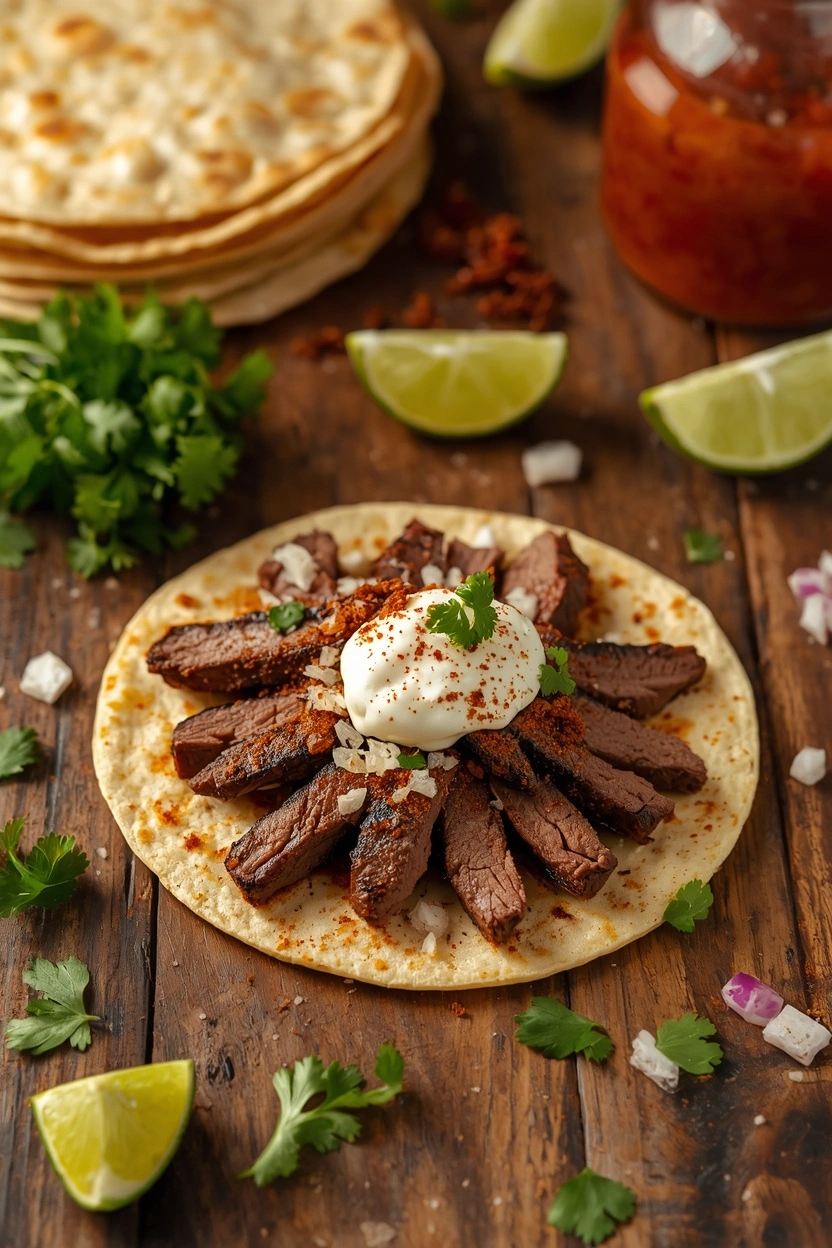
Flank steak is excellent for steak salads, rice bowls, fajita-style plates, and tacos. For a grilled taco-style approach, see our skirt steak tacos guide and use the same slicing logic.
08 Expert Tips and Common Mistakes
Dry Before Searing
The crust depends on a dry surface. Pat the steak more than you think you need to.
Use High Heat
The sear should be fast. Long searing can push the edges past your target doneness.
Season Cleanly
Salt and pepper are enough. Strong aromatics can become intense in a sealed bag.
Match Thickness
Cook steaks of similar thickness together so the timing stays predictable.
Slice Correctly
Ribeye and strip can slice normally. Flank steak should always be sliced thinly across the grain.
09 Serving, Storage, and Reheating
Serve sous vide steak with crisp, simple sides so the crust stays the focus. Roasted potatoes, a green salad, creamed spinach, garlic rice, or grilled vegetables all work well. If you want more meat-focused dinner ideas, browse our must-try meat recipes.
| Topic | What to Do | Why It Helps |
|---|---|---|
| Serving | Slice after a short 2 to 5 minute pause | Lets the surface heat settle after searing |
| Flank Steak | Slice thinly across the grain | Shortens the muscle fibers for a more tender bite |
| Refrigeration | Cool leftovers and refrigerate in an airtight container | Helps preserve texture and reduce drying |
| Reheating | Warm gently, then refresh the crust quickly | Prevents the steak from turning tough or gray |
For leftover handling, the USDA leftovers and food safety guide is the best official reference.
Steak Nutrition Estimator
Estimate calories, protein, and fat by cooked steak cut and portion size. Values are approximate because steak nutrition changes by cut, trimming, and added fat.
Use this as a planning estimate, not a fixed nutrition label. Sauces, butter, steak grade, and trimming change the final numbers.
10 Frequently Asked Questions
Build Your Next Steak Dinner
Once you understand sous vide steak, these guides help you compare grilling times, plan tacos, and handle frozen meat safely.
JULIA writes practical meat recipes and cooking guides for home cooks. Her approach focuses on clear methods, reliable timing, and results that work in a regular home kitchen without unnecessary complication.