
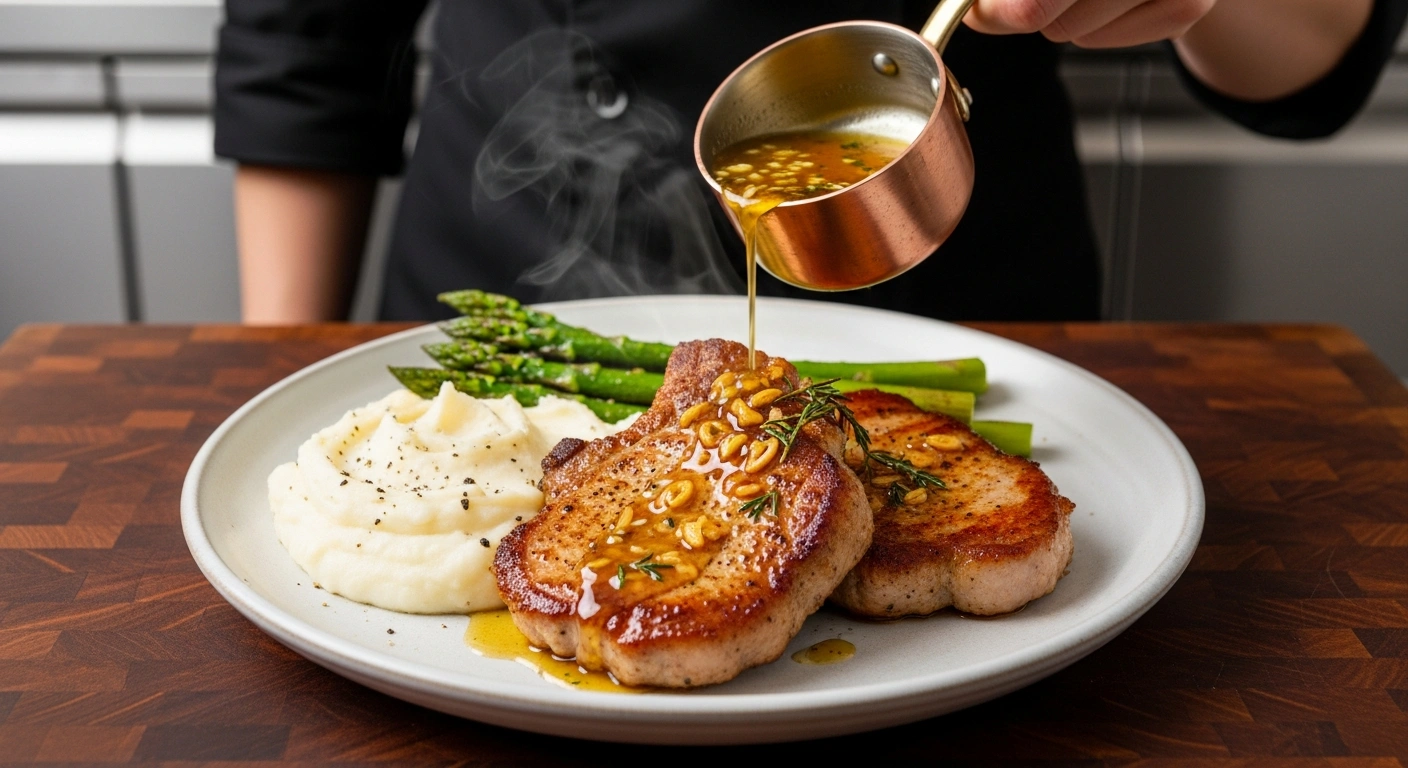
Juicy 10-Min Thin Cut Pork Chop Recipes- Julia-Tested
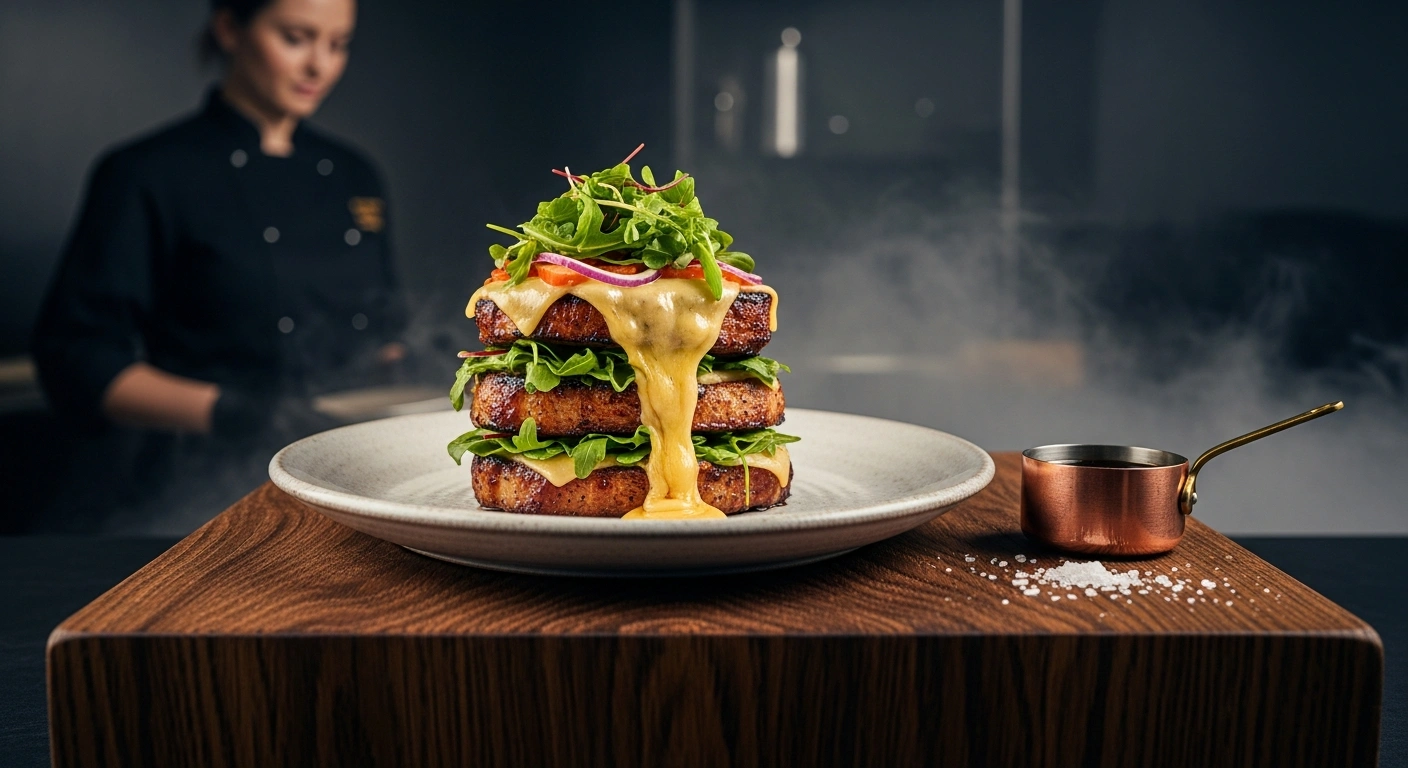
01 Why Thin Cut Pork Chops Are Tricky
Thin cut pork chop recipes are some of the most searched and most misunderstood in home cooking. The cut is fast and affordable, but its leanness punishes overcooking in a way thicker cuts do not. One extra minute in the pan can turn a juicy chop into something dry and tough.
The solution is a three-part system: a seasoned flour dredge that builds crust and seals moisture, a very hot skillet sear that finishes in under 5 minutes, and a garlic butter baste that adds richness in the final 60 seconds. Every step has a purpose.
This guide covers the full method, the best variations (including boneless pork chops in the oven), answers to common questions like what temp to bake pork chops, and a complete pork chop recipes skillet block you can cook tonight. For more on safe pork temperatures, see our dedicated internal temperature for pork guide.
02 What Makes Thin Cut Different
A thin cut pork chop is typically under 3/4 inch thick, often around 1/2 inch. At that thickness, the internal temperature rises in under 4 minutes in a hot pan — which is both an advantage and a risk.
Boneless pork chops are the most common thin cut. They cook faster and more evenly than bone-in, which makes them ideal for the stovetop skillet method. Bone-in thin chops work the same way but add slightly more flavor near the bone.
Thin chops lack the fat marbling that keeps thicker cuts moist during searing. A light seasoned flour coating acts as a thermal barrier, slowing moisture loss and building the golden crust that holds the juices in.
The pork chop recipes skillet method wins for thin cuts because it delivers high direct heat that crisps the crust before the center dries out. Boneless pork chops in the oven work better for thicker cuts or larger batches — see the alternatives table below.
03 Cooking Methods Compared
All of these methods work for thin cut pork chop recipes — but the skillet sear delivers the best crust-to-moisture ratio for this specific thickness.
| Method | Time | Temp | Best For |
|---|---|---|---|
| Cast Iron Skillet ★ | 4–5 min total | High heat | Best crust, juiciest result for thin cuts |
| Oven (Bake) | 12–15 min | 400°F | Larger batches, hands-off cooking |
| Air Fryer | 8–10 min | 400°F | Quick weeknight, no splatter |
| Grill | 2–3 min/side | Medium-high | Summer cooking, char flavor |
| Breaded / Fried | 3–4 min/side | Medium-high oil | Schnitzel-style crispy coating |
For what temp to bake pork chops in the oven: 400°F is the standard for thin cuts. Pull at 145°F internal. For full oven guidance, the USDA safe temperature chart is the authoritative reference.
Thin Cut Pork Chop Recipes — Garlic Butter Skillet
A Julia-tested skillet method for thin cut pork chop recipes: flour dredge, hot sear, garlic butter baste. Crispy crust, juicy center, on the table in 15 minutes.
04 Ingredients
05 Step-by-Step Instructions
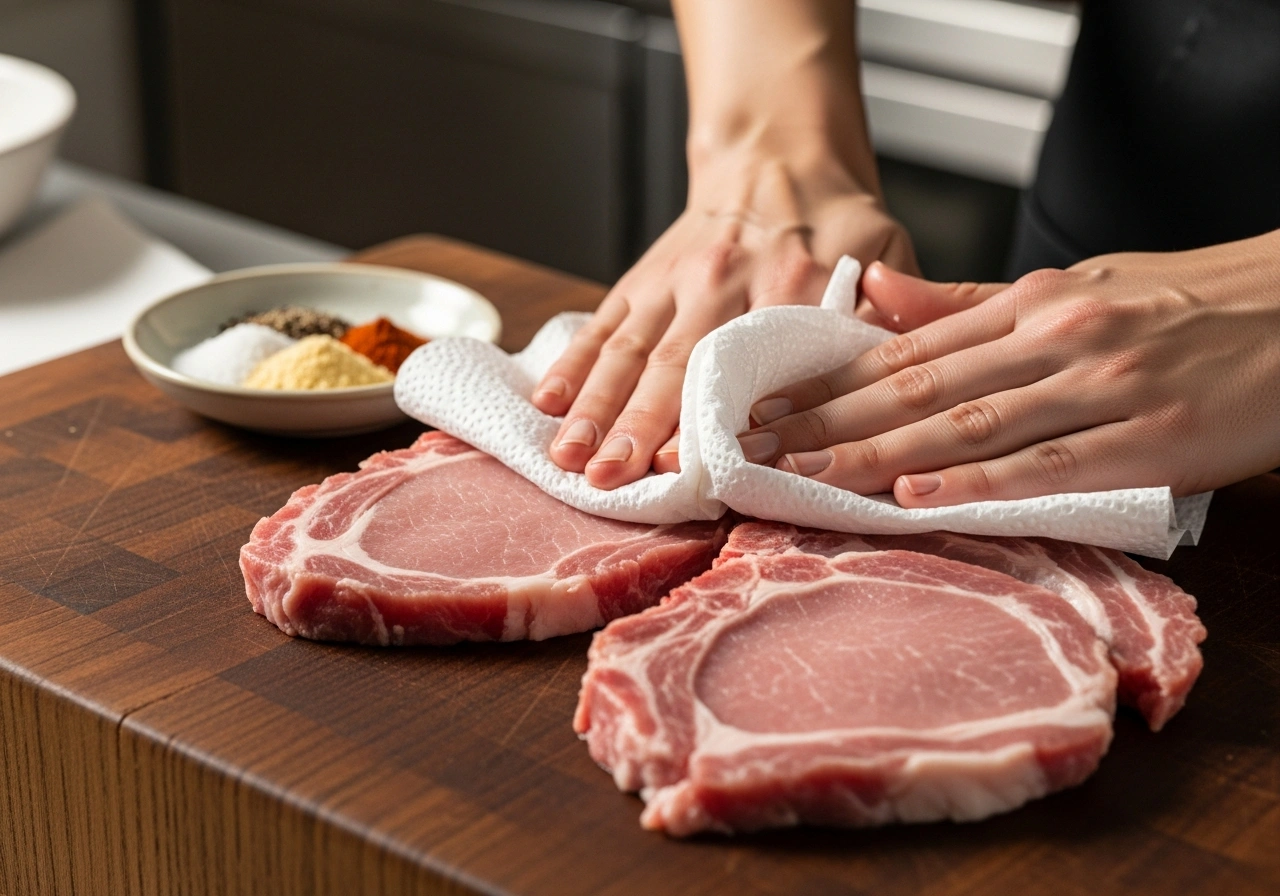
Pat each chop completely dry on both sides using paper towels. This is the most skipped and most important step. Surface moisture creates steam in the pan, which prevents browning and collapses the crust before it can form.
Season generously with kosher salt, black pepper, garlic powder, and smoked paprika. Press the seasoning in lightly so it adheres. Let the chops rest on a wire rack at room temperature for 5 minutes after seasoning.
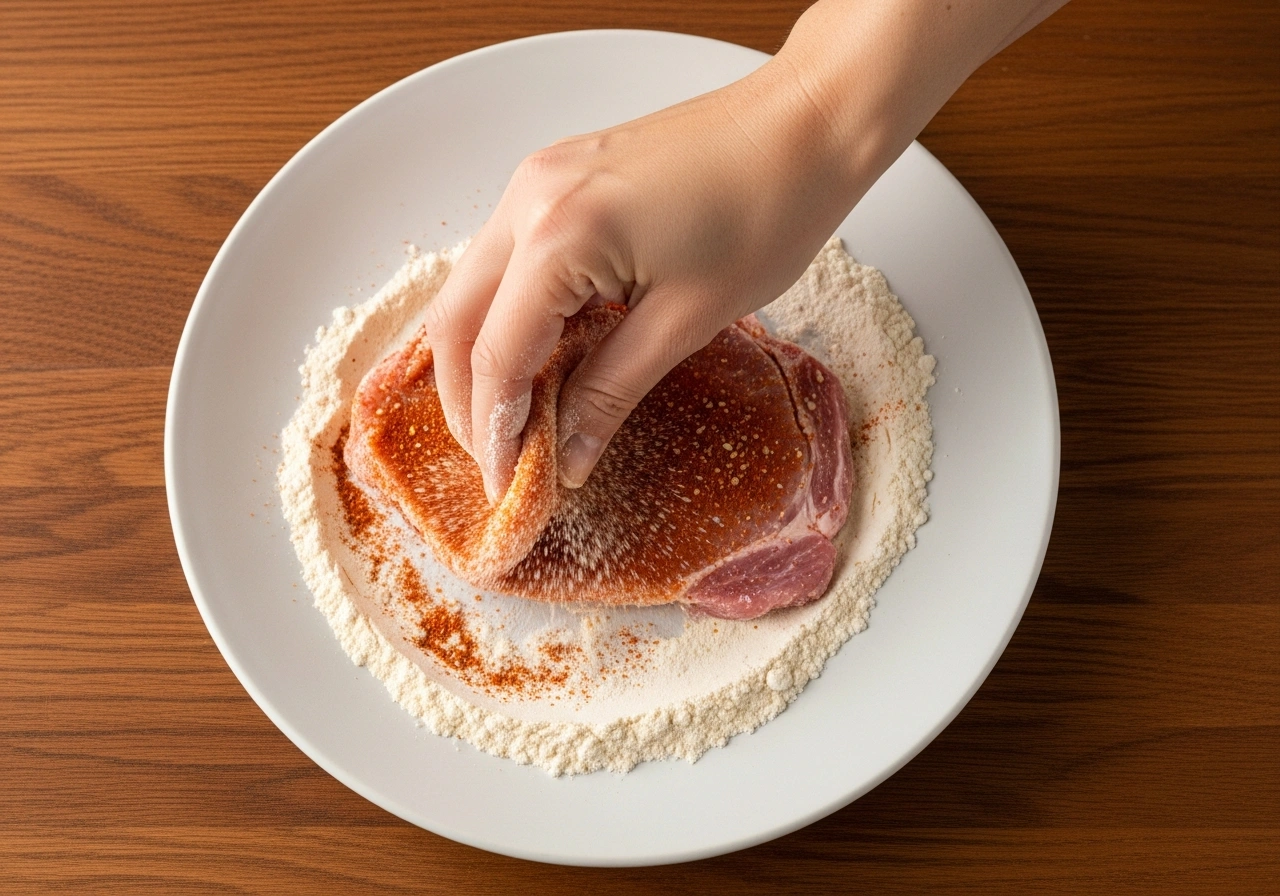
Combine the flour and onion powder in a shallow dish. Press each chop into the flour on both sides and shake off all excess. The coating should be barely visible — a whisper-thin layer, not a thick coating.
This layer does two things: it crisps into a golden crust when it hits the hot oil, and it acts as a moisture barrier that slows the speed at which the interior dries out during cooking.
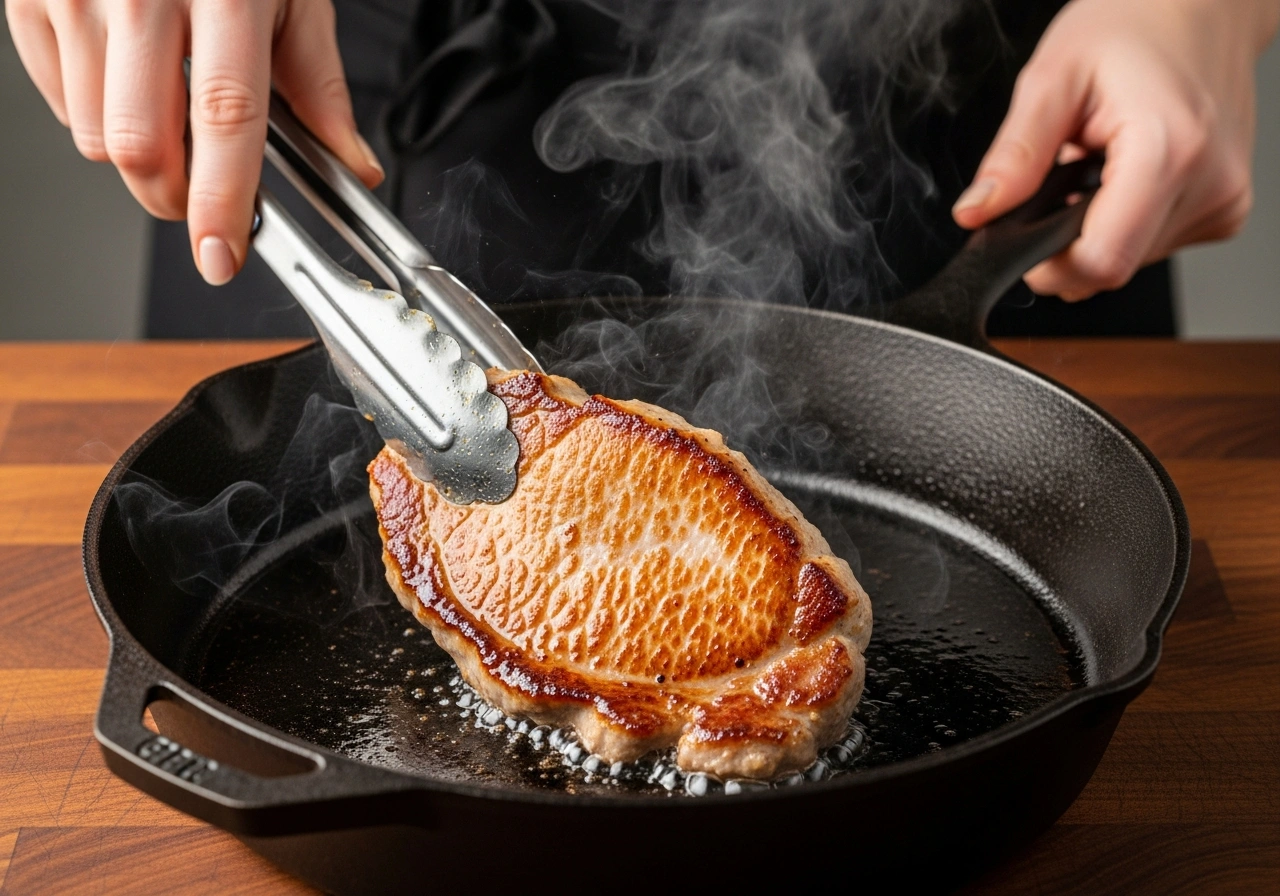
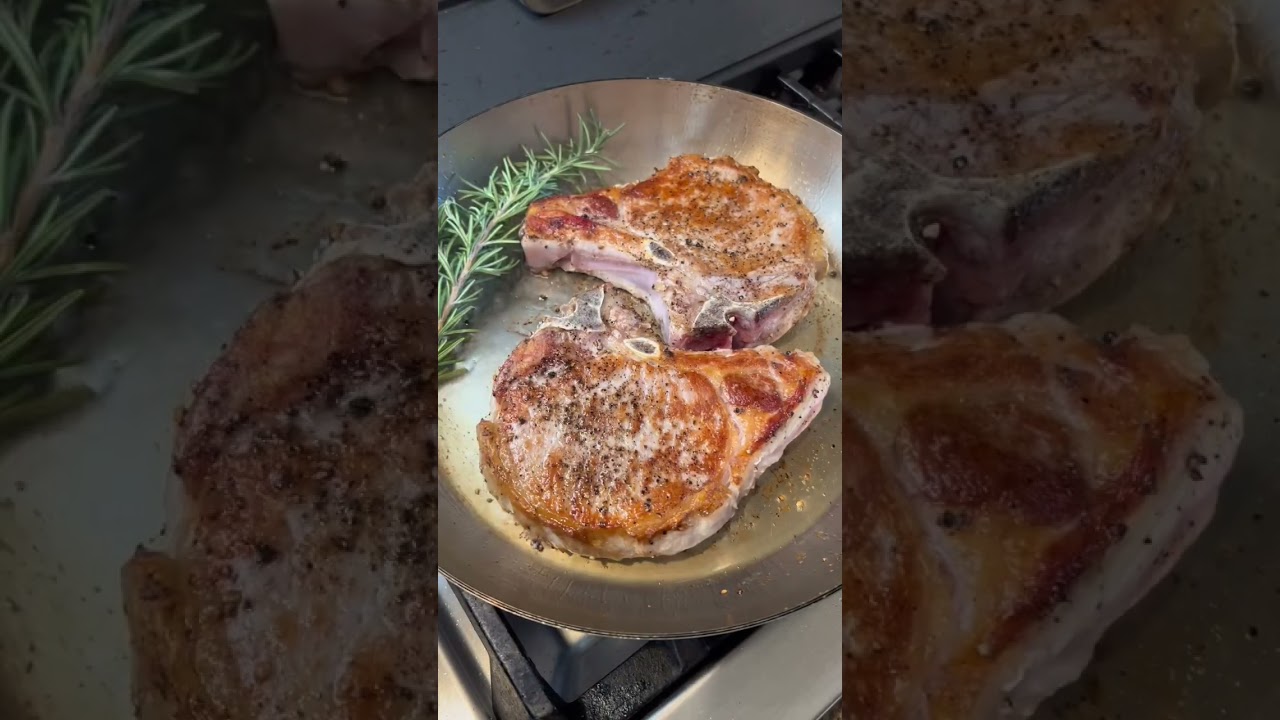
Heat a cast iron skillet over high heat for 3 full minutes before adding oil. Add the neutral oil and let it shimmer and begin to smoke slightly. This is the temperature you need for a fried pork chop recipe result on the stovetop.
Place the chops in the pan and do not touch them. Sear for exactly 2 minutes on the first side. Flip once and sear for 2 minutes on the second side. The crust must set completely before you move the chop or it will tear.
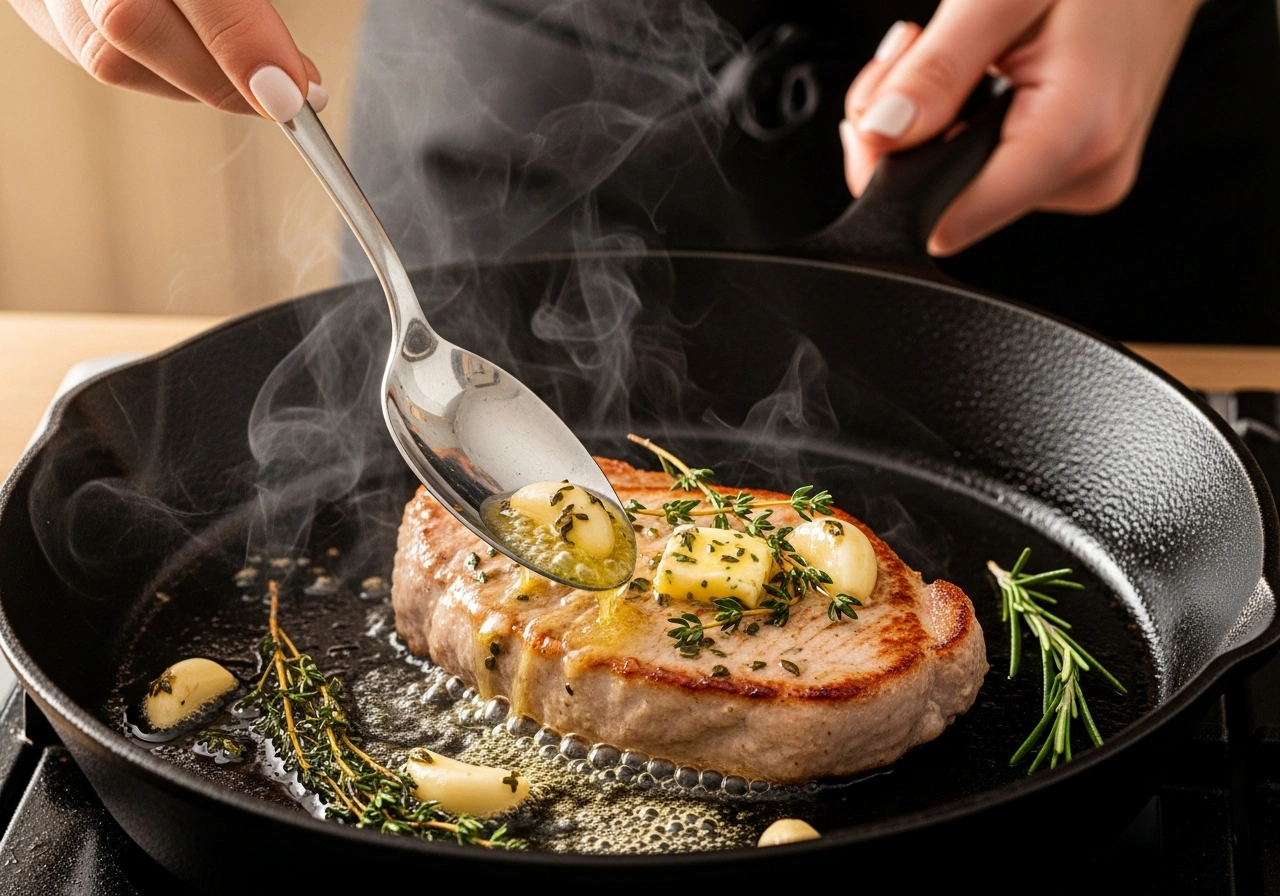
Reduce the heat to medium. Add the butter, smashed garlic cloves, and fresh herb sprigs. As the butter melts and begins to foam, tilt the pan slightly and use a large spoon to continuously scoop the hot garlic butter over the top surface of the chops.
Continue basting for 60 seconds. The butter carries the garlic and herb flavor directly into the crust with each pass. Remove the chops immediately when the internal thermometer reads 145°F.

Transfer the chops to a wire rack or warm plate and rest for 3 minutes before cutting. This rest period allows the internal temperature to equalize and the juices to redistribute throughout the meat. Cutting immediately causes significant moisture loss.
Spoon the remaining garlic butter from the pan directly over the chops just before serving. Plate with mashed potatoes, roasted green beans, or any sides from our easy pork chop recipes collection.
06 Expert Tips and Common Mistakes
Thermometer Always
At 1/2 inch thick, visual cues are unreliable. A thermometer is the only accurate way to hit 145°F without guessing.
Start Cold-ish
Pull chops from the fridge 15 minutes before cooking. Cold center vs hot exterior means uneven cooking.
Pan Must Be Hot
A warm pan steams. A hot pan sears. Heat it for 3 full minutes before oil goes in. No shortcuts here.
2 Minutes Per Side
At 1/2 inch, 2 minutes per side is the window. 3 minutes is overcooked for this thickness. Set a timer.
Shake the Flour
Excess flour burns in the pan and turns bitter. Shake firmly until only a whisper-thin coating remains.
Single Layer Only
Crowding drops the pan temperature instantly. Cook in batches if needed — the second batch takes less than 5 minutes.
07 What to Serve With Thin Cut Pork Chops
The garlic butter from the pan is effectively a sauce — spoon it over everything on the plate. These sides work especially well:
- Creamy mashed potatoes — the garlic butter pan sauce doubles as gravy
- Roasted green beans or asparagus — simple prep, strong visual contrast
- Cucumber salad — brightness that cuts the richness
- Rice or couscous — absorbs the pan sauce well
- Applesauce — a traditional pairing that actually works
If you want a fuller pork dinner plan, also see our stuffed pork tenderloin recipe for a more elaborate weekend version, or our guide on internal temperature for pork for all cuts and methods.
| Topic | What to Do | Note |
|---|---|---|
| Refrigeration | Airtight container, up to 3 days | Keep sauce separate if possible |
| Reheating | Hot skillet, 60 sec per side | Microwave makes them rubbery |
| Freezing | Wrap tightly, up to 2 months | Thaw overnight in fridge before reheating |
| Leftover use | Slice thin for sandwiches or tacos | Cold with mustard is underrated |
For official food safety and storage guidance, the USDA leftovers and food safety page covers refrigeration timelines for all cooked meats.
Meat Nutrition Calculator
Check calories, protein & fat for any cut — based on approximate USDA values.
Values are approximate, based on cooked weight per USDA data. Visit the full Meat Nutrition Calculator on our homepage.
08 Frequently Asked Questions

Julia writes practical meat recipes and cooking guides for home cooks. Her focus is on clear methods, reliable timing, and results that hold up every time — without unnecessary complication.