Discover Classic Adobo Recipes Now
You know the comfort of a single pan turning simple ingredients into a meal that feels like home. This guide gives you clear, practical information so you can pick a recipe and cook tonight without guesswork.
Filipino adobo traces its name to the Spanish verb that means to marinate, and one early note appears in a 1613 dictionary as “adobo de los naturales.” Here, the classic approach centers on soy sauce, vinegar, and garlic, which create a tangy-salty balance and a glossy sauce that clings to meat.
You’ll get a simple roadmap: essentials first, then protein choices, followed by chicken and pork options, and finally a universal method you can reuse. Expect a garlicky aroma and a sauce that reduces into a shiny coating. Use the steps to decide what to buy, what to swap, and how to control strength so the dish suits your table.
Table of Contents
What Makes Adobo a Must-Make Family Dinner Dish
Make one pot, walk away, and come back to a meal that tastes richer than the effort it took. You get hands-off simmering, easy scaling for leftovers, and flavors that deepen overnight. That combination makes this an ideal family dinner you can rely on.
Filipino vs. Mexican preparations: don’t mix them up
Filipino recipes use a soy-and-vinegar braise with bay leaves and whole peppercorns. Mexican versions are chile-forward, earthy, and often include cinnamon and oregano.
Flavor profile you should expect
The finished plate tastes tangy from vinegar, savory from soy, and punchy from garlic. Whole peppercorns give occasional pops of heat, while ground pepper blends into steady warmth.
- Buy the right ingredients: soy and vinegar for the braise, chiles for the Mexican sauce.
- Scaling made easy: simmer more, serve more—results hold well for families.
- Taste before you finish: reduced sauce concentrates, so adjust tang, salt, or a touch of sweetness last.
Adobo Essentials You Need in Your Kitchen
Stock your pantry with a focused set of staples and you’ll always be one pot away from a reliably tasty meal.
Soy sauce, vinegar, and garlic form the backbone. Use all-purpose or light soy sauce for the best balance when the sauce reduces. Minced garlic gives quick flavor; crushed cloves give a gentler, roasted note.
Bay leaves and whole peppercorns
Bay leaves—fresh or dried—add depth without extra salt. Whole peppercorns provide gentle bursts of heat that pop while you eat, rather than a steady, dull spice.
Water or stock to build your sauce
Use water when you want a neutral base. Use stock for added richness; it shortens simmer time to a satisfying glaze.
Sugar choices and vinegar guidance
Brown sugar adds caramel notes. White sugar keeps sweetness cleaner.
White distilled vinegar is neutral. If you swap in rice, apple cider, or sherry vinegar, start with less and adjust near the end to avoid an overly sour finish.
| Ingredient | Why it matters | Quick tip |
|---|---|---|
| Soy sauce | Provides savory backbone and color | Use light/all-purpose; avoid dark soy for reductions |
| Vinegar | Gives tang and balances fat | White vinegar is neutral; add substitutes slowly |
| Bay leaves & peppercorns | Add aroma and gentle heat | Use whole peppercorns for bursts, not uniform heat |
| Water or stock | Controls sauce volume and reduction time | Stock shortens simmering; water keeps a lighter sauce |
| Sugar | Balances acid and salt | Brown for depth, white for clean sweetness |
How to Pick the Best Protein for Your Adobo Recipe
Choose the protein that matches the finish you want—sticky glaze or melt-in-your-mouth tenderness.
Chicken choices
Why thighs make the best chicken result
Use chicken thighs for a glossy, jam-like glaze. Their natural fat helps the sauce reduce and cling without drying the meat.
If you must use breast, add a small amount of fat (butter or oil) and reduce the sauce separately to avoid a dry outcome.
Pork cuts: belly vs. shoulder
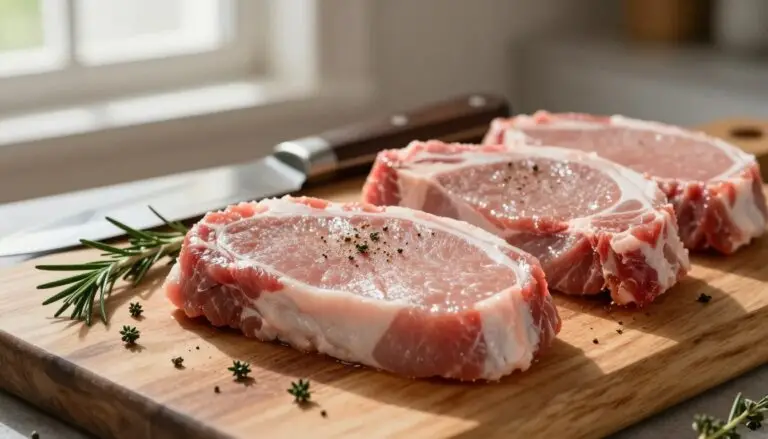
For pork adobo, pork belly and pork shoulder both work well. Pork belly gives a rich, melt-in-your-mouth texture thanks to higher fat.
Pork shoulder keeps a meatier bite and becomes tender with slow simmering. Cut pieces evenly so they cook uniformly.
Leaner swaps and which version to pick
Leaner protein reduces sauce body and depth. The simplest fix is to add a tablespoon of fat and simmer longer to deepen flavor.
- Weeknight: chicken thighs for speed and sticky sauce.
- Weekend: pork shoulder or pork belly for slow, tender results.
Chicken Adobo With Sticky Sauce in Under an Hour
You’ll follow a straight workflow to get a glossy finish on your chicken with minimal fuss. Start with a short or overnight soak, sear quickly, then simmer in one pot until the liquid turns jam-like.

Quick marinade strategy: 20 minutes to overnight
Marinate at least 20 minutes or longer for deeper flavor. Overnight gives richer depth, but 20 minutes is fine on weeknights. Use soy sauce, a splash of vinegar, and crushed garlic.
Sear first, then simmer: how the sauce turns into a glaze
Sear about 1 minute per side to build browned flavor. Add the marinade and simmer; the sauce will look thin until the last minutes. As it reduces, it becomes thick and clingy.
Timing guide and how to control tang
| Step | Minutes | Tip |
|---|---|---|
| Prep | 10 | Trim and season quickly |
| Marinate | 20–overnight | Short or ahead—both work |
| Cook | 35 | Sear, then simmer covered |
| Total | ≈45 | Plan for resting time |
Taste before you finish: the reduced sauce is strong. If it’s too thin, remove the chicken and boil the sauce down, then toss to coat. Save extra sauce for fried rice—use a little, it packs big taste.
Pork Adobo That Simmer-Softens Into Melt-in-Your-Mouth Pieces
A patient simmer and a smart sear are the two things that turn tough cuts into tender dinner. Choose pork belly for rich, silky bites or shoulder for a meatier finish. You’ll get tender pieces and a glossy sauce when you follow low heat and steady minutes.
Marinate or skip: when it helps
Marinate pork belly with soy sauce and garlic for at least one hour to boost depth. If you’re short on time, skip marinating—an assertive sear and long simmer still deliver flavor.
Simmer time that matters
Sear in batches to avoid steaming, then add water, bay leaves and black pepper and simmer covered. Plan about 40–60 minutes until fork-tender, then add vinegar and cook another 12–15 minutes.
Reducing to a glossy finish
Uncover at the end and simmer until the sauce thickens and clings to each piece. Drain excess fat or spoon off some oil if pork belly renders too much fat.
Nutrition: pork belly versions are richer than shoulder, so balance portions with rice and vegetables.
Step-by-Step Method You Can Use for Any Adobo
Follow a simple sequence and you’ll turn basic pantry items into a reliably great braise every time.
Marinate for deeper flavor
Short marinate or overnight works. Toss your protein with soy and crushed garlic for at least 20 minutes. Longer time deepens the flavor but is never required.
Sear to build browned flavor
Use a heavy pot or skillet and high heat to sear in batches. Those browned bits in the pan give the sauce real depth when you deglaze.

Add aromatics, bay leaves and peppercorns, then simmer
Pour in water or stock, add bay leaves and whole peppercorns, and lower the heat. Simmer gently until the meat is tender, about the minutes suggested below.
Add vinegar at the right moment
Stir in vinegar near the end of cooking to keep the sourness integrated. Cook a few minutes more to mellow sharp edges, then reduce the sauce to thickness you like.
Finish and season
Salt to taste, adjust with a pinch of sugar if the sauce is too sharp, and serve hot from the pot. Rest briefly so juices settle.
“Sear for flavor, add acid last — it’s the simple rules that deliver consistency.”
| Step | Minutes | Tip |
|---|---|---|
| Marinate | 20–overnight | Short time works for weeknights |
| Sear | 4–6 | High heat; work in batches |
| Simmer | 30–60 | Low heat until tender |
| Vinegar & finish | 5–10 | Add acid last; reduce to glaze |
Easy Ingredient Swaps and Add-Ins to Customize Your Sauce
Small swaps in your pantry can shift the sauce from sharp and bright to rich and mellow in minutes.
Onion or no onion: what it changes in taste
You’ll choose onion when you want extra body and a touch of natural sweetness. Caramelize sliced onion in the pan before adding soy and vinegar to add depth without extra sugar.
If you skip onion, the sauce stays lean and sharper in vinegar and garlic notes.
Ground black pepper vs. whole peppercorns
Whole peppercorns give little pops of heat as you eat. Ground black pepper spreads heat evenly and can taste hotter right away.
Use cracked pepper if you want texture but not the hot rush that ground pepper brings.
Adding fish sauce for extra umami (optional)
A splash of fish sauce deepens savory flavor without making the sauce taste fishy. Add just a teaspoon, taste, then add more if you want a stronger umami note.
How to make it slightly sweeter without losing the classic bite
Add sugar slowly—use teaspoons and stir between additions. One teaspoon softens sharp vinegar; two teaspoons is a clear but subtle sweetening.
- When to taste: always taste near the end, after reduction, because the sauce’s true intensity shows up then.
- How swaps affect heat: choose whole peppercorns for milder heat, ground for consistent spice suited to kids or spice-sensitive eaters.
“A teaspoon can change the whole balance—adjust in small steps and taste as you go.”
Popular Adobo Variations You Can Try Next
Mixing proteins or adding coconut milk gives you a richer, more varied finish for big pots. These variations keep the familiar soy-vinegar base while giving you more texture and mouthfeel for gatherings or meal prep.
Chicken and pork together make a great large-batch dish. Use bone-in chicken thighs and uniform pork shoulder pieces so both reach tenderness at the same time.
- Start with pork to brown and simmer longer, then add chicken later so it stays juicy.
- This mixed batch offers different textures in one serving and stretches well for leftovers.
Adobong baboy sa gata is a coconut-milk version that rounds the tang and makes the sauce silkier. Add a few Thai chiles slowly to dial in the heat.
- Sa gata softens sharp vinegar notes and increases cravings for plain rice.
- Serve with a crisp side—sliced cucumber or quick pickles—to cut the richness.
“Small steps with chiles let you control heat and keep everyone at the table happy.”
What to Serve With Adobo and How to Use Leftover Sauce
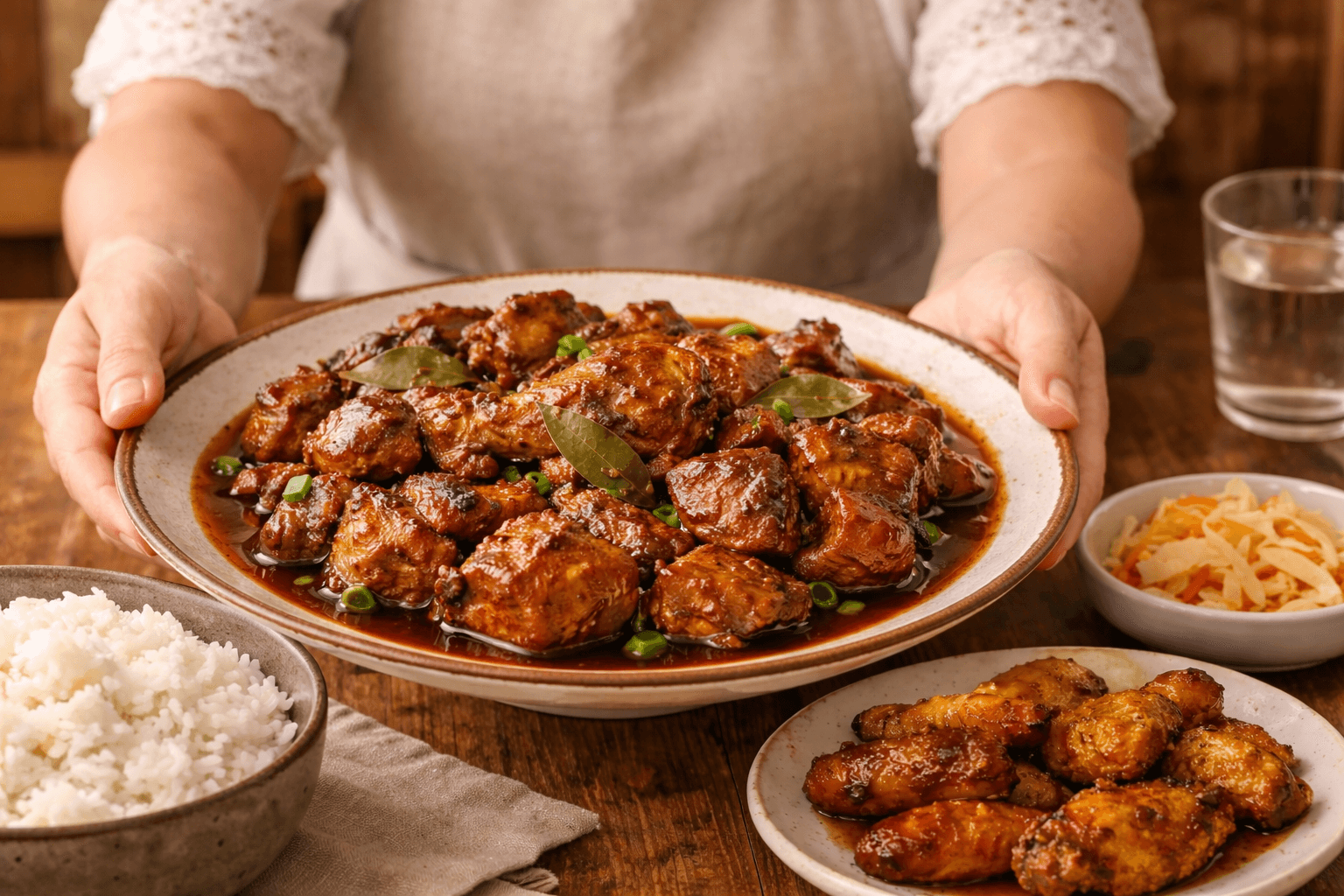
White rice is the easiest, most reliable partner for this braised dish. Steamed rice absorbs the salty-tangy sauce and evens out bold flavors so each bite feels balanced.
Steamed white rice and why it’s the classic pairing
Steamed rice soaks up sauce and tames intensity. Serve hot rice alongside pieces of meat so diners can mix sauce by the forkful.
Adobo fried rice: turn “gold” sauce into a second meal
To make fried rice, stir-fry cold cooked rice with chopped meat, scallions, and a few spoonfuls of leftover sauce. A little sauce adds big taste—use it sparingly.
Weeknight sides that balance the richness
Pick quick sides that cut fat and salt: crisp cucumber slices, quick pickles, or sautéed greens in a few minutes. For lighter plates, swap in cauliflower rice to lower calories while keeping texture.
Reheat tip: when you warm leftovers, add a splash of water or stock to loosen the sauce. Heat until glossy, taste, then adjust seasoning before serving.
Conclusion
Close with a clear plan and you can cook a confident, repeatable meal tonight. Use the soy-vinegar-garlic base, stock the right ingredients, and give the dish the sear and simmer it needs. That simple recipe path saves minutes and reduces guesswork.
Pick the protein that fits your time and texture goal. Choose chicken thighs for a sticky glaze or pork belly/shoulder for melt-in-your-mouth pieces. Keep bay leaves, peppercorns, a bit of oil and water handy, and use a balanced soy sauce so salt doesn’t overpower the dish.
Final checklist before you finish: add vinegar with intent, taste the reduced sauce, and use a teaspoon of sugar if it needs softening. Adjust cloves and fat so the sauce matches the texture you want.
Now choose one recipe, pick the minutes you have, and cook it in one pot. Save extra sauce for fried rice—leftovers improve overnight. With the base ratio and reduction nailed, you can switch versions and still get reliable results.