Exactly How Many Lbs of Meat Per Person You Need
Planning a gathering can feel overwhelming. You want your guests to leave satisfied and happy. Getting the meat quantities right makes all the difference between a successful event and one where people go hungry or you waste money on excess food.
Figuring out how many lbs of meat per person to buy is one of the most important decisions you’ll make when hosting. Too little meat leaves your guests disappointed. Too much creates waste and drains your budget. The right amount strikes the perfect balance between plenty and practicality.
This guide walks you through the essential strategies to calculate meat portions with confidence. You’ll learn professional tips that caterers and event planners use every day. Whether you’re hosting an intimate dinner for eight or a large backyard celebration for 100 people, these methods will help you get it right.
Understanding portion sizes removes the guesswork from meal planning. You’ll spend less time worrying and more time enjoying your event. Your guests will appreciate the thoughtful preparation, and you’ll feel confident knowing you’ve ordered exactly what you need.
The information ahead covers everything from basic guidelines to advanced calculations. You’ll discover adjustments based on your guest list, event style, and menu choices. With these tools in your hands, hosting becomes easier and more enjoyable.
Table of Contents
Determining how many lbs of meat per person
Planning the right amount of meat for your event is key. The USDA suggests 3 to 4 ounces of cooked meat per person for a meal. Remember, you need to add extra for raw meat, as it loses weight when cooked.
Using a good party meat planning guide helps you buy the right amount. This way, you avoid wasting food and make sure everyone is fed.
General Guidelines for Party Meat Planning
Start with basic measurements when planning your meat. Raw meat loses about 25 percent of its weight when cooked. For boneless cuts, plan for 0.5 pounds per person.
Bone-in cuts need 0.75 to 1 pound per person because of the bone. This helps you avoid buying too little or too much.
- Boneless meat: 0.5 pounds per person
- Bone-in meat: 0.75 to 1 pound per person
- Mixed meat options: 0.6 to 0.8 pounds per person
- Heavy appetites: add 0.25 pounds per person
Adjusting for Guest Demographics
Your guests’ needs affect how much meat you should buy. Kids eat less, while teenagers and active adults eat more. Think about your guests before you buy.
| Guest Type | Recommended Portion | Calculation Method |
|---|---|---|
| Adults (average appetites) | 0.5 to 0.75 lbs raw meat | Multiply adult count by 0.5 to 0.75 |
| Children (ages 4-12) | 0.25 to 0.35 lbs raw meat | Multiply child count by 0.25 to 0.35 |
| Teenagers | 0.6 to 0.8 lbs raw meat | Multiply teen count by 0.6 to 0.8 |
| Elderly guests | 0.4 to 0.5 lbs raw meat | Multiply elderly count by 0.4 to 0.5 |
| Mixed group gathering | 0.5 to 0.65 lbs raw meat average | Blend portions based on actual guest breakdown |
Understanding your specific guest demographics helps you purchase with confidence. A party with mostly children requires less meat than a gathering of athletes. Families with teenagers eating heartily need larger portions than retired adults with lighter appetites. Take time to think about who will attend before you shop.
Factors influencing your meat serving sizes per person
When planning meat for your event, it’s key to understand several factors. The time of day, who’s coming, and what else you’re serving all matter. Knowing these helps you buy just the right amount, saving money and making sure everyone’s happy.
The time of day affects how much meat people eat. Dinner guests usually need more than those at lunch or brunch. For lunch, aim for 3-4 ounces per person. For dinner, it’s 5-8 ounces.
What you serve with your meat also plays a part. If you have lots of sides, you can serve smaller meat portions. But if meat is the main focus, you’ll need more. Think about your menu before you shop.
Who’s coming to your event also matters. Kids eat less, and older guests might want smaller portions. If some guests don’t eat meat, you’ll need less overall. Make sure to adjust your list for these differences.
- Adjust portions based on meal type (breakfast, lunch, dinner)
- Factor in the number and variety of side dishes
- Consider guest age ranges and dietary preferences
- Account for appetizers served before the main course
Don’t forget about the weather and temperature. People eat differently in summer than in winter. Adjust your meat amounts for outdoor or indoor events.
Calculating beef tenderloin lbs per person for elegant dinners
Planning an upscale dinner means you need to figure out how much meat to serve. Beef tenderloin is a top choice for special events. It’s pricey, so you must get the portioning right to avoid waste.
Knowing how to measure beef tenderloin lbs per person is key. This elegant cut needs careful attention during preparation and cooking.
Selecting the right cut for your event
Beef tenderloin comes in different forms. Your choice affects how much you need. A whole tenderloin needs trimming, while a center-cut has less work.
For fancy dinners, chefs often choose center-cut tenderloin. It looks great and cooks evenly. Plan for 5 to 6 ounces of trimmed beef per guest.
- Whole tenderloin: requires extensive trimming
- Center-cut tenderloin: minimal trimming needed
- Portioned steaks: pre-cut for individual servings
Accounting for trimming and shrinkage
Beef tenderloin loses weight when cooked. It shrinks 20 to 25 percent. Knowing this helps you buy the right amount.
To serve 5 ounces cooked per person, buy 6.5 to 7 ounces raw. For 12 guests, you’ll need about 4.5 to 5 pounds raw before cooking.
| Number of Guests | Cooked Beef Per Person (oz) | Raw Beef Needed (lbs) | Accounting for 25% Shrinkage |
|---|---|---|---|
| 6 | 5 | 1.9 | 2.5 |
| 12 | 5 | 3.75 | 5 |
| 18 | 5 | 5.6 | 7.5 |
| 24 | 5 | 7.5 | 10 |
Always add 10 to 15 percent extra to your beef tenderloin order for trimming waste and unexpected needs. This extra ensures you have enough for your event. Premium cuts need premium planning.
“Precision in portioning elegant proteins separates professional results from amateur mistakes.”
Your beef tenderloin lbs per person calculation is key for an elegant dinner. Understanding shrinkage and trimming ensures perfect portions for your guests.
Best practices for how much roast beef per person
When planning roast beef for your event, consider a few key factors. Knowing how much roast beef to prepare ensures you serve your guests well. This way, you avoid wasting food or running out.
Start with basic portion sizes. A standard serving of roast beef is 6 to 8 ounces of raw meat per guest. This takes into account the meat’s loss of weight during cooking. Meat can lose up to 25 percent of its weight when cooked.
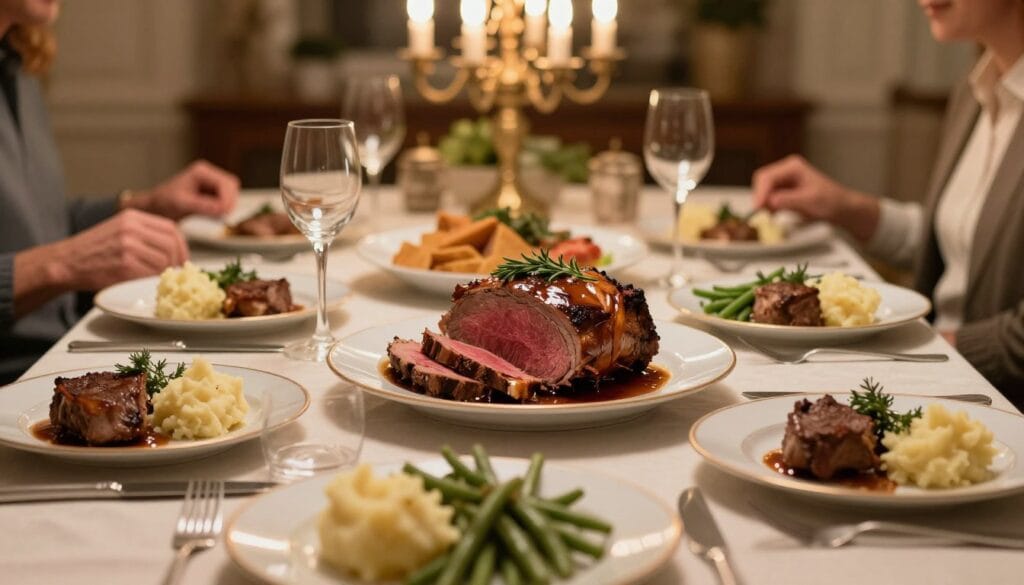
The setting of your event also plays a role. More meat is needed for a main course than for a buffet with many options.
Key Serving Guidelines
- Primary entree: 8 ounces raw per person
- Buffet with multiple proteins: 4 to 5 ounces raw per person
- Appetizer or sample portions: 2 to 3 ounces raw per person
- Carving station service: 6 to 7 ounces raw per person
Knowing the difference between raw and cooked weight helps avoid ordering errors. This knowledge helps reduce food waste and manage your budget better.
| Guest Count | Primary Entree (Ounces) | Primary Entree (Pounds) | Buffet Service (Pounds) | Carving Station (Pounds) |
|---|---|---|---|---|
| 10 guests | 80 | 5 | 2.5-3.1 | 3.75-4.38 |
| 25 guests | 200 | 12.5 | 6.25-7.81 | 9.38-10.94 |
| 50 guests | 400 | 25 | 12.5-15.6 | 18.75-21.88 |
| 100 guests | 800 | 50 | 25-31.2 | 37.5-43.75 |
Temperature and resting time also affect how much meat you need. Rested roast beef is juicier and more flavorful. This makes smaller portions feel more satisfying to your guests.
Estimating how many pounds of chicken per person for casual gatherings
Planning a casual gathering means making smart meat choices. Chicken is a great choice because it’s versatile and affordable. The amount you need depends on the cut and how you’ll serve it.
Getting the right portion sizes is key. It ensures everyone is happy without too much leftover. Your portion planning is critical for a successful event.
Bone-in versus boneless considerations
The type of chicken you choose affects your serving needs. Bone-in chicken has more weight from bones, so you need more pounds for the same meat.
For casual events, plan for 8 to 10 ounces of bone-in chicken per guest. This accounts for bone weight and gives a good meat portion. Boneless chicken, on the other hand, needs less weight—about 6 to 8 ounces per person. This is because most of it is meat.
| Chicken Type | Weight Per Person | Best For |
|---|---|---|
| Bone-in thighs and drumsticks | 8–10 ounces | Casual backyard gatherings |
| Boneless, skinless breasts | 6–8 ounces | Health-conscious guests |
| Bone-in breasts | 8–9 ounces | Mixed preference groups |
Serving whole birds versus individual pieces
Your serving style affects how guests see portion sizes. Whole roasted chickens make a great centerpiece for casual dinners. One whole bird usually serves 3 to 4 people well.
Individual pieces, like thighs and breasts, offer flexibility. They make serving easier and let guests choose their favorites. Plan for 2 to 3 pieces per person for cut portions.
- Whole birds are perfect for gatherings of 6–12 people
- Individual pieces are great for larger events and buffets
- Marinated thighs are juicy and flavorful for outdoor cookouts
- Boneless breasts cook fast and are popular with younger guests
Chicken absorbs flavors well from marinades and seasonings. This makes even budget-friendly portions taste premium. Your choice between whole birds and individual pieces depends on your guest count, cooking space, and how much serving you want to do.
Tips for how many pounds of beef roast per person
Choosing the right amount of beef roast for your event is important. The amount needed depends on your menu. If you have many side dishes, you can use less meat per person.
Side dishes like potatoes, vegetables, bread, and salads help fill plates. This means your guests will eat less meat.
How much beef roast should you buy? Start with a basic amount and adjust as needed. The types of side dishes you serve play a big role in this.
A meal with lots of starch sides needs less meat. A simple dinner with fewer sides requires more meat.
Planning Around Your Menu
Think about your menu beyond the roast. Rich, filling sides mean guests will eat less beef. Light sides require larger meat portions.
Understanding this helps you buy the right amount without waste. A dinner with mashed potatoes, gravy, and vegetables allows for smaller portions. A simple meal with just salad and bread needs more meat.
Building in a Safety Buffer
Always buy extra meat to be safe. Add about 10 percent more beef to your order. This extra meat covers guests with big appetites.
It also helps if unexpected visitors arrive. Running out of food can cause stress and disappointment.
| Meal Type | Pounds Per Person | Side Dish Quantity | Reason |
|---|---|---|---|
| Heavy sides included | 0.5 to 0.75 lbs | 3 to 4 sides | Sides fill plates and reduce meat needs |
| Moderate sides included | 0.75 to 1 lb | 2 to 3 sides | Balanced portion with some side support |
| Minimal sides | 1 to 1.25 lbs | 1 side or less | Beef becomes the main focus |
Your menu strategy affects how much meat you buy. Smart planning saves money and reduces leftovers. Planning your side dishes before buying beef keeps your event running smoothly.
Essential meat quantity for guests at large events
Planning a big event means thinking about how you’ll serve food and what your guests like. The way you serve food affects how much meat you need. Knowing the difference between buffet and plated service helps you order the right amount of meat. This way, you won’t spend too much or leave guests hungry.
Buffet Style Versus Plated Service
At buffet events, guests take bigger portions than at plated dinners. They load their plates with more meat. For buffets, plan for 0.5 to 0.75 pounds per person.
Plated service lets you control how much meat each guest gets. You can serve 0.3 to 0.5 pounds per person for plated dinners.
- Buffet service needs extra meat for looks and to refill
- Plated service lets you portion meat in the kitchen
- Buffet guests often come back for more
- Plated events feel more formal
Managing Side Dishes to Balance Protein Intake
Planning your sides wisely can cut down on the meat you need. Filling carbs and veggies make guests feel full with less meat. Serve big sides like potatoes, rice, or pasta with your protein.
| Service Style | Meat Per Guest | Best Side Dishes |
|---|---|---|
| Buffet | 0.5-0.75 lbs | Pasta salad, roasted potatoes, grain pilaf |
| Plated | 0.3-0.5 lbs | Mashed potatoes, wild rice, roasted vegetables |
Good side dishes help you serve enough without breaking the bank. Your guests will enjoy the meal without focusing too much on meat.
Using a meat per person calculator for accuracy
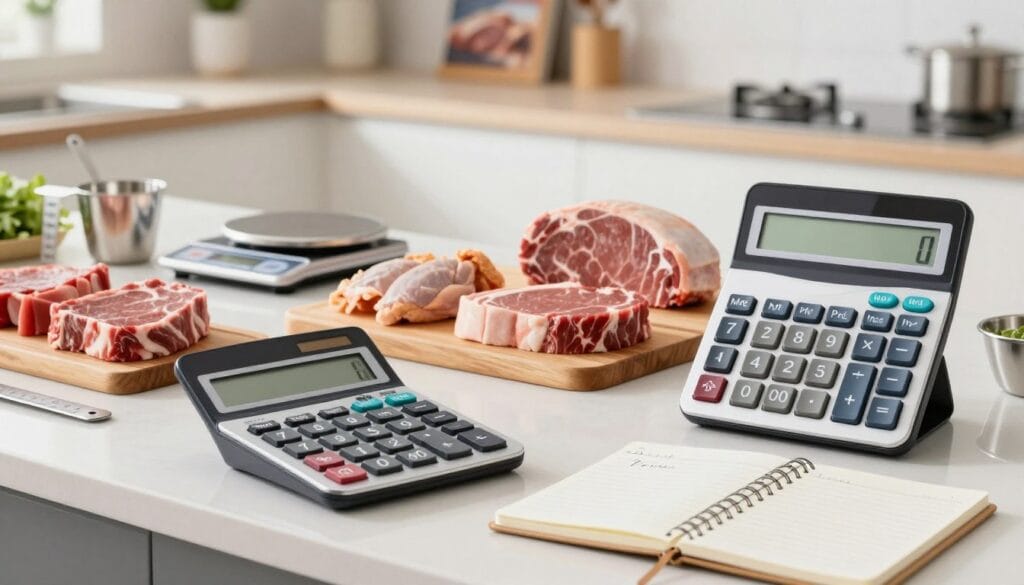
Planning a meal for guests can be overwhelming. You need to figure out the exact portions. A meat per person calculator makes this easier. It helps you find the right amount of protein for your event, big or small.
With a meat per person calculator, you just enter some basic info. It then gives you exact meat amounts for your guests. This works for all meats, from chicken to beef tenderloin.
- Enter your total guest count
- Select your menu items and meat types
- Choose your service style (plated or buffet)
- Get instant portion recommendations
- Receive shopping lists with exact weights
These calculators consider many factors. They look at whether meat has bones, cooking method, and side dishes. You’ll get accurate numbers for all meats.
| Meat Type | Boneless Per Person | Bone-In Per Person | Best For |
|---|---|---|---|
| Beef Tenderloin | 5-6 oz | 7-8 oz | Formal Dinners |
| Chicken Breast | 5-6 oz | 8-10 oz | Casual Gatherings |
| Beef Roast | 4-5 oz | 6-7 oz | Family Meals |
| Pork Chops | 5-6 oz | 7-9 oz | Mixed Events |
Using these tools saves time and money. You won’t order too much meat, and you won’t run out. Most are free or cheap online tools that take just minutes to use.
Managing meat portions for catering and professional service
Professional catering needs careful planning. Feeding large groups means knowing how much meat to serve. Caterers use strict rules to keep food quality high and costs low. Your goal is to serve great food without wasting too much or running out.
The catering world follows proven standards. These rules help you figure out the right amount of meat for each guest at your event.
Standard Industry Weight Guidelines
Experts say 6 to 8 ounces of raw protein per person for main courses. This includes cooking loss and bone weight. Your meat servings should match these amounts based on your event:
- Formal plated dinners: 8 ounces raw meat per person
- Casual buffet events: 6.5 ounces raw meat per person
- Cocktail receptions with light appetizers: 2 to 3 ounces per person
- Family-style service: 7 ounces per person
A meat per person calculator makes planning easier. It helps you order the right amount for your guests.
Reducing Waste Through Precise Ordering
Ordering the right amount saves money and helps the environment. Knowing how much meat you need means you don’t overbuy. Professional kitchens lose thousands of dollars each year from wrong portion sizes.
| Event Type | Guest Count | Raw Meat Required | Cooked Yield |
|---|---|---|---|
| Formal Dinner | 100 guests | 50 pounds | 35-38 pounds |
| Casual Buffet | 100 guests | 40 pounds | 28-32 pounds |
| Cocktail Event | 150 guests | 18-22 pounds | 12-16 pounds |
Ordering the right amount boosts your profits. Telling suppliers exactly how much meat you need gets you better prices. Showing you’re organized and serious with your orders helps you get better deals.
Keep track of how much meat you use at each event. This helps you order better next time and builds your reputation.
Conclusion
Planning the right amount of meat for your event takes practice. You now know how to figure out how much chicken and beef roast you need for different events. These skills are useful whether you’re hosting a small dinner or a big party.
The secret to success is knowing your guests and the meal you want to serve. By calculating meat ahead of time, you avoid waste and keep costs down. This shows you care about your guests and your budget.
Getting good at portion control means you can host any event with confidence. Whether it’s for catering or a home dinner, the tips you learned work everywhere. Your smart planning will make every meal memorable and stress-free for everyone.