
How to Clean Cast Iron: Simple Steps for a Perfect Skillet
Cooking with cast iron is special. Your grandmother’s skillet is a pride on the stove. Lodge pans sizzle with your favorite dishes. Cast iron cookware heats evenly, lasts long, and gets better with time.
Many worry about caring for cast iron. They think it’s hard or needs special skills. But, cleaning cast iron is easy and stress-free.
Learning to clean cast iron is simple. Just follow a few basic steps. Water is okay to use, and you don’t need to scrub hard. Your pan won’t rust if you care for it right. Whether it’s your first skillet or a family heirloom, these tips will keep it in top shape.
Table of Contents
Why Cast Iron Cookware Deserves Special Care
Cast iron is different from other cookware in many ways. Knowing what makes it special helps you see why caring for it is so important. Your cast iron skillet is not like stainless steel or non-stick pans. It needs a special care routine, but it’s worth it for years of great cooking.
The Unique Properties of Cast Iron
Cast iron has a porous surface that forms a protective layer called seasoning. This seasoning is made from polymerized oil, which develops through cooking and care. Unlike non-stick pans, your cast iron creates its own natural non-stick surface that gets better with time.
Cast iron reacts to moisture in ways other pans don’t. If water is left on the surface, it can cause rust spots. But, with the right care, you can avoid this and keep your pan in great shape.
Cast iron is great at holding heat and distributing it evenly. It stays hot longer than aluminum pans, making it perfect for searing meat and frying foods. Because of this, you need to handle it carefully during and after cooking.
Benefits of Proper Cast Iron Maintenance
Properly cared for, cast iron can last for generations. Many families have cast iron skillets that are over 100 years old. With the right care, your pan will only get better with age.
A well-seasoned skillet has amazing non-stick properties without using chemicals. Food slides off easily, and cleaning is a breeze. Regular use actually makes your seasoning layer stronger.
- Enhanced browning and crust formation on foods
- Even heat distribution for consistent cooking results
- No replacement costs—one pan lasts a lifetime
- Improved non-stick performance over time
- Chemical-free cooking surface
Learning how to care for your cast iron skillet turns it into a valuable kitchen asset. The effort you put in now will pay off for years to come.
Essential Tools and Materials for Cleaning Your Skillet
You don’t need to spend a lot on fancy products to keep your cast iron skillet clean. Most things you need are probably in your kitchen already. Creating a simple cleaning kit is quick and won’t cost much.
Here are the basic tools you’ll need for easy skillet cleaning:
- Coarse salt – Kosher salt is great for scrubbing without harming your seasoning
- Stiff brush or non-metal scrubber – Chainmail scrubbers, nylon brushes, or the rough side of a sponge work well
- Paper towels or clean kitchen towels – Important for drying your skillet completely
- Cooking oil – Vegetable, canola, or flaxseed oil is best for upkeep
- Hot water – The key to any cleaning routine
- Plastic pan scraper – Useful for getting rid of tough food bits (optional)
Each tool has its own role in caring for your cast iron. Salt gently scrubs away dirt without scratching. Non-metal scrubbers help remove stuck-on food without harming your seasoning. Oil helps restore the seasoning after washing.
Lodge cast iron care is all about simplicity. Lodge, the oldest cookware maker in America, suggests using common household items instead of pricey cleaners. You don’t need special products to keep your cast iron in top shape.
Here are things to avoid during regular care and cleaning:
- Dishwashers – The heat and harsh water can damage seasoning
- Steel wool pads – These can scratch and remove seasoning (use only for rust removal)
- Abrasive scouring powders – Too rough for everyday cleaning
With these simple tools, you’re set to clean your skillet right after each use.
How to Clean Cast Iron After Every Use
Keeping your cast iron cookware clean is essential for its longevity. It’s not hard to do. A simple routine after each use will keep your skillet in top shape for years. This quick daily care protects the seasoning that makes cast iron non-stick.
The Immediate Post-Cooking Rinse
Cleaning your cast iron is best when it’s still warm. Warm cookware makes it easier to remove food. Start by rinsing your skillet under hot water. Then, use your hand or a soft cloth to wipe away loose food gently.
Many think water will harm their cast iron. But, brief water contact is safe. The danger is in soaking or leaving it wet for too long. Quick rinsing is safe for your cookware.
Gentle Scrubbing Techniques That Protect Seasoning
For stuck-on food, try the salt scrub method. It’s great for cleaning cast iron without harming the seasoning:
- Add one tablespoon of coarse salt to your warm pan
- Pour a small amount of water or oil onto the salt
- Use a cloth or paper towel to scrub in circular motions
- Let the salt work as a gentle abrasive to lift food particles
Avoid harsh scrubbing or steel wool, as they remove seasoning. Scrub gently and control your pressure. After scrubbing, rinse well under hot water to remove all salt and food.
Drying your pan immediately is crucial. Pat it dry with a clean cloth, then warm it on low heat for a few minutes. Once warm, apply a thin layer of oil. This keeps your seasoning in good condition between uses.
Cleaning your cast iron takes only three to five minutes. This small effort ensures your cookware lasts for decades.
Dealing with Stubborn Food Residue and Buildup
Even the most skilled cooks face burnt-on food and carbon deposits in their cast iron pans. This doesn’t mean you’ve ruined your pan. Learning how to clean your cast iron skillet well will help you keep it in top shape.
Begin with the boiling water method for stuck-on food. Fill your skillet with water and heat it until boiling. Use a wooden spatula to gently scrape off the loosened food. This easy method works well and requires little effort.
For tougher buildup, try the salt scrub approach. Mix coarse salt with a bit of oil, then scrub with a chainmail scrubber or stiff brush. This method offers strong cleaning power without damaging your seasoning.
Today, you can use mild dish soap in small amounts. The old rule against using soap was due to harsh cleaners. Now, gentle formulas won’t harm your seasoning, but soap is still not needed for regular cleaning.
| Cleaning Method | Best For | Difficulty Level | Re-seasoning Needed |
|---|---|---|---|
| Boiling Water Method | Fresh burnt food | Easy | Optional |
| Salt Scrub | Moderate buildup | Moderate | Optional |
| Soap and Scrubbing | Heavy residue | Moderate | Recommended |
| Oven Self-Clean Cycle | Extreme buildup | Advanced | Required |
For severe cases, use the oven method as a last resort. Place your skillet upside down in a self-cleaning oven cycle. This method burns off all organic material, essentially resetting your pan for full re-seasoning.
Avoid these mistakes during cast iron skillet cleaning:
- Never soak your pan overnight in water
- Don’t place cast iron in the dishwasher
- Avoid metal scouring pads unless you plan full re-seasoning
After deep cleaning, apply a generous oil coating or re-season your skillet completely. This protects the iron surface and keeps your cookware performing well for years.
Removing Rust from Cast Iron Cookware
Rust on your cast iron skillet might seem like a disaster, but the good news is that cast iron is remarkably resilient. Many neglected pans can be brought back to life with the right techniques. Rust forms when moisture sits on your pan’s surface without proper seasoning protection. Understanding how to remove rust from cast iron is an essential skill that helps you restore cast iron skillet pieces that have been damaged or stored improperly.
Identifying Rust on Your Skillet
Rust appears as reddish-brown spots or patches on your cast iron surface. You might see fine rust dust or more substantial flaking in severe cases. The key difference between rust and normal seasoning is the color—rust is distinctly reddish, while seasoning buildup appears dark brown or black.
Common causes of rust include:
- Storing your pan while still damp
- Prolonged exposure to moisture or humidity
- Loss of the protective seasoning layer
- Incorrect washing techniques
Surface rust doesn’t mean your pan is ruined. Cast iron’s durability allows you to reverse rust damage completely.
Step-by-Step Rust Removal Process
For minor surface rust, use fine steel wool with a small amount of dish soap. Scrub the affected areas until the reddish color disappears and you see bare gray iron underneath.
For more extensive rust buildup, try the vinegar soak method:
- Mix equal parts white vinegar and water in a container
- Submerge the rusty sections for 30 minutes to 1 hour
- Check every 30 minutes to prevent over-etching
- Scrub away loosened rust with steel wool
- Rinse thoroughly and dry completely
Never leave cast iron in vinegar longer than a few hours—the acid damages the iron itself. After removing rust, wash your pan and immediately proceed to complete re-seasoning. This step restores the protective coating and prevents future rust formation. For severely damaged pieces, consider professional electrolysis or lye bath treatments, though these advanced restoration methods require specialized knowledge.
How to Season a Cast Iron Skillet for Long-Lasting Protection
Seasoning is crucial for your cast iron cookware. It creates a protective layer that stops rust and makes cooking easier. This layer forms when oil bonds with the iron through heat, making it hard and non-stick.
You might need to season your skillet in several situations. New pans often come pre-seasoned, but raw iron needs it right away. Also, season after removing rust or when food sticks too much. Extra layers make your cookware better over time.

The basic process for how to season a cast iron skillet is straightforward and takes just a few hours.
- Clean your skillet completely and dry it thoroughly
- Apply a very thin layer of cooking oil to the entire pan, including the handle and bottom
- Wipe away excess oil with a clean cloth—your pan should look almost dry
- Place the pan upside down in a 450-500°F oven
- Bake for one hour, then cool completely inside the oven
Choosing the right oil is key when seasoning cast iron pans. Grapeseed, canola, and vegetable oils are good because they have high smoke points. Repeat this process 3-4 times for new pans or once every few months for maintenance.
“Every time you cook with fat, you’re naturally building seasoning on your skillet.”
Cooking fatty foods like bacon, fried chicken, and cornbread strengthens your skillet’s coating. Proper cleaning and maintenance make your cookware better with age. Knowing how to season a cast iron skillet helps you keep it for decades.
Common Mistakes to Avoid When Caring for Cast Iron
Your cast iron skillet can last for generations if you take care of it. Knowing what not to do is as important as knowing how to clean it. Many people unknowingly damage their pans through simple errors. These mistakes can strip the seasoning or invite rust. Learning these cast iron maintenance tips will help keep your cookware in great shape for years.
What Never to Do to Your Cast Iron Pan
Protecting your investment is key. Here are the biggest errors that damage cast iron:
- Leaving your pan wet or air-drying it — Water left on the surface invites rust quickly. Always dry your skillet immediately with a towel or use stovetop heat to evaporate moisture completely.
- Soaking cast iron in water — Extended soaking promotes rust and softens seasoning buildup. Clean your pan right after cooking instead of letting it sit.
- Putting cast iron in the dishwasher — Harsh detergents, high heat, and standing water destroy seasoning and cause rust. Hand-wash your pan every single time.
- Using metal utensils too aggressively — Sharp metal scratches and chips the seasoning layer. Use wooden spoons, silicone spatulas, or plastic tools when cooking.
- Cooking highly acidic foods for long periods — Tomatoes, wine sauces, and citrus can degrade seasoning on newer pans. This matters less with well-established seasoning built up over time.
- Storing with lids on or in humid areas — Trapped moisture leads to rust. Store your pan in a dry location with a paper towel between the pan and lid.
- Applying too much oil during maintenance — Excess oil creates sticky buildup rather than a protective coating. Use light coatings only.
- Over-scrubbing for minor food residue — Aggressive scrubbing removes seasoning unnecessarily. Gentle cleaning works just fine for light debris.
| Common Mistake | What Happens | Correct Cast Iron Maintenance Tips |
|---|---|---|
| Leaving pan wet | Rust forms quickly on exposed iron | Dry immediately with a towel or heat on the stovetop |
| Soaking in water | Rust develops and seasoning softens | Clean right after cooking while pan is still warm |
| Using dishwasher | Seasoning strips away completely | Always hand-wash with gentle soap and warm water |
| Metal utensils | Scratches chip the protective coating | Use wooden, silicone, or plastic cooking tools |
| Acidic foods long-term | Iron reacts with acid and weakens seasoning | Limit acid exposure on poorly seasoned pans |
| Storage with lids on | Moisture trapped, rust develops | Store dry with paper towel between pan and lid |
| Too much oil application | Sticky residue builds up instead of protection | Apply thin, light oil coatings only |
| Over-scrubbing lightly soiled pan | Seasoning wears away unnecessarily | Use gentle scrubbing for minor food particles |
The good news is that cast iron forgives mistakes. Most damage from poor handling can be corrected with proper cleaning and re-seasoning. Your pan is tougher than you might think, yet it still requires thoughtful care. By following solid cast iron maintenance tips and avoiding these eight common pitfalls, you will build a seasoning layer that improves with use and protects your skillet for decades.
Restoring and Maintaining Vintage Cast Iron Pieces
Vintage cast iron cookware is loved by many home cooks. Brands like Griswold, Wagner, and Lodge are especially sought after. These pans have smoother cooking surfaces than today’s pans. They are both useful and valuable.
If you have old cast iron, you can make it shine again. Learning to restore your skillet can make it a favorite in your kitchen.
Before starting, check your pan for damage. Look for cracks, deep rust, warping, and surface rust. These issues can affect how well your pan cooks.
- Cracks in the iron (these cannot be repaired and make the pan unsafe)
- Deep pitting from severe rust (this affects cooking performance)
- Warping (test by placing the pan on a flat surface)
- Surface rust and old seasoning buildup (these are fixable)
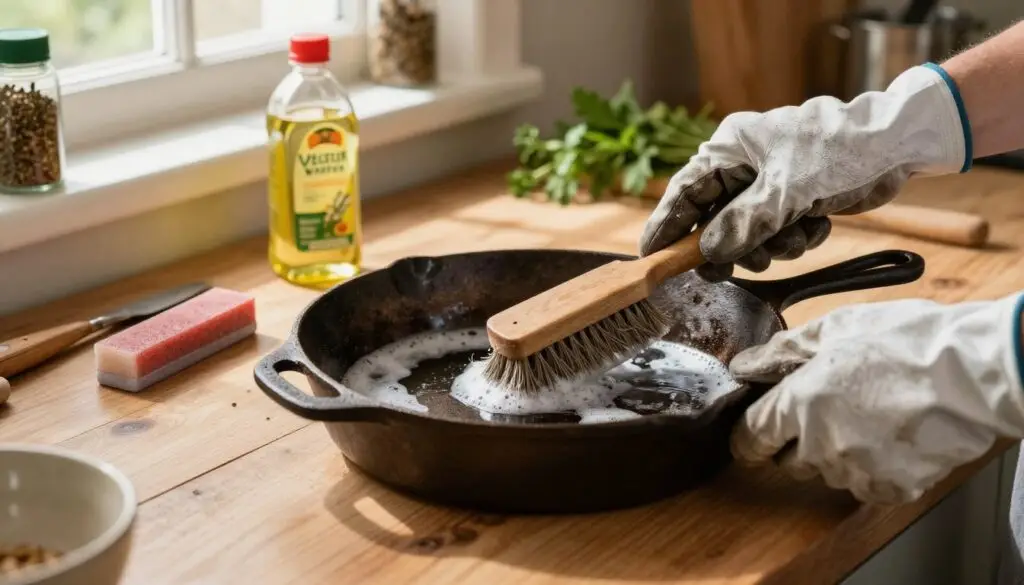
Surface rust, grime, and old seasoning are cosmetic problems. You can clean and restore these issues. To fix your skillet, remove old seasoning and rust. Vinegar is great for rust, and a self-cleaning oven can remove buildup.
After stripping, clean the pan with steel wool and dish soap. This will get it ready for seasoning.
For lodge cast iron care, early-to-mid twentieth century pans need extra care. Dry them well after stripping and season them with four to six layers. This protects the iron.
Where to Find Vintage Cast Iron
Look for vintage cast iron at estate sales, antique shops, online, and thrift stores. You can find great deals. After fixing them up, these pans will be your go-to for cooking.
Conclusion
Caring for cast iron is simpler than you might think. Just clean it while warm, dry it with a cloth, and apply a thin oil coat. These steps take only a few minutes after cooking. Once you get these basics, taking care of your cast iron becomes easy.
Consistency is key. Regular seasoning makes the protective layer stronger with each use. This makes your skillet last longer.
Many think cast iron is hard to care for. But it’s actually very forgiving. Mistakes can be fixed, and rust can be removed. Vintage pans and new ones need the same care.
Seasoning cast iron is best done through regular use. Cooking with oil or butter builds up the seasoning. Try making cornbread, fried chicken, or a skillet cookie. These recipes not only taste great but also keep your pan in top condition.
Cast iron skillets have a long history, passed down through generations. With the care you now know, your skillet could cook for your grandchildren in the future. Start using your cast iron today. Season it, cook with it, and watch it improve. A little care today means decades of cooking joy.