Delicious Shrimp Sashimi: A Culinary Delight
Imagine taking a bite of shrimp sashimi. The shrimp melts in your mouth, revealing a sweet taste. This moment is more than just eating. It’s a taste of centuries of Japanese tradition and art.
Shrimp sashimi shows the beauty of simple cooking. It doesn’t hide flavors with sauces or spices. Raw shrimp’s natural taste and soft texture speak for themselves. The Japanese have made raw seafood an art form.
What makes shrimp sashimi special? It’s about the quality of the shrimp, how it’s prepared, and the respect for the ingredient. You start by choosing the best shrimp at the market.
Learning to make shrimp sashimi at home is a journey. You’ll learn techniques from Japanese chefs. It takes patience, attention to detail, and a love for authenticity.
This guide will teach you how to make shrimp sashimi like a pro. You’ll learn how to pick the right shrimp and follow safety rules. You’ll impress yourself and your guests.
Table of Contents
Understanding the Appeal of Raw Seafood
Raw seafood has been loved by many for centuries. It’s more than just eating something uncooked. Enjoying raw dishes like sashimi means you’re part of a tradition that values freshness and skill.
When you eat raw seafood, your senses come alive. You taste pure flavors and feel unique textures. You also see beautiful dishes. This makes raw seafood special for those who love quality food.
The Cultural Significance of Sashimi
Sashimi has deep roots in Japanese culture, dating back to the 14th century. It started as a way to celebrate the ocean’s bounty. Over time, it became an art form that requires respect and knowledge.
In Japan, sashimi is more than food. It shows discipline, tradition, and respect for nature. Chefs follow methods passed down through generations. This shows that raw seafood is a thoughtful experience.
- Sashimi originated during Japan’s medieval period
- The practice spread from coastal fishing communities
- Traditional preparation methods remain largely unchanged
- Respect for ingredients is central to the philosophy
Why Texture Matters in Raw Preparations
Texture is key in raw shrimp sashimi. The Japanese word “nekkori” describes the sticky-sweet sensation. This comes from perfect freshness and handling.
Fresh shrimp has firm yet tender bites. This is because its muscle fibers are intact. You can tell the difference between fresh and low-quality shrimp. The texture shows the ingredient’s quality and the chef’s skill.
| Texture Quality | Freshness Level | Taste Experience | What You Feel |
|---|---|---|---|
| Nekkori (Sticky-Sweet) | Peak Freshness | Sweet, Clean Flavor | Firm, Tender Bite |
| Soft, Mushy | Day-Old or Older | Bland, Watery Taste | Loses Structure Quickly |
| Rubbery | Improperly Stored | Off Flavors Develop | Difficult to Chew |
Understanding texture shows why freshness is important. Quality raw shrimp gives a unique sensation. This sensation comes from perfect handling from ocean to plate.
“The texture of raw seafood is nature’s way of telling you it’s fresh. Every bite should feel alive on your tongue.”
Appreciating raw seafood grows when you understand its cultural and sensory aspects. Tradition and texture guide you to better choices in sashimi.
Sourcing High Quality Sushi Grade Fish
Finding the right ingredients is key when making shrimp sashimi at home. The safety and taste of your meal depend on it. You need to find reliable suppliers who offer premium quality products.
When looking for sushi grade fish, choose suppliers who follow strict safety rules. Not all fish markets sell sushi-ready products. True sushi grade fish comes from vendors who know about freezing, freshness, and handling.
Finding Reputable Suppliers
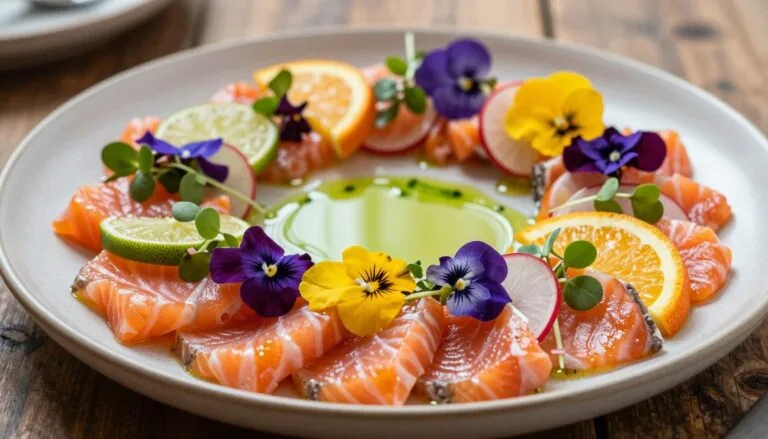
Search for seafood suppliers with good reputations in your area. Read online reviews and ask local sushi places where they get their ingredients. Many shops now sell salmon sashimi and explain how they source it.
Try to visit suppliers in person. See how they store their fish and how clean their places are. Good suppliers can answer your questions about where their fish comes from.
Understanding Cold Chain Logistics
Keeping fish cold is very important during transport and storage. Sushi grade fish must stay under 32 degrees Fahrenheit from the ocean to your kitchen. This cold chain stops harmful bacteria from growing, making the fish safe to eat raw.
- Ask suppliers about their refrigeration methods
- Confirm fish arrived frozen and stayed frozen
- Check that packaging shows proper ice coverage
- Verify delivery times remain under 24 hours
Your choice of supplier affects your dining experience and your family’s safety.
Exploring the Delicate Flavor of Shrimp Sashimi
Shrimp sashimi offers a unique taste experience. The flavor depends on the shrimp species and freshness. This makes shrimp sashimi a favorite in sushi and fine dining across the United States.
The Natural Sweetness of Amaebi
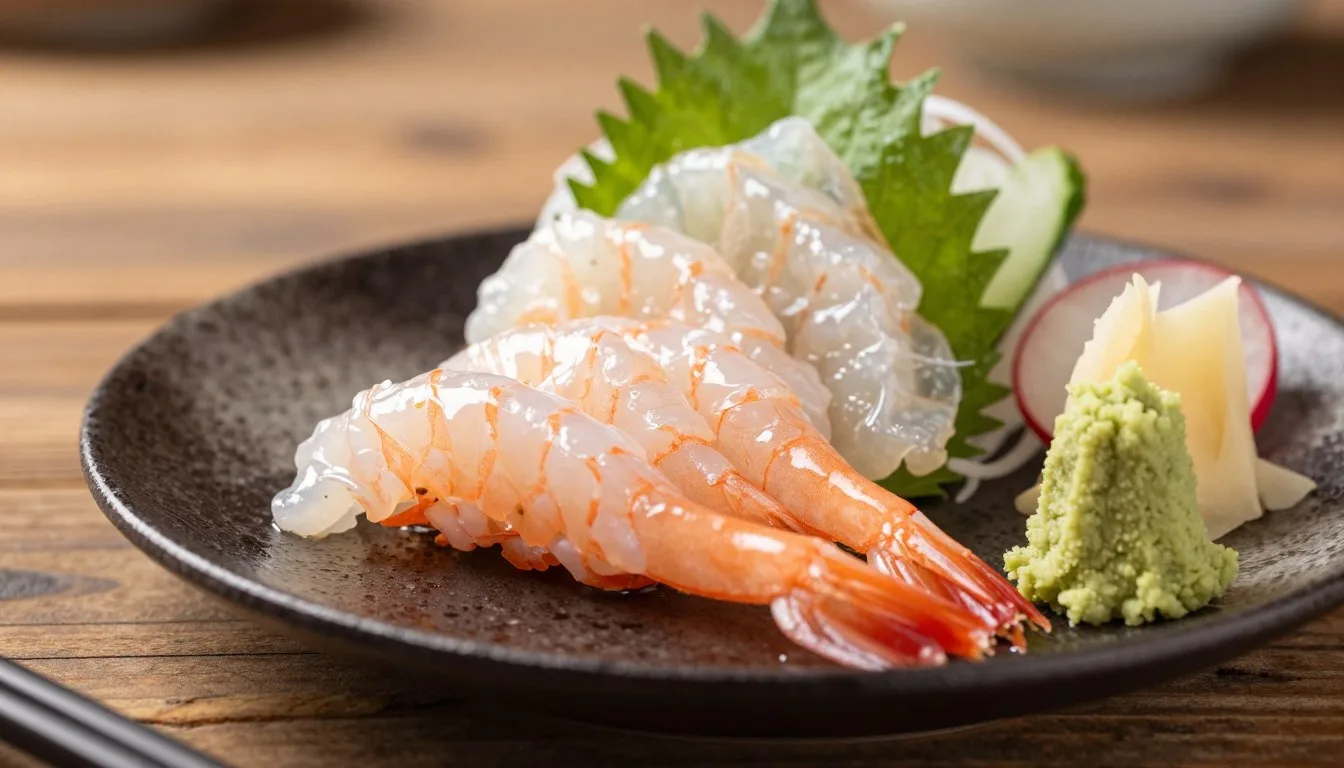
Amaebi sashimi is known for its sweet taste. The name “amaebi” means “sweet shrimp” in Japanese. When you eat it, you get a sweet finish that stays with you.
This sweetness comes from the shrimp’s amino acids and sugars. Raw preparation keeps these flavors. Unlike cooked shrimp, raw shrimp keeps all its natural tastes.
- Sweet shrimp sashimi has a buttery texture
- The flavor intensifies as it reaches room temperature
- Each bite reveals layers of subtle sweetness
- The tail portion offers richer flavor than the body
Freshness Standards for Raw Consumption
Raw shrimp needs strict freshness standards. You need sushi-grade shrimp that’s been flash-frozen right after catch. The shrimp must come from clean waters and be handled carefully.
| Freshness Indicator | Acceptable Standard | What to Avoid |
|---|---|---|
| Smell | Fresh ocean scent, no ammonia | Strong fishy or ammonia odor |
| Color | Translucent with slight pink hue | Gray, brown, or opaque appearance |
| Texture | Firm and slightly springy | Mushy or falling apart easily |
| Freezing Method | Flash-frozen at minus 4°F for 7 days | Slow-frozen or unknown freezing process |
Buy your shrimp from trusted Japanese markets or certified sushi suppliers. Make sure they know how to handle it right. Ask about the shrimp’s origin and freezing. Quality suppliers will show you proof it’s safe for raw eating.
Essential Tools for Preparing Raw Shrimp Sushi
To make raw shrimp sushi at home, you need special tools. These tools help keep the shrimp’s texture and quality right. They also make sure your food is safe to eat. Using the right tools makes you look like a pro.
You’ll need good cutting tools and a clean workspace. Each tool has its own job in making your sushi. Let’s look at what you need before you start.
Cutting Equipment and Preparation Surfaces
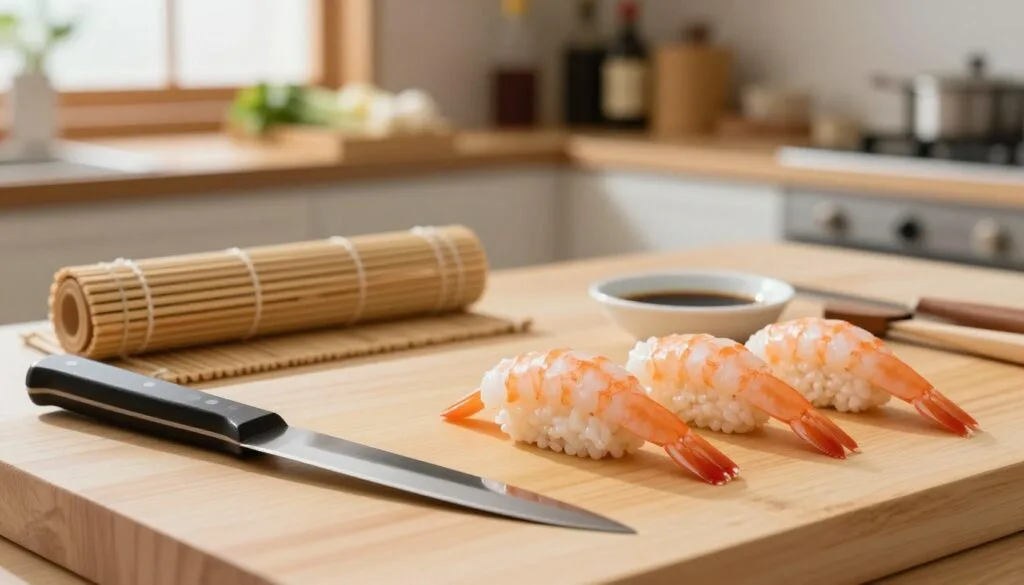
A high-carbon steel yanagiba knife is key. It lets you cut the shrimp smoothly without tearing it. Aim for a knife that’s eight to ten inches long for better control.
Choosing the right cutting board is also important. Use different boards for seafood to avoid contamination. Bamboo or plastic boards are good choices. Always clean your board well before using it.
Temperature Control and Additional Equipment
Keep your cutting surfaces cold. A cold cutting board is best for the shrimp. You can chill your board in the freezer or use a marble surface.
You’ll also need:
- Sharp tweezers for removing small bones
- A quality fish scaler for cleaning
- Absorbent paper towels for moisture control
- A reliable kitchen thermometer
- Ice packs for storage containers
These tools help create the best environment for making raw shrimp sushi. Good tools lead to better results.
Identifying Sweet Shrimp and Botan Ebi Varieties
Not all shrimp are the same for sashimi. Knowing the differences helps pick the best prawns. Each type adds something special to your meal, like texture and taste. Spotting these differences takes time but makes your meals better.
Distinguishing Between Common Species
The sweet shrimp, known as Pandalus eous, is known for its sweet taste and soft flesh. It’s smaller than others and tastes mild, perfect with Japanese flavors. Botan ebi sashimi is bigger and has firmer meat that looks great on your plate.
- Eye clarity and brightness show freshness
- Shell firmness means it was handled right
- Body color tells you about age and quality
- Tail flexibility shows where it lived
Selecting the Best Prawns for Your Meal
When buying sashimi-grade prawns, check them carefully. Look for shiny, clear eyes. The shell should be firm and without soft spots. The flesh should be clear and bright, not cloudy or off-color.
| Quality Indicator | Excellent | Average |
|---|---|---|
| Eyes | Crystal clear and bright | Slightly cloudy appearance |
| Shell | Firm and glossy | Dull with minor cracks |
| Smell | Fresh ocean scent | Strong fishy odor |
| Tail Meat | Translucent white | Opaque or discolored |
Buy your prawns from trusted fishmongers who sell sushi-grade seafood. Ask about when they were caught and how they were stored. Shrimp that’s fresh, caught within 24 hours, tastes best and is safest to eat raw.
Step by Step Guide on How to Make Shrimp Sashimi
Learning to make shrimp sashimi at home makes you a pro at preparing seafood. This guide will show you how to create this elegant Japanese dish. It takes patience, precision, and detail. The result is a stunning plate of raw shrimp sashimi that’s as good as what you find in restaurants.
First, pick sushi-grade shrimp from a reliable fishmonger. Choose the freshest ones you can find. Rinse them under cold water and dry them with paper towels. This step helps prevent them from slipping while you prepare them.
Preparing Your Raw Shrimp Sashimi
Start by carefully peeling the shrimp from the head end. Move down towards the tail, being gentle to avoid damaging the meat. Keep the tail on for a nice presentation.
Then, devein the shrimp by making a shallow cut along the back. Use a small, sharp knife to remove the dark vein. Rinse the shrimp in cold water to get rid of any leftover bits.
The ice bath is key to success. Put your cleaned shrimp in a bowl of ice water for 15 to 20 minutes. This makes the flesh firm and brings out the sweet flavor. Cold temperatures make the shrimp crisp and tasty.
Now, slice the shrimp lengthwise into thin, even pieces. Arrange them on a chilled plate carefully. Serve right away with your favorite Japanese condiments.
- Use a very sharp knife for clean cuts
- Keep all tools and surfaces cold
- Work quickly to maintain freshness
- Serve on chilled plates
Safety Considerations for Consuming Raw Seafood
Eating raw seafood requires careful steps to stay safe. You must follow strict rules for sourcing, storage, and handling. Knowing these rules helps you enjoy sashimi grade shrimp safely.
The FDA has rules for raw seafood. It must be frozen at certain temperatures to kill parasites. Only trusted suppliers follow these rules. Your health depends on choosing the right suppliers.
Proper Handling and Storage Techniques
After buying seafood, how you store it is key. Keep it frozen at 32°F or below. Never thaw and refreeze the same piece twice. This can harm quality and increase bacteria.
- Store raw shrimp in airtight containers
- Keep items away from other foods to prevent cross-contamination
- Use shrimp within 24 hours of thawing
- Wash your hands and all tools thoroughly with hot water
- Use separate cutting boards for raw seafood
Recognizing Quality Indicators
Check your shrimp before you use it. Good seafood looks fresh. A bad smell means it’s gone bad. Fresh seafood smells like the ocean, not bad.
| Quality Indicator | Good Sign | Warning Sign |
|---|---|---|
| Appearance | Translucent, firm, shiny | Dull, mushy, discolored |
| Smell | Fresh ocean scent | Strong ammonia or fishy odor |
| Texture | Springy and resilient | Soft or slimy surface |
| Color | Natural white-pink tone | Gray or brown patches |
Buying from certified suppliers is smart. They know proper sourcing and keep quality high. Your health is the most important thing when eating raw seafood.
Pairing Your Dish with Traditional Japanese Condiments
The right condiments can make your japanese shrimp sashimi unforgettable. They bring out the shrimp’s sweetness and tender texture. Traditional Japanese condiments are key to a balanced and refined meal.
Essential Condiments for Raw Shrimp
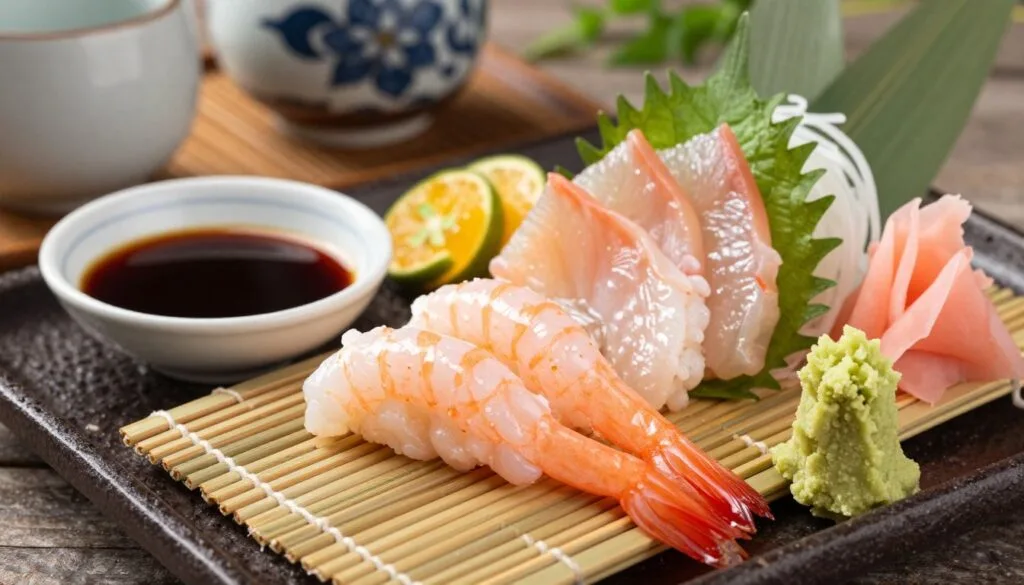
Your japanese shrimp sashimi needs quality condiments that enhance its taste. You’ll want to have:
- Fresh wasabi root – Grate it just before serving for a sharp, clean heat
- Premium soy sauce – Go for authentic brands like Kikkoman or Yamasa for deep umami
- Pickled ginger (gari) – It cleanses your palate and aids digestion
- Shiso leaves – These aromatic leaves add freshness and complexity
Proper Usage Techniques
Use wasabi in small amounts, either on the shrimp or mixed with soy sauce. Dip lightly to avoid overpowering the shrimp. Eat pickled ginger between bites to refresh your taste. Use shiso leaves as garnish, adding freshness with each bite.
| Condiment | Primary Purpose | Application Method |
|---|---|---|
| Wasabi Root | Adds heat and sharpness | Small dab on shrimp or mixed with soy |
| Soy Sauce | Enhances umami flavor | Light dip for each piece |
| Pickled Ginger | Cleanses palate | Eat between bites |
| Shiso Leaves | Adds aromatic freshness | Wrap or layer with shrimp |
Learn these pairing techniques to appreciate quality shrimp sashimi more. You’ll also honor Japanese culinary traditions.
Comparing Spot Prawn Sashimi to Other Delicacies
Exploring raw seafood, you find each crustacean unique. They each add something special to your meal. Knowing these differences makes you appreciate the best ones.
Flavor Profiles of Different Crustaceans
Raw crustaceans taste different. Here’s why:
- Spot prawns are sweet and buttery, feeling soft on your tongue
- Tiger shrimp are firmer with a strong sea taste
- Langoustines have a light, mineral taste
- Scallops are creamy and sweet
- Lobster tail is chewy with deep flavors
The cold waters of the Pacific Northwest make prawns taste better. This environment helps them grow sweeter.
Why Enthuasiasts Prefer Fresh Shrimp Sashimi
Fresh shrimp sashimi is a favorite for good reasons. Spot prawn sashimi is a top choice for many. It’s loved for several reasons:
| Characteristic | Spot Prawns | Tiger Shrimp | Langoustines |
|---|---|---|---|
| Natural Sweetness | Exceptional | Moderate | Subtle |
| Texture | Delicate, buttery | Firm, bouncy | Tender |
| Umami Depth | Rich | Medium | Light |
| Sustainability | Responsibly harvested | Variable | Seasonal |
Shrimp sashimi is a hit with chefs and diners. Its natural taste makes every bite memorable. It’s hard for others to beat.
Conclusion
Shrimp sashimi is a delicate art that combines quality and skill. You now know how to pick the best sushi-grade shrimp and how to handle them. This guide has given you the basics to make this dish safely at home.
Starting your shrimp sashimi journey lets you enjoy its unique flavors and textures. By following safety and storage tips, you can enjoy this dish worry-free. With each try, you get closer to making it as good as a restaurant.
This dish holds a special place in Japanese food culture. Learning to make shrimp sashimi shows your respect for tradition. It shows you value the art and hard work behind Japanese cuisine.