Rib eye Steak vs Striploin: The Real Difference !
 JULIA
May 11, 2026 · 10 min read
JULIA
May 11, 2026 · 10 min read
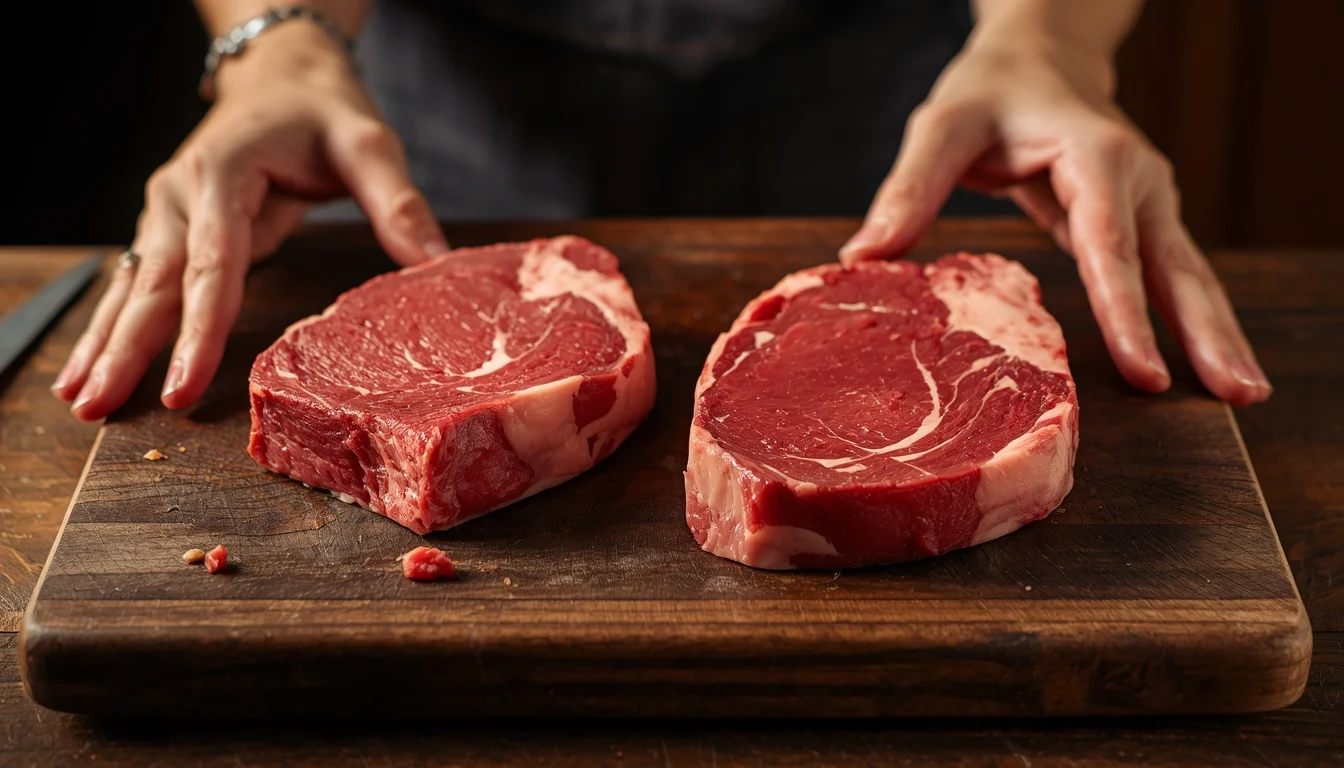
Rib eye steak vs striploin comes down to fat, texture, and how much richness you want. Ribeye is usually juicier, softer, and more heavily marbled. Striploin — often called New York strip — is leaner, firmer, and more beef-forward. Choose ribeye when you want indulgent steakhouse richness. Choose striploin when you want a cleaner bite, easier trimming, and a more structured chew.
Rib Eye Steak vs Striploin: The Real Difference
The main difference between ribeye and striploin is where the steak comes from and how fat is distributed through the meat. Ribeye comes from the rib section and is known for heavy marbling, a soft central eye, and often a rich rib cap. Striploin comes from the short loin and has a tighter grain, a cleaner beef flavor, and a more predictable rectangular shape.
That difference matters because the two steaks do not eat the same way. A ribeye feels softer and richer because the internal fat melts during cooking. A striploin has less internal fat, so it gives you a firmer, steakhouse-style chew. When people ask new york strip or ribeye, they are really asking whether they prefer buttery richness or a cleaner, meatier bite.
Ribeye is the richer steak. It has more marbling, more visible fat, and usually a softer bite.
- Best for: richness, juiciness, steakhouse flavor
- Texture: soft, fatty, tender
- Watch for: flare-ups and overcooked fat pockets
Striploin is the cleaner steak. It is still tender, but leaner and firmer than ribeye.
- Best for: beef flavor, structure, easier trimming
- Texture: firm, tender, slightly chewy
- Watch for: drying out if cooked past medium
Ribeye vs NY Strip: Full Side-by-Side
The phrase ribeye vs NY strip is the same practical comparison as ribeye vs striploin. New York strip is the common American name for striploin steak, though naming can vary by country and butcher counter.
| Feature | Ribeye | Striploin / New York Strip |
|---|---|---|
| Primal area | Rib section | Short loin |
| Fat level | Higher — more marbling and fat pockets | Moderate — leaner with edge fat |
| Texture | Soft, rich, juicy | Firmer, tighter grain, cleaner chew |
| Flavor | Buttery, beefy, intense | Clean, classic steak flavor |
| Best cooking method | Grill, cast iron, reverse sear | Grill, cast iron, broil |
| Forgiveness | More forgiving because of fat | Less forgiving if overcooked |
| Flare-up risk | Higher on the grill | Lower than ribeye |
| Best for | People who want richness and juiciness | People who want beef flavor and structure |
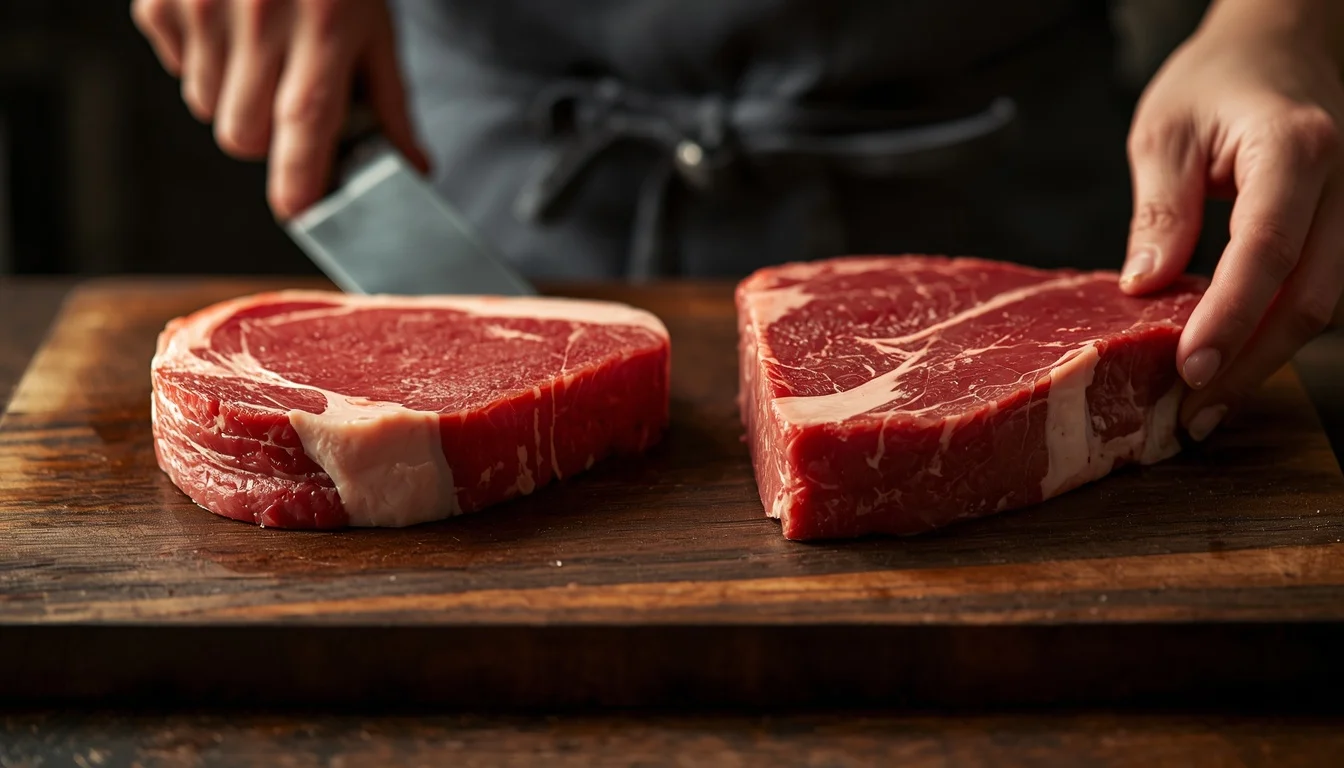
Simple buying rule: If the ribeye has a thick, well-defined cap and even marbling, it will usually be the more luxurious steak. If the striploin has a bright red center, firm texture, and a clean fat edge, it will give you a classic steakhouse bite without as much fat.
What Makes Ribeye Different?
Ribeye is cut from the rib primal, the same general area used for prime rib. A good ribeye usually shows several visual features: a central eye of meat, internal marbling, and sometimes the rib cap around the edge. That rib cap is one of the richest parts of the steak, which is why many steak lovers consider ribeye the more indulgent choice.
The advantage of ribeye is moisture and richness. As the steak cooks, the fat softens and helps the meat feel juicy even if the surface gets a hard sear. The disadvantage is that fat can flare over open flame, and very fatty sections can taste heavy if the steak is under-rendered.
For grilling, ribeye benefits from a hot sear followed by temperature control. If you need a broader timing reference for different steak thicknesses, use our steak grilling time guide as a companion.
What Makes Striploin Different?
Striploin comes from the short loin. In the United States, it is commonly sold as New York strip, strip steak, or Kansas City strip when bone-in. Compared with ribeye, striploin has a tighter grain and a more uniform shape. That makes it easy to sear, easy to slice, and easy to portion.
The flavor is less fatty than ribeye, but not bland. Striploin has a strong, direct beef flavor because the lean meat carries the bite. It is a favorite for people who want a steak that feels substantial without the soft fat pockets of ribeye.
The tradeoff is that striploin gives you less protection against overcooking. Once it moves past medium, it can tighten quickly. If you want the best version of striploin, keep it around medium-rare to medium, rest it properly, and slice across the grain.
Difference Between Sirloin and Ribeye — Why the Names Get Confusing
The phrase difference between sirloin and ribeye can mean different things depending on where you shop. In U.S. butchery, sirloin and ribeye are clearly different cuts. Ribeye comes from the rib section and is generally richer. Sirloin comes from farther back on the animal and is generally leaner.
The confusion comes from international naming. In some markets, striploin may be referred to as sirloin, while in the U.S. sirloin usually means a different steak family. That is why ribeye steak vs sirloin can be a different comparison from ribeye vs New York strip.
Butcher-counter tip: If you want the steak in this guide, ask specifically for “New York strip,” “strip steak,” or “striploin.” If you ask only for “sirloin,” you may get a leaner sirloin steak instead of striploin.
Which Steak Is Better?
There is no universal winner. Ribeye and striploin are built for different eaters. Ribeye wins for richness, softness, and a more luxurious plate. Striploin wins for structure, cleaner beef flavor, and a neater eating experience.
You want maximum juiciness, visible marbling, and a rich steak that feels indulgent even with simple salt and pepper.
You want bold beef flavor, a firmer chew, less internal fat, and a steak that slices neatly for serving.
You are learning your steak preference. Cooking them side by side under the same conditions is the fastest way to understand the difference.
If you are cooking for a group, striploin is often easier to serve because the shape is more consistent. If you are cooking for steak lovers who enjoy fat and richness, ribeye usually gets the stronger reaction.
Watch: Strip Loin vs Ribeye
This video is included as a visual companion to the guide. Watch how the two steaks differ in shape, marbling, and cooking behavior before you run the side-by-side method below.
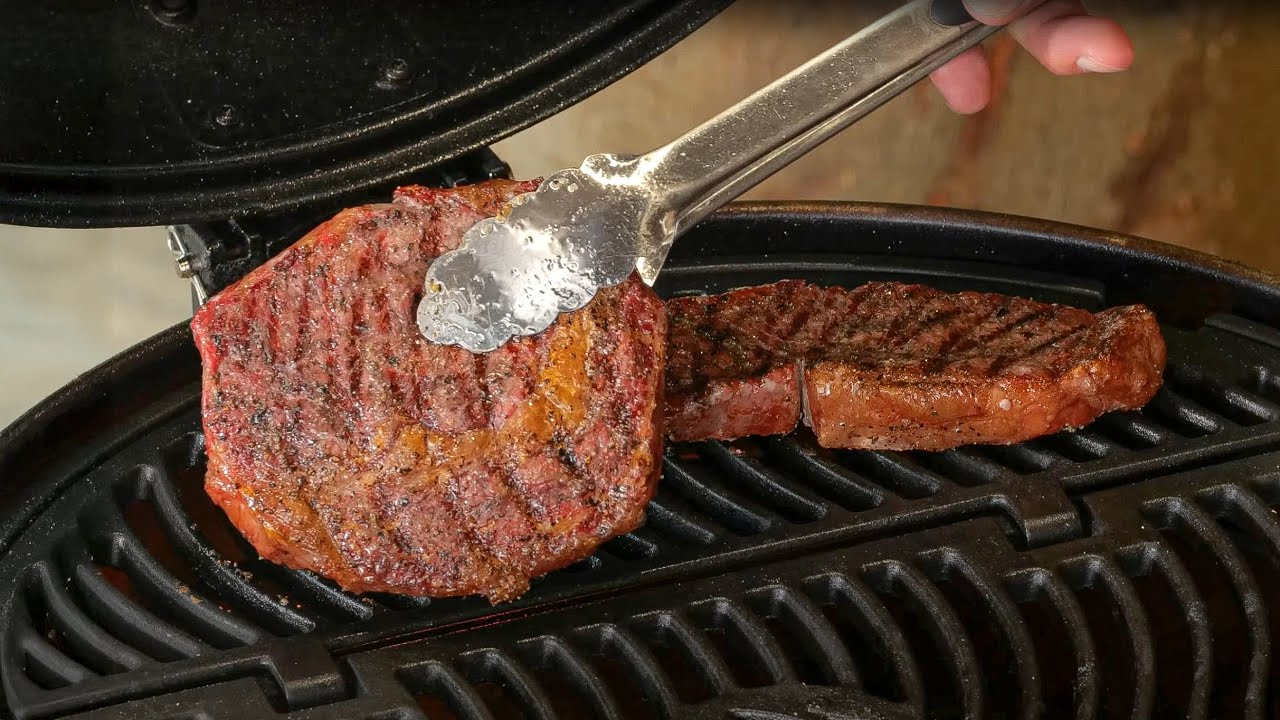
This method is not about masking the steaks with sauce. It cooks ribeye and striploin under the same conditions so the difference is obvious: ribeye should taste richer and softer; striploin should taste cleaner and firmer. Use steaks of similar thickness for a fair comparison.
 Ribeye Steak
1 steak
Ribeye Steak
1 steak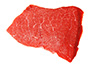 Striploin Steak
1 steak
Striploin Steak
1 steak Kosher Salt
2 tsp
Kosher Salt
2 tsp Black Pepper
1 tsp
Black Pepper
1 tsp High-Heat Oil
1 tbsp
High-Heat Oil
1 tbsp Butter
2 tbsp
Butter
2 tbsp Garlic
2 cloves
Garlic
2 cloves Rosemary/Thyme
2 sprigs
Rosemary/Thyme
2 sprigsStep-by-Step Instructions
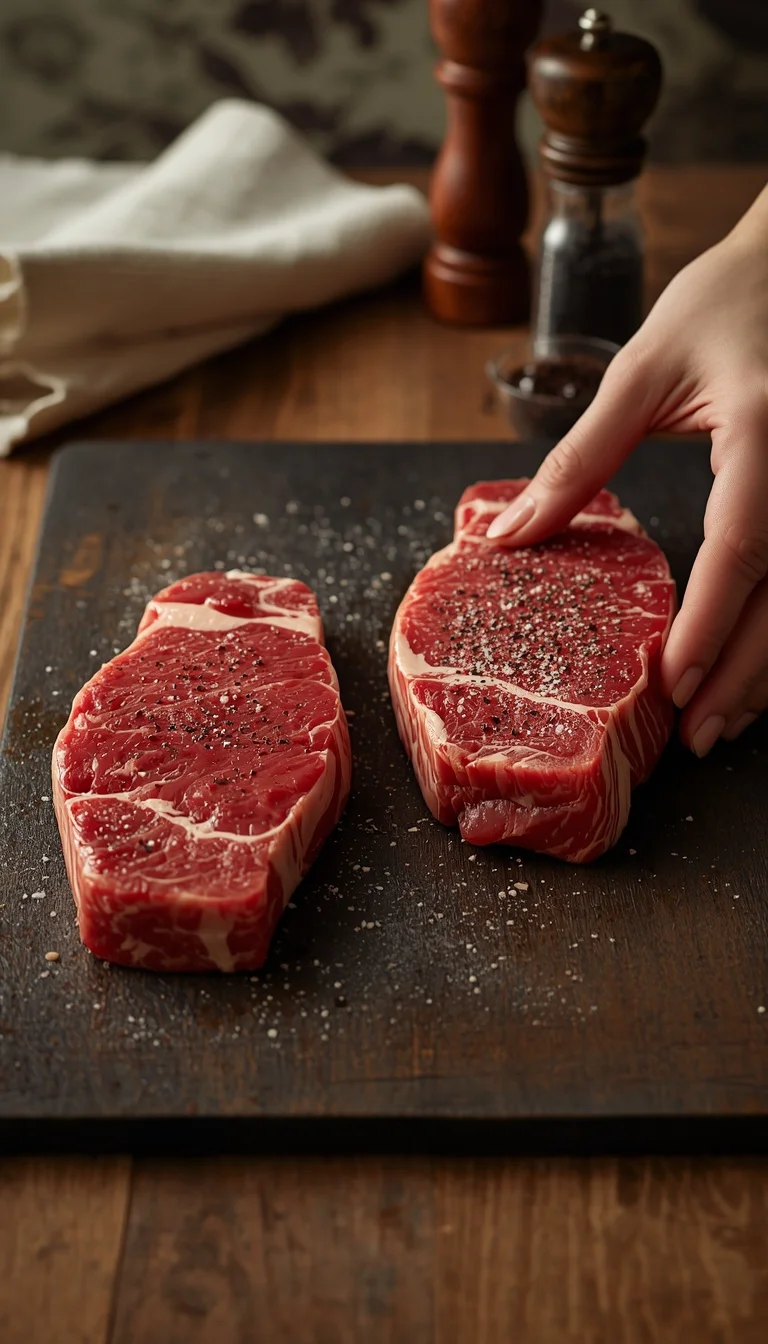
Pat both steaks very dry with paper towels. Season all sides with kosher salt and black pepper. Rest uncovered for 30 minutes. This short dry-brine period helps the surface dry slightly, which improves browning. Keep the seasoning identical on both steaks so you are comparing the cuts, not the rub.
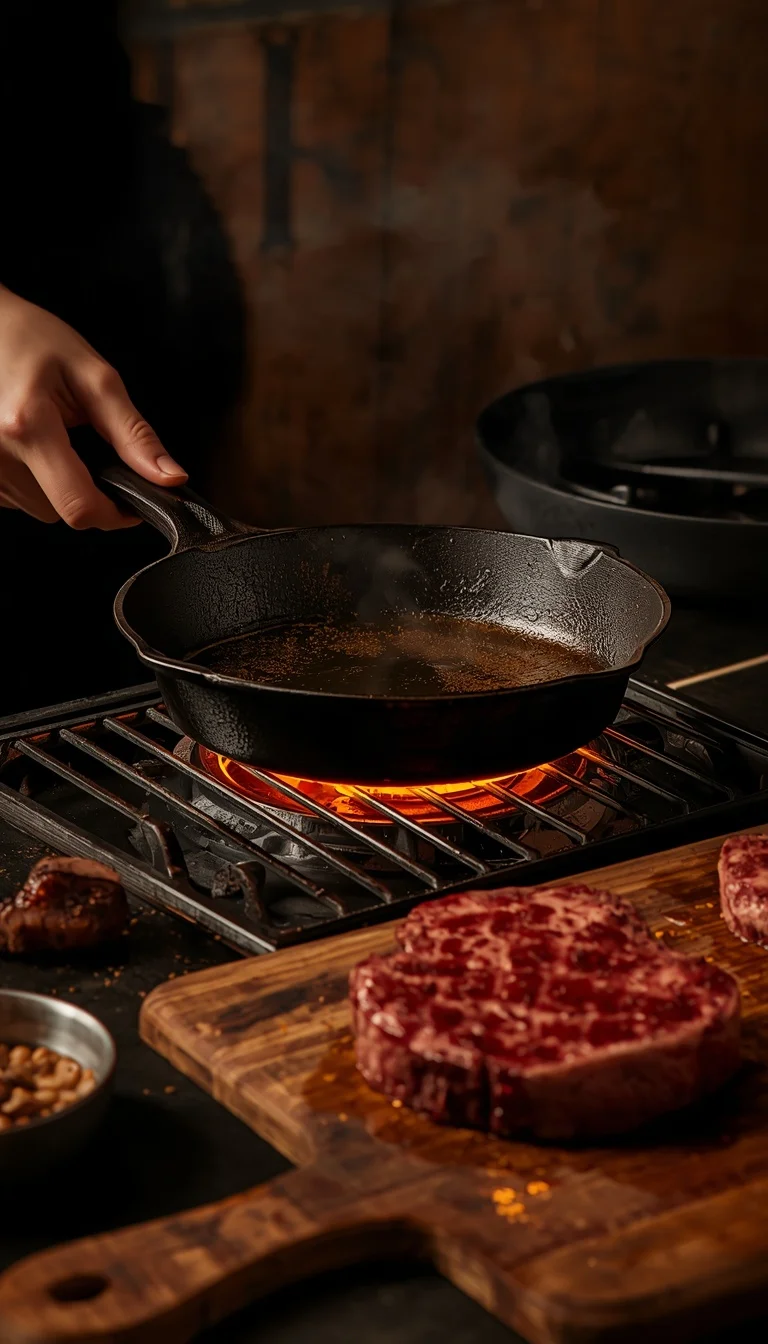
Use high heat. A grill or cast iron skillet works well. The surface should be hot enough that the steak sizzles immediately on contact. If the pan is not hot enough, the steaks will steam before they sear.
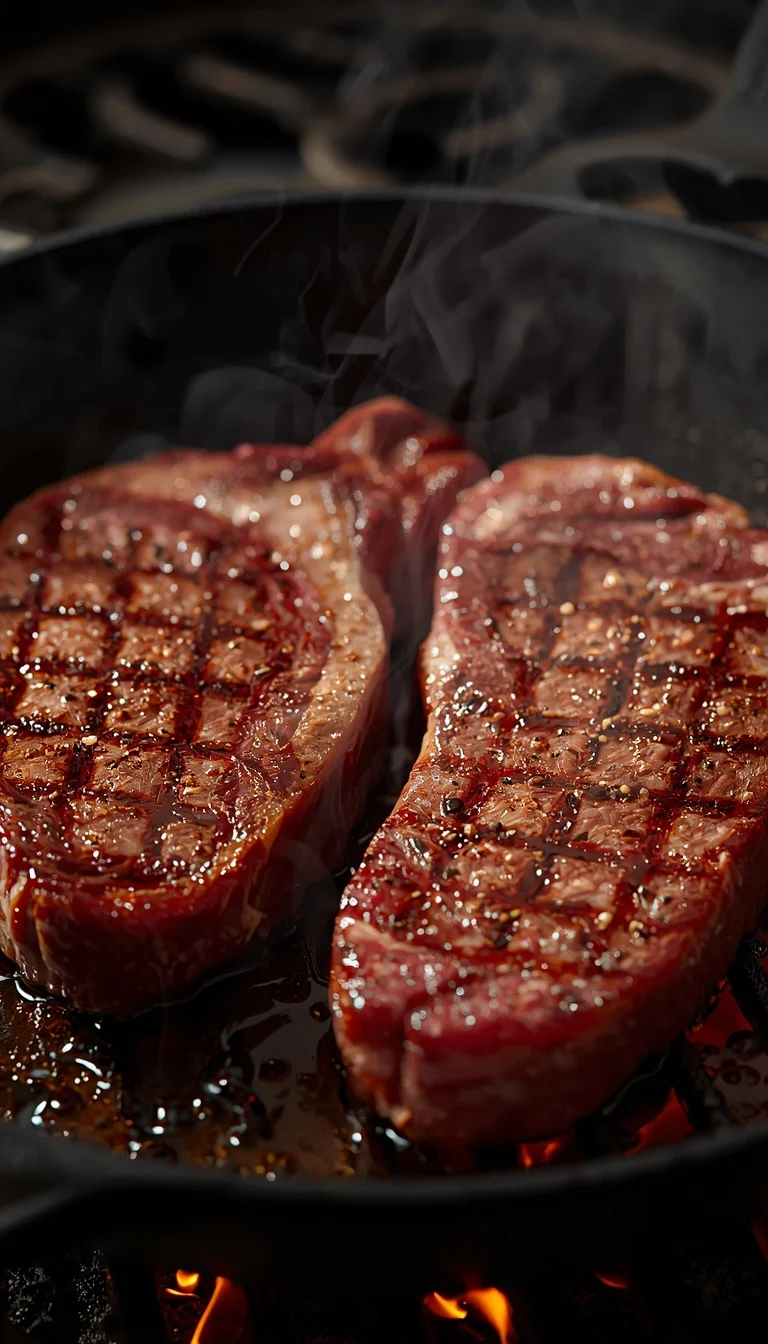
Sear 3 to 4 minutes on the first side, then flip and sear 3 to 4 minutes on the second side. After that, turn every 1 to 2 minutes until each steak reaches your target internal temperature. Use an instant-read thermometer because ribeye and striploin can feel different by touch even at the same temperature.
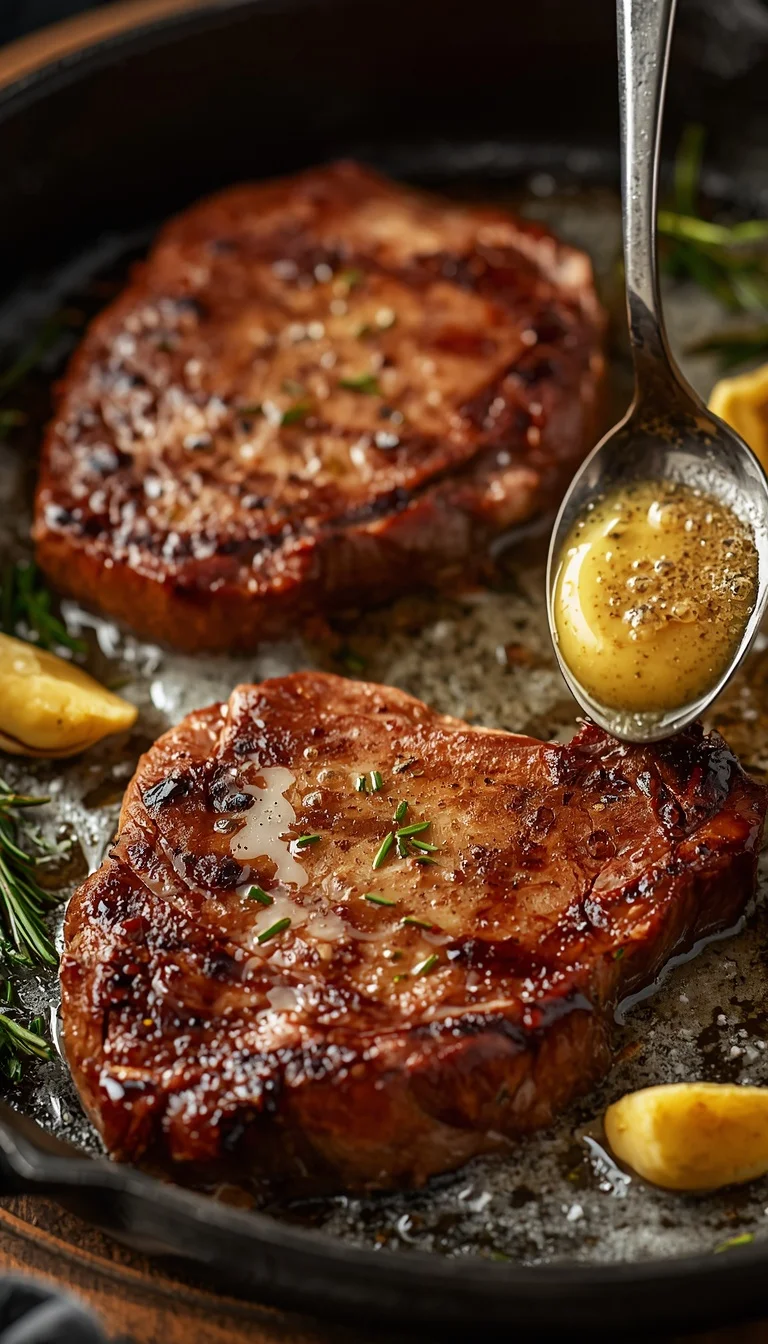
If cooking in a skillet, lower the heat slightly, then add butter, garlic, and herbs. Spoon the foaming butter over the steaks for 1 to 2 minutes. This adds aroma and helps finish the crust. Keep checking temperature; butter basting can push a steak past medium-rare quickly.
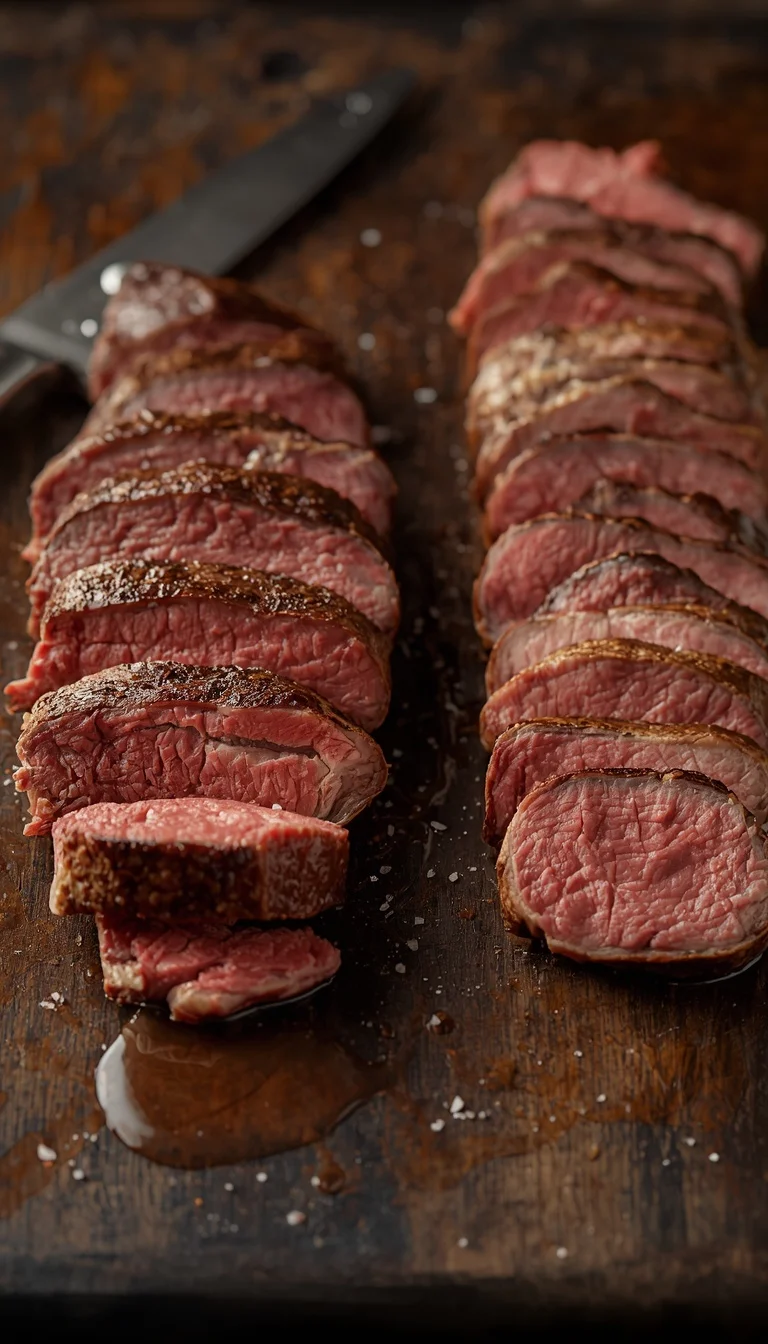
Rest both steaks on a cutting board for 5 to 8 minutes. Slice the striploin across the grain. Slice the ribeye so each serving gets some of the eye and the fattier edge. Taste the striploin first, then the ribeye. The difference will be clearer when the cleaner steak comes first.
Steak Temperature Guide
For best texture, many steak cooks prefer ribeye and striploin around medium-rare to medium. For food safety, FoodSafety.gov lists beef steaks, roasts, and chops at 145°F with a 3-minute rest. Use that official guidance when cooking for anyone who needs a conservative safety target.
Ribeye tolerates slightly more heat because of its fat. Striploin is best before it dries out, so watch it closely once it passes 130°F.
Expert Tips and Common Mistakes
- Do not cook them from cold if you want a fair comparison. Let both steaks rest at room temperature for about 30 minutes before cooking so the center warms slightly and the sear develops evenly.
- Match thickness before comparing. A 1-inch striploin and a 1.5-inch ribeye will not cook the same way. Choose steaks as close in thickness as possible.
- Use temperature, not touch. Ribeye feels softer because of fat, while striploin feels firmer because of grain. Touch tests can mislead you when comparing these cuts.
- Expect ribeye flare-ups on the grill. The extra fat can drip into flames. Move it to a cooler zone if flames get aggressive instead of letting the exterior burn.
- Slice striploin across the grain. This matters more for striploin than ribeye because its tighter grain becomes obvious if sliced the wrong way.
- Thaw properly if frozen. For thick steaks, refrigerator thawing gives the most even result. For more safety context, see this frozen meat safety guide.
Serving, Storage, and Reheating
Serving Ideas
Serve ribeye with sharp, fresh sides that cut through the fat: arugula salad, roasted asparagus, chimichurri, or grilled onions. Striploin works well with classic steakhouse sides like baked potatoes, creamed spinach, mushrooms, or a simple green salad.
Leftover sliced steak also works beautifully in tacos. If you want a beef taco direction after this comparison, the method in our steak taco recipe translates well to thinly sliced striploin or ribeye leftovers.
Storage Guidelines
- Keep refrigerated until ready to season.
- Store wrapped and cold on the lowest refrigerator shelf.
- Freeze if you will not cook within the safe storage window on the package.
- Thaw slowly in the refrigerator for the most even cooking.
- Cool and refrigerate promptly.
- Store in an airtight container.
- Slice before storing if you plan to use it for salads or tacos.
- Reheat gently to avoid pushing the steak past your preferred doneness.
For leftovers, use low heat. A hot microwave can turn medium-rare steak into dry, gray slices fast. A covered skillet over low heat with a small splash of beef juices, butter, or water is usually better.
Nutrition data is a practical estimate for cooked steak portions. For detailed database lookup, use USDA FoodData Central.
Frequently Asked Questions