Pork Chop Brine: Recipe & Shopping List
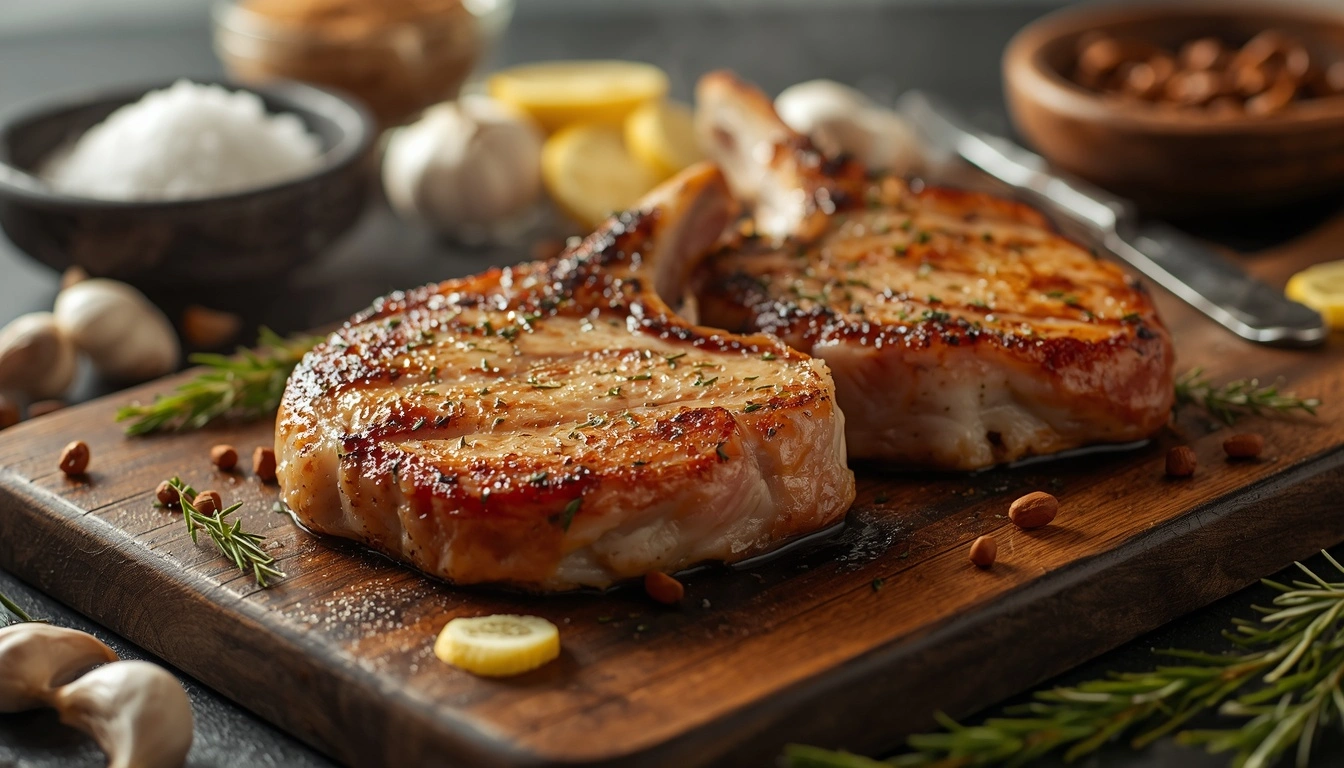
Pork Chop Brine: The Practical Short Answer
A good pork chop brine seasons the meat from the surface inward and gives you more room for error when cooking lean chops. The basic formula is water, kosher salt, a little sugar, and optional aromatics.
Brining does not replace careful cooking. For tender pork chops, brine briefly, dry the surface well, sear over steady heat, and stop when the thickest part reaches 145°F with a 3-minute rest.
- 4 cups cold water
- 1/4 cup kosher salt
- 2 tablespoons brown sugar or honey
- Garlic, peppercorns, bay leaf, and herbs if you want more aroma
Pork Chop Brine: What It Does and When to Use It
Pork chop brine is a salty liquid that helps pork chops taste seasoned, juicy, and less flat after cooking. It is especially useful for lean center-cut chops, thick bone-in chops, and boneless chops that dry out quickly.
The point is not to make the pork taste salty. The point is to season the meat evenly and protect the texture just enough that a few extra minutes in the pan do not ruin dinner. If you are learning how to cook tender pork chops, brining is one of the simplest upgrades.
Pork Chop Brine Shopping List
You do not need a complicated cart. This brine for pork chops uses pantry ingredients, and the only item that really changes the result is the pork itself. Choose chops with some thickness and a little visible fat rather than very thin, pale chops.
| Item | Amount for 4 Servings | Why It Matters | Shopping Note |
|---|---|---|---|
| Pork chops | 4 chops, 1 to 1 1/2 inches thick | Main cut for the recipe | Bone-in chops are forgiving; boneless chops cook faster. |
| Kosher salt | 1/4 cup | Seasons the meat and drives the brine | Use kosher salt, not table salt, unless you adjust carefully. |
| Brown sugar or honey | 2 tablespoons | Balances salt and helps browning | Optional, but useful for skillet or grill cooking. |
| Garlic | 2 cloves | Adds savory aroma | Crush lightly; no need to mince. |
| Peppercorns | 1 teaspoon | Adds mild heat | Whole peppercorns keep the flavor clean. |
| Bay leaf and herbs | 1 bay leaf, 2 herb sprigs | Adds background flavor | Thyme, rosemary, or sage all work. |
| High-heat oil | 1 tablespoon | Helps sear the dried chops | Avocado oil or another neutral high-heat oil works well. |
Why Brining Pork Chops Helps
Pork chops are lean compared with fattier cuts like shoulder or ribs. That leanness is why they can taste clean and mild, but it is also why they dry out when cooked too long. Brining gives the meat a small buffer by seasoning it before heat hits the pan.
A short wet brine helps salt move into the outer layer of the chop instead of sitting only on top.
Brined chops still need careful cooking, but they are less likely to taste dry at the table.
Garlic, bay, pepper, and herbs support the pork without turning the brine into a sauce.
Thin chops can be brined, but they need less time and a faster cook. For very thin chops, see our guide to thin cut pork chop recipes.
Price and Where to Buy Pork Chops
Pork chop prices vary widely by country, region, store, butcher, breed, thickness, bone-in vs boneless cut, organic or pasture-raised status, and whether you buy fresh, frozen, local, or online. Treat any price you see as a current-market snapshot, not a fixed rule.
For this pork chop brine recipe, look for chops that are thick enough to sear without overcooking. A 1 to 1 1/2 inch chop is easier to manage than a very thin supermarket chop.
| Region | Where to Look | What to Check | Useful Options |
|---|---|---|---|
| United States | Supermarkets, butcher shops, warehouse clubs, ranch-direct sellers, and online meat retailers | Thickness, bone-in vs boneless, breed, fat cap, package weight, and fresh vs frozen status | Check current availability from ButcherBox boneless pork chops, Porter Road bone-in pork chops, and Snake River Farms Kurobuta pork chops. |
| Canada | Local butchers, supermarkets, specialty meat shops, farmers markets, and regional meat delivery services | Ask for center-cut pork chops, rib chops, loin chops, or thick-cut bone-in chops depending on the counter | Check current local availability and thickness before planning the recipe. |
| Australia | Butchers, supermarkets, pork specialists, farmers markets, and online meat suppliers | Look for pork loin chops, pork cutlets, or thick bone-in chops depending on local labeling | Confirm whether the chop is lean loin, rib-end, or cutlet style before brining. |
Recipe Block: Simple Pork Chop Brine
This is a flexible master brine for thick pork chops. Use it before skillet cooking, grilling, or oven finishing.
Best for: 1 to 1 1/2 inch pork chops, bone-in or boneless. For thin chops, use the shorter brine window and cook quickly. For pork loin roast, scale the brine and extend the timing carefully.
Important: the brine must be cold before adding raw pork, and used brine should be discarded after the chops come out.
Ingredients and Shopping List
 Pork chops
4 chops
est. $10.50
Pork chops
4 chops
est. $10.50 Cold water
4 cups
est. $0.00
Cold water
4 cups
est. $0.00 Kosher salt
1/4 cup
est. $0.25
Kosher salt
1/4 cup
est. $0.25 Brown sugar or honey
2 tbsp
est. $0.30
Brown sugar or honey
2 tbsp
est. $0.30 Garlic
2 cloves
est. $0.30
Garlic
2 cloves
est. $0.30 Peppercorns
1 tsp
est. $0.10
Peppercorns
1 tsp
est. $0.10 Bay leaf
1 bay leaf
est. $0.15
Bay leaf
1 bay leaf
est. $0.15 Thyme or rosemary
2 sprigs
est. $0.75
Thyme or rosemary
2 sprigs
est. $0.75 Ice
1 cup
est. $0.00
Ice
1 cup
est. $0.00 High-heat oil
1 tbsp
est. $0.40
High-heat oil
1 tbsp
est. $0.40 Butter, optional
1 tbsp
est. $0.20
Butter, optional
1 tbsp
est. $0.20Ingredient prices are rough estimates for planning only. Actual cost changes by store, pork chop thickness, region, package size, and current availability.
Helpful tool: An instant-read meat thermometer is not a recipe ingredient, but it is the easiest way to stop brined pork chops at 145°F without drying them out.
Step-by-Step: How to Brine and Cook Pork Chops
Brining pork chops is simple, but the small details matter: dissolve the salt fully, chill the brine, dry the chops before cooking, and stop at the right internal temperature.
Brine, Dry, Sear, Rest
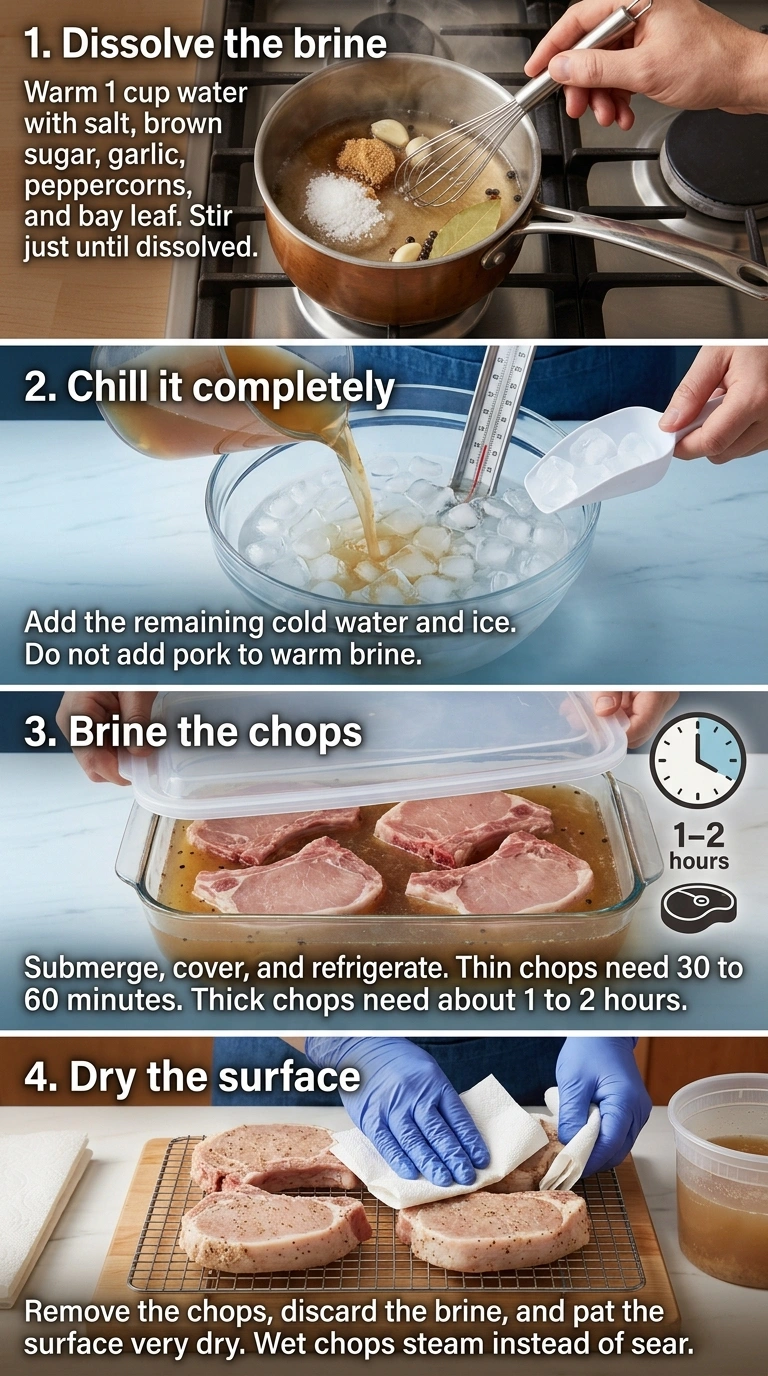
1Dissolve the brine
Warm 1 cup water with the salt, brown sugar, garlic, peppercorns, and bay leaf. Stir just until dissolved.
2Chill it completely
Add the remaining cold water and ice. Do not add pork to warm brine.
3Brine the chops
Submerge, cover, and refrigerate. Thin chops need 30 to 60 minutes. Thick chops need about 1 to 2 hours.
4Dry the surface
Remove the chops, discard the brine, and pat the surface very dry. Wet chops steam instead of sear.
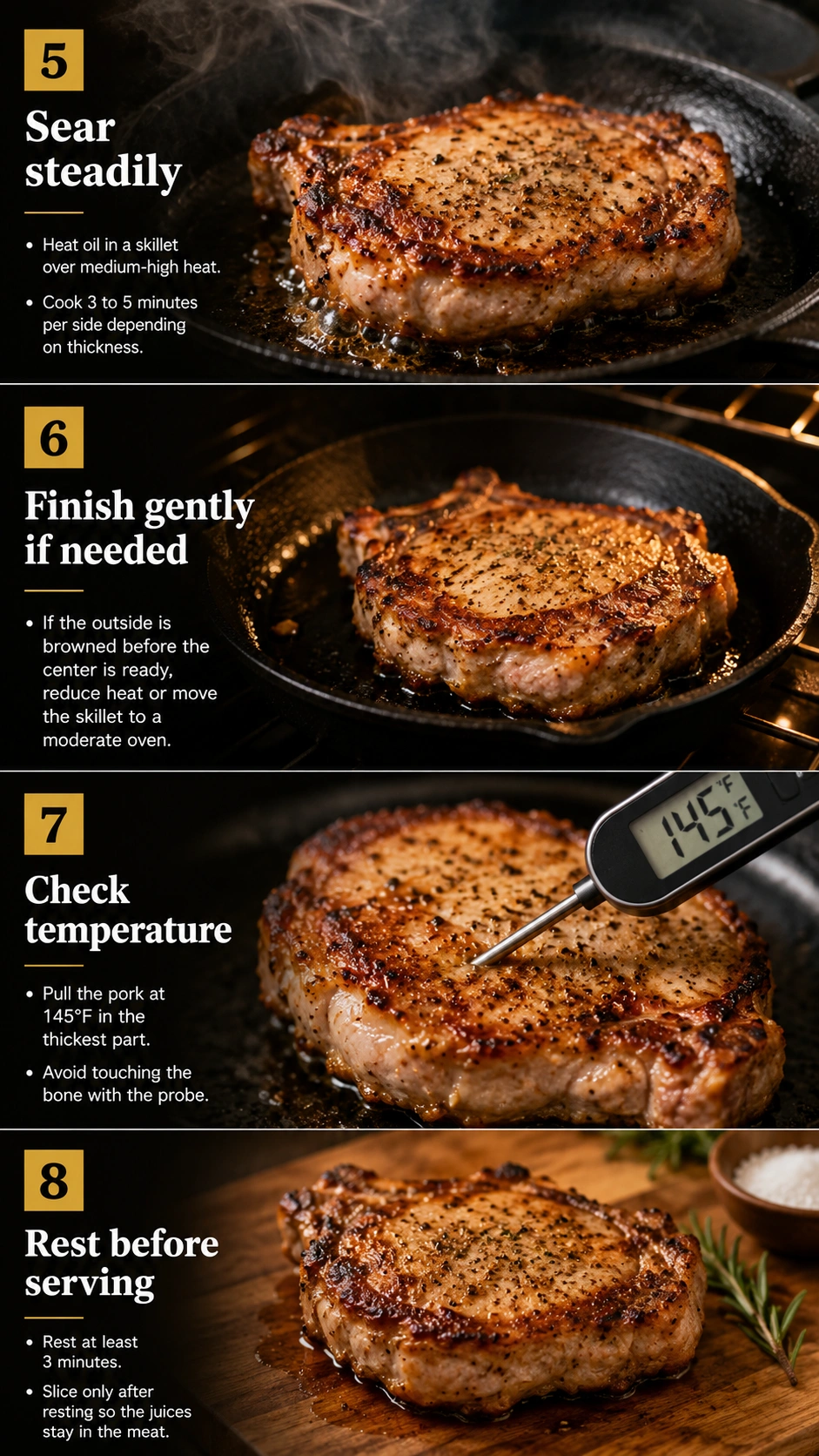
5Sear steadily
Heat oil in a skillet over medium-high heat. Cook 3 to 5 minutes per side depending on thickness.
6Finish gently if needed
If the outside is browned before the center is ready, reduce heat or move the skillet to a moderate oven.
7Check temperature
Pull the pork at 145°F in the thickest part. Avoid touching the bone with the probe.
8Rest before serving
Rest at least 3 minutes. Slice only after resting so the juices stay in the meat.
Video: Brine and Cook Pork Chops
Use this video as a visual reference for wet brining, dry brining, and cooking pork chops. The recipe block above keeps the method simple and written for a standard home skillet.

How to Cook Tender Pork Chops After Brining
A brine helps, but the pan still decides the final texture. The main rule is to brown the outside without pushing the center far past 145°F.
| Method | Best For | How It Works | Key Tip |
|---|---|---|---|
| Skillet sear | 1 to 1 1/2 inch chops | Sear in oil over medium-high heat, then lower heat if needed | Dry the chops very well before they hit the pan. |
| Skillet + oven | Thick bone-in chops | Brown on the stove, then finish in a moderate oven | Use a thermometer instead of guessing by time. |
| Grill | Bone-in chops with some fat | Sear over direct heat, then move to a cooler zone if needed | Watch for flare-ups if the fat cap drips. |
| Thin chop fast cook | Thin boneless chops | Short brine, hot pan, very quick cooking | Thin chops can overcook in minutes. |
For more pork doneness detail, see our guide to internal temperature for pork. For more weeknight ideas, see quick pork chop recipes.
Can You Use This Brine for Pork Loin?
Yes, you can brine pork loin with the same basic idea, but the timing changes. Pork loin is larger and thicker than a chop, so it needs a longer refrigerated brine. Keep the formula balanced and avoid making the brine much saltier just because the roast is bigger.
For a small pork loin roast, plan on several hours in the refrigerator rather than 30 minutes. After brining, pat it dry, roast gently, and check the center with a thermometer. For a full oven method, see our pork loin roast recipe.
Expert Tips for Better Brined Pork Chops
A strong brine used too long can make pork taste too salty or slightly cured. Standard chops do not need overnight brining.
The chop should look dry before it enters the pan. Moisture on the surface blocks browning.
Brined pork already contains salt. Season with pepper, herbs, or a low-salt rub if you want more flavor.
Give the chop at least 3 minutes after cooking. For thick chops, 5 minutes is often better.
Common Pork Chop Brine Mistakes
- Adding pork to warm brine: cool the brine completely first.
- Using table salt without adjusting: table salt is denser than many kosher salts and can make the brine too salty.
- Brining too long: more time is not always better, especially for thin chops.
- Skipping the dry step: a wet surface prevents good browning.
- Cooking by time only: thickness varies. Use a thermometer.
- Salting heavily after brining: taste and season carefully because the chop is already salted.
What to Serve with Brined Pork Chops
Brined pork chops work with simple sides because the meat is already seasoned. Keep the plate balanced with something fresh, something starchy, and a sauce or pan juice if you want extra moisture.
- Mashed potatoes, roasted potatoes, or buttered noodles
- Apple slaw, cabbage salad, or sautéed cabbage
- Green beans, roasted carrots, or broccolini
- Pan sauce made with a splash of broth, mustard, and butter
- Rice or grain bowls with leftover sliced pork
For more pork ideas, browse the pork recipe collection.
Storage, Make-Ahead, and Reheating
Can you make the brine ahead?
Yes. Make the brine, chill it completely, and keep it covered in the refrigerator until ready to use. Do not add raw pork until you are ready to start the brining window.
How to store cooked pork chops
Store cooked pork chops in an airtight container in the refrigerator. For leftover timing and safe handling, follow USDA leftovers and food safety guidance.
How to reheat without drying them out
Reheat gently in a covered skillet with a splash of broth or water. Avoid blasting leftover chops over high heat, which can tighten the meat and undo the benefit of brining.
Approximate Nutrition Per Serving
Nutrition varies by chop size, fat level, bone-in vs boneless cut, oil amount, and how much salt is absorbed from the brine. Use these numbers as a practical estimate, not a lab-tested result. For raw ingredient research, the USDA FoodData Central database is a useful reference.
Sodium is not estimated as a fixed number because brine absorption changes with salt brand, chop thickness, brining time, and whether the surface is rinsed.
Frequently Asked Questions
Thin pork chops usually need 30 to 60 minutes. Thicker 1 to 1 1/2 inch chops usually do well with 1 to 2 hours. Very thick bone-in chops can handle up to 4 hours, but avoid leaving standard chops in a strong brine overnight.
You do not have to rinse if the brine is balanced and the chops were not brined too long. If the surface tastes too salty or the brine time ran long, rinse briefly under cold water, then pat completely dry before cooking.
Yes. This same basic brine can be used for pork loin, but the timing changes because pork loin is larger than pork chops. A small pork loin roast usually needs several hours, not minutes. Keep it refrigerated and avoid using an overly salty brine for long brining times.
Pat the pork chops very dry, cook them in a hot skillet or on a hot grill, use a thermometer, and stop at 145°F with a 3-minute rest. Overcooking is the fastest way to make pork chops dry, even after brining.
Pork chops should reach 145°F internal temperature with a 3-minute rest. Check the thickest part of the chop and avoid touching the bone with the thermometer probe.
Yes. Dry brining means salting the pork chops without water and letting them rest uncovered in the refrigerator. It is cleaner than wet brining and helps the surface brown well, but a wet pork chop brine is useful when you want very even seasoning and extra insurance against dryness.
Related Pork Guides
Continue with these pork-focused guides if you want more cooking methods, cut comparisons, and temperature help.
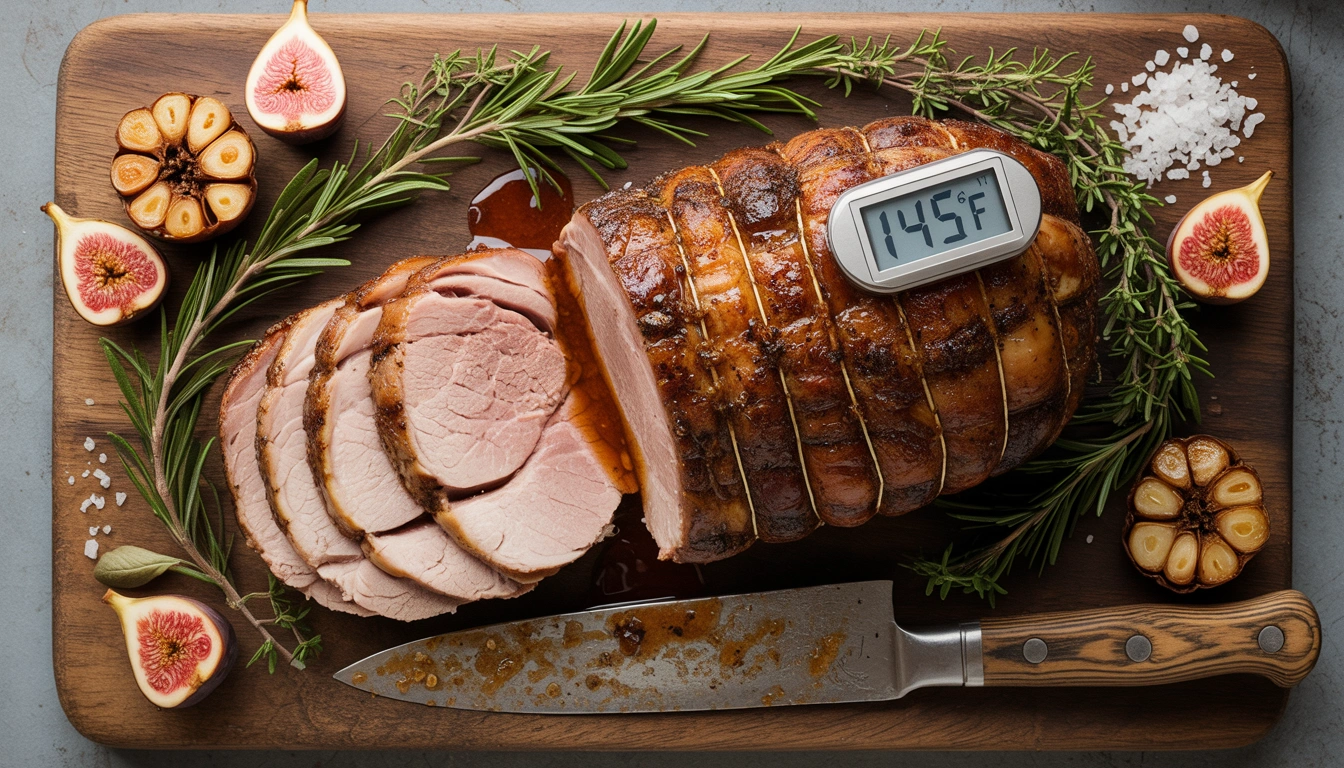 Internal Temperature for Pork
 Thin Cut Pork Chop Recipes
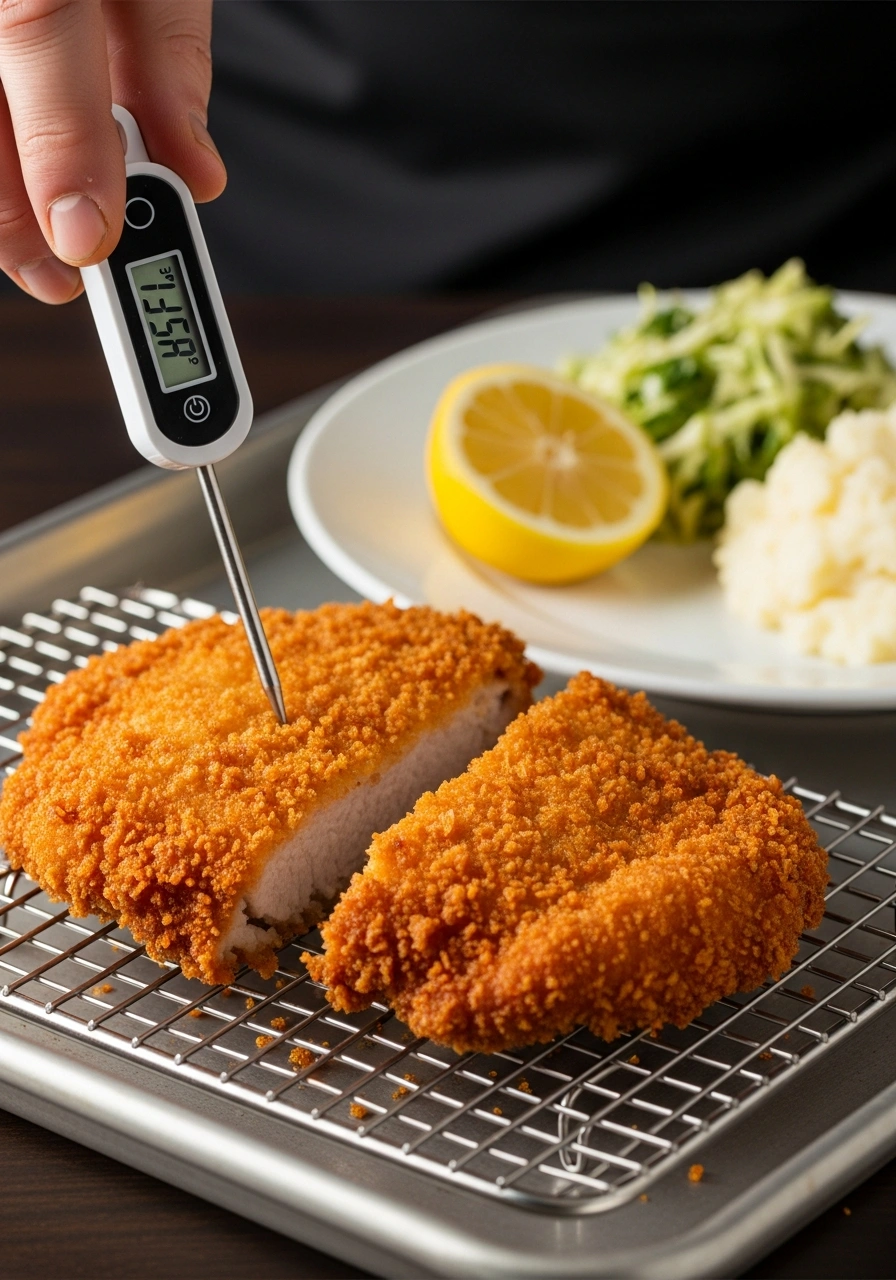 Pork Chop vs Loin
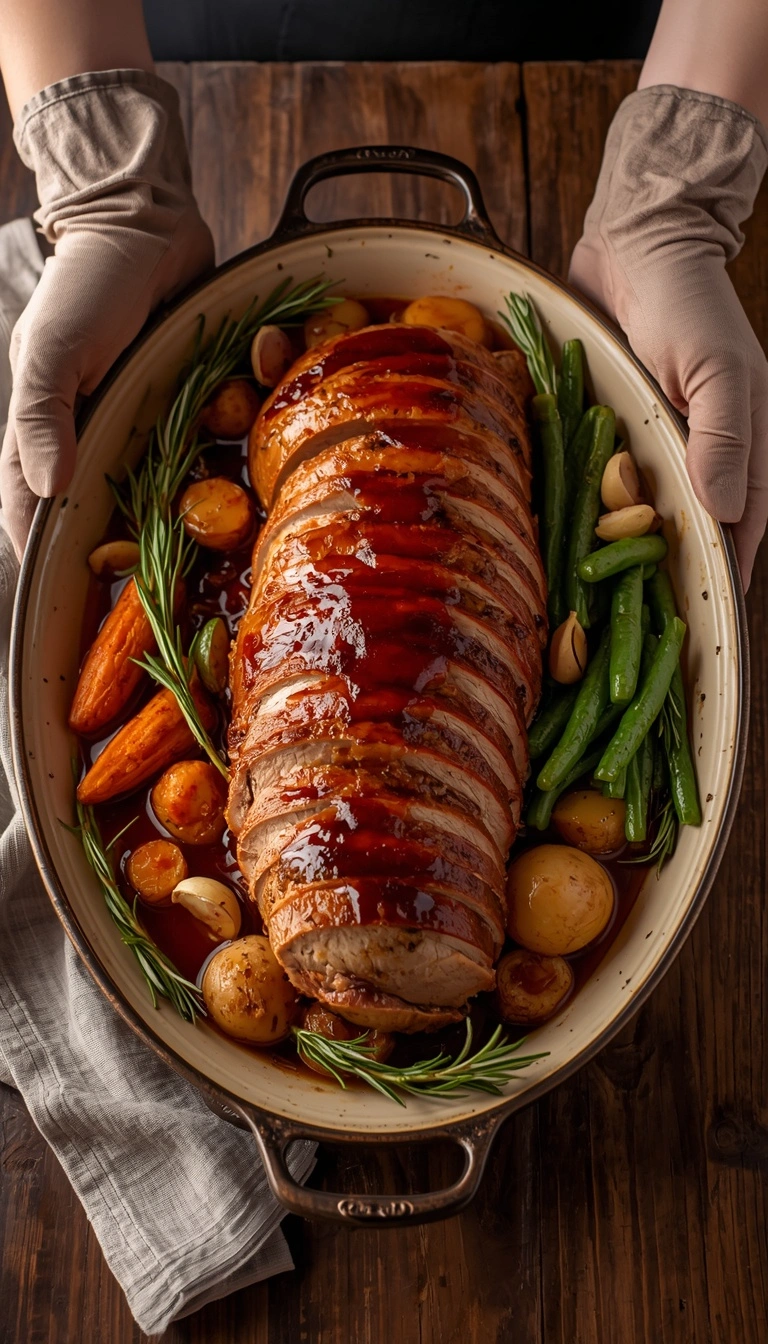 Pork Loin Roast Recipe

About JULIA
JULIA writes practical meat guides and recipe methods for MeatRecipeZone, with a focus on clear cooking steps, safe temperatures, and realistic home-kitchen results.
This guide was built around practical pork chop brining guidance, safe temperature references, and neutral shopping notes for home cooks choosing pork chops by thickness, cut, and quality level.
Last updated: May 22, 2026