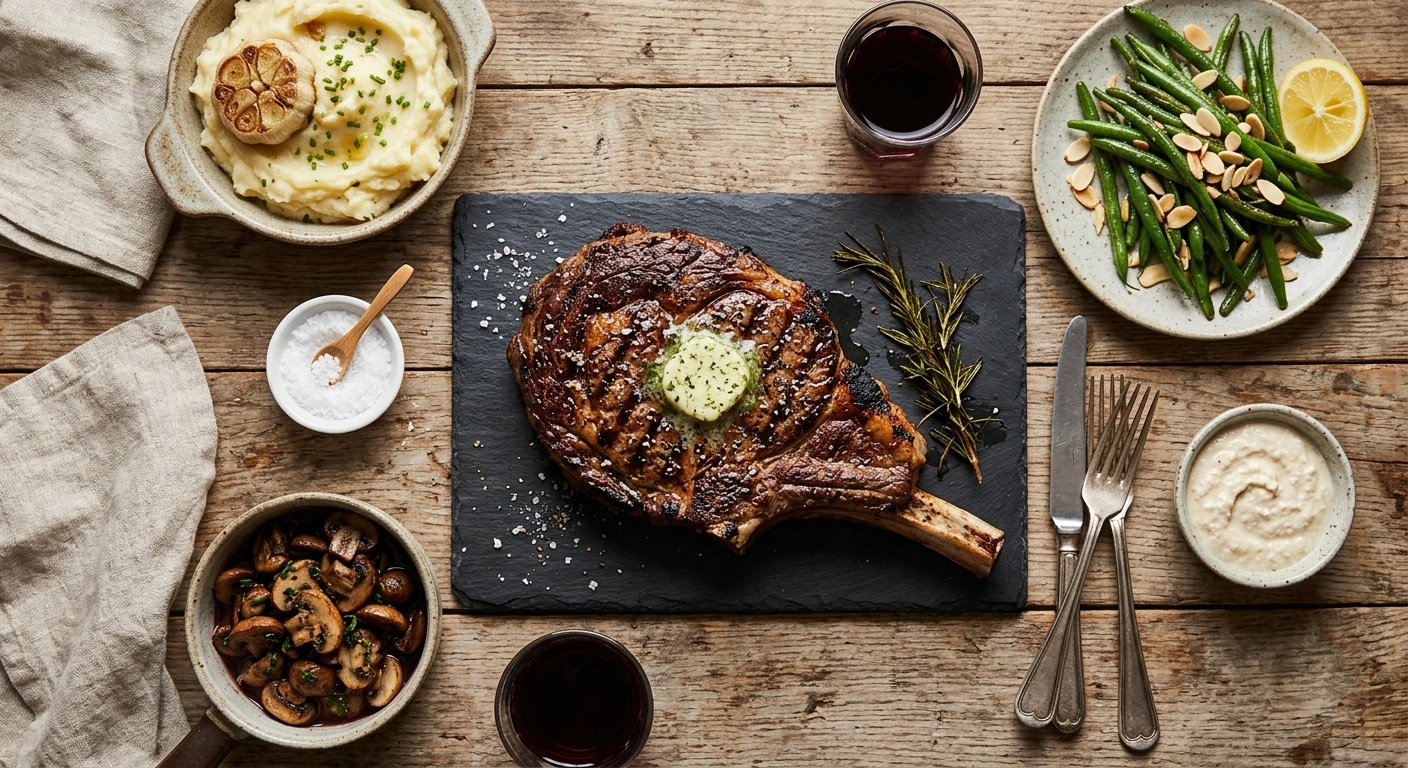
Bone In Ribeye Steak: Buy & Cook It Like a Pro
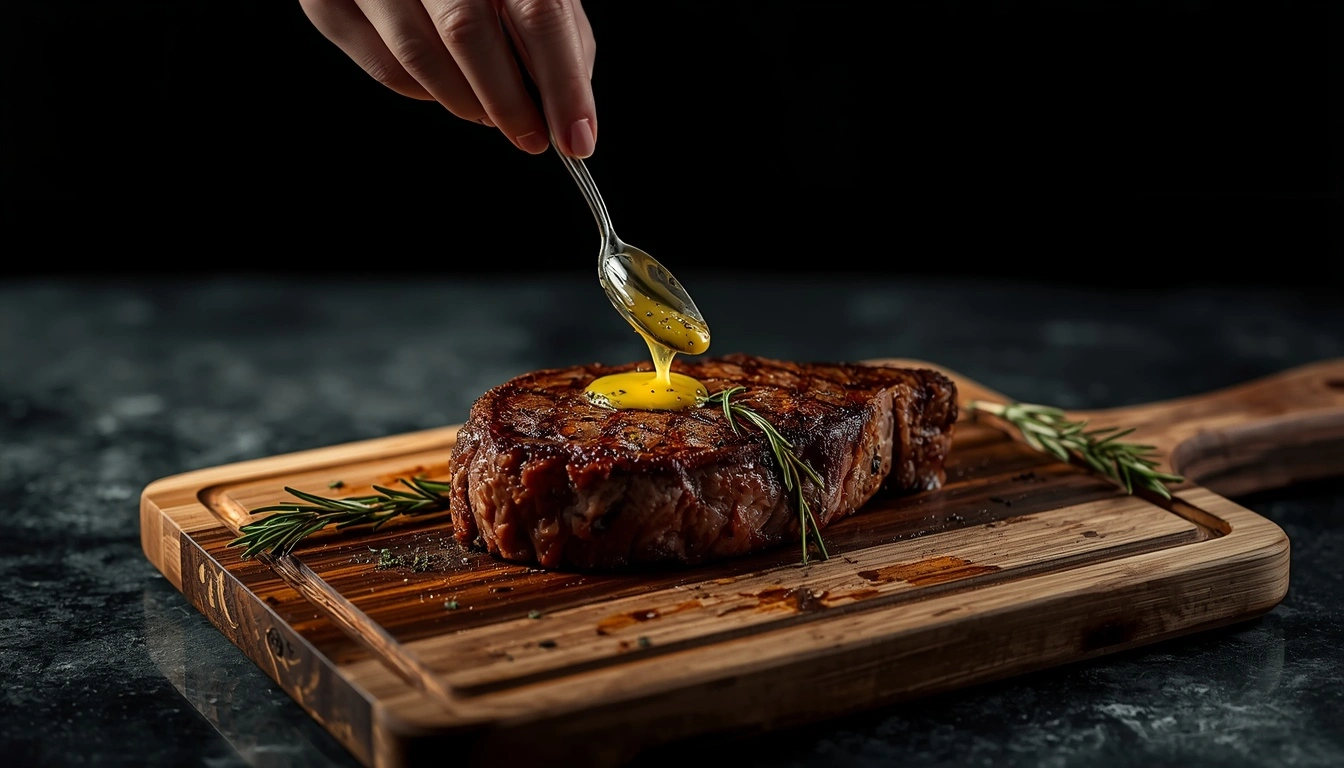
Bone-In Ribeye: The Practical Short Answer
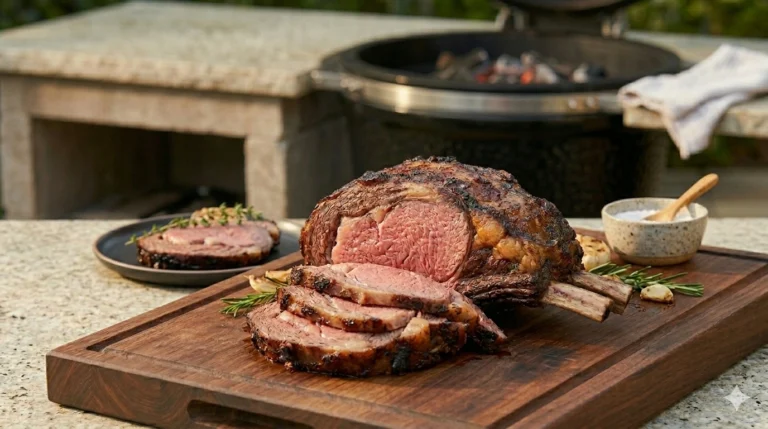
Bone in ribeye is a ribeye steak cut with part of the rib bone still attached. It is rich, marbled, dramatic on the plate, and best cooked with a method that gives the center time to warm before the outside gets a hard sear.
For most home cooks, the easiest way to cook a thick bone-in ribeye steak is the reverse sear: season first, cook gently over indirect heat or in a low oven, then finish in a ripping-hot skillet or over direct grill heat. This gives you better control than trying to blast the steak from raw to done over high heat.
What Is a Bone-In Ribeye Steak?
A bone-in ribeye steak comes from the rib primal, the same area that gives you prime rib and ribeye steaks. The steak includes the ribeye muscle, visible marbling, and a section of rib bone. Depending on how the butcher trims it, you may also see names like cowboy steak or tomahawk steak.
The main reason people buy bone-in ribeye is not that the bone magically flavors the whole steak. The real benefits are thickness, presentation, and heat protection. A thick bone-in steak gives you more room to build crust while keeping the center controlled.
If you want to compare steak cuts before buying, this guide to rib eye steak vs striploin is a useful next read.
How to Buy the Best Bone-In Ribeye
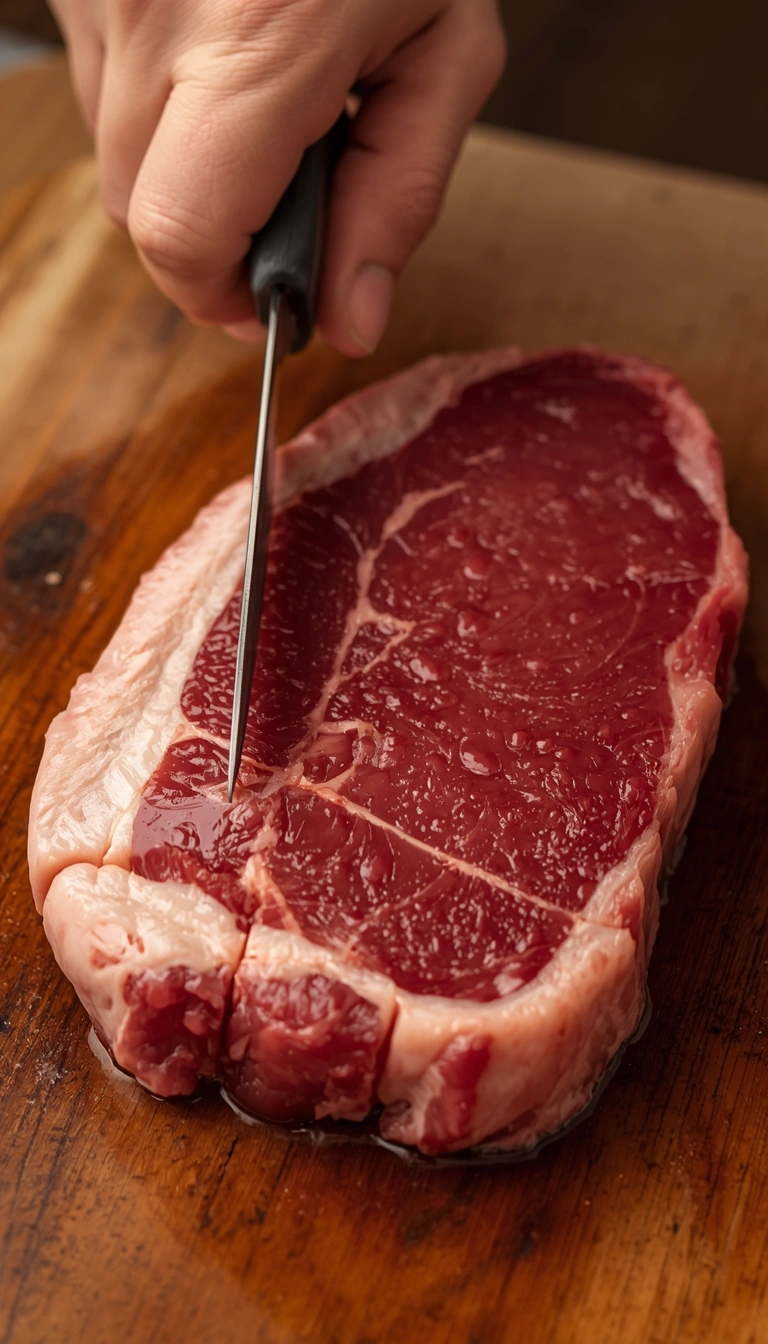
The best bone-in ribeye steak is thick, evenly cut, well marbled, and not overloaded with hard exterior fat. Look for small white streaks running through the meat, not only a large fat cap around the edge.
Thin bone-in ribeye can overcook before it develops a good crust. Thick steaks give you more control.
Fine intramuscular fat is what makes ribeye feel juicy and rich after cooking.
USDA Prime generally has more marbling than Choice, while Select is usually leaner.
A cleaner, more even steak cooks more predictably than one with loose flaps or uneven thickness.
For a deeper official explanation of beef grades, the USDA explains that Prime, Choice, and Select are quality grades tied largely to tenderness, juiciness, flavor, and marbling. USDA Prime, Choice, and Select guide.
Bone-In Ribeye Price and Where to Buy It
Bone-in ribeye usually sits in the premium steak category. The final price changes by grade, thickness, dry-aging, breed, store, butcher, region, fresh vs frozen status, and whether you buy locally or online. Dry-aged and Prime-grade steaks usually cost more than standard supermarket ribeye.
Treat any price you see as a current-market snapshot, not a permanent rule. If a specific online steak looks expensive, compare the weight, grade, aging method, shipping terms, and whether it is a true bone-in ribeye, cowboy steak, or tomahawk-style cut.
| Region | Where to Look | What to Check | Useful Links |
|---|---|---|---|
| United States | Butchers, premium supermarkets, warehouse clubs, ranch-direct sellers, and online meat retailers | USDA grade, steak thickness, dry-aged vs wet-aged, shipping temperature, and actual steak weight | Porter Road bone-in ribeye, Snake River Farms dry-aged bone-in ribeye |
| United States alternatives | Premium steak retailers when exact bone-in ribeye is not available | Confirm whether the steak is bone-in, boneless ribeye, cowboy steak, or tomahawk before buying | Snake River Farms cowboy ribeye, Flannery Beef ribeye steak |
| Canada | Local butchers, specialty steak shops, premium supermarkets, and Canadian online meat sellers | Ask for bone-in ribeye, cowboy steak, or rib steak, and confirm thickness before ordering | Use local butcher listings and current regional availability |
| Australia | Butchers, steak specialists, premium supermarkets, and online beef suppliers | Look for rib eye on the bone, rib steak, or tomahawk-style cuts depending on local labeling | Check current local supplier listings before planning the recipe |
How to Cook Bone-In Ribeye Without Overcooking It
The safest cooking strategy for a thick bone-in ribeye is controlled heat first, hard sear second. High heat from start to finish can work for thinner steaks, but a thick ribeye can burn outside before the center is where you want it.
| Method | Best Use | How It Works | Key Tip |
|---|---|---|---|
| Reverse sear | Thick bone-in ribeye, cowboy steak, tomahawk-style steak | Low oven or indirect heat first, hot sear at the end | Pull before final target because the sear adds heat. |
| Two-zone grill | Grilled bone in rib eye with smoky crust | Cook on indirect heat, then sear over direct heat | Move the steak if fat flare-ups get aggressive. |
| Cast iron sear + oven | Indoor cooking with reliable crust | Sear first, then finish gently in the oven | Works best when the steak is not extremely thick. |
| Sous vide + sear | Precision cooking | Cook in a water bath, dry thoroughly, then sear | Dry the surface very well before searing. |
For another precision method, see this guide to sous vide steak. For grill timing, this steak grilling time guide can help you plan around thickness and heat.
Bone-In Ribeye Temperature Guide
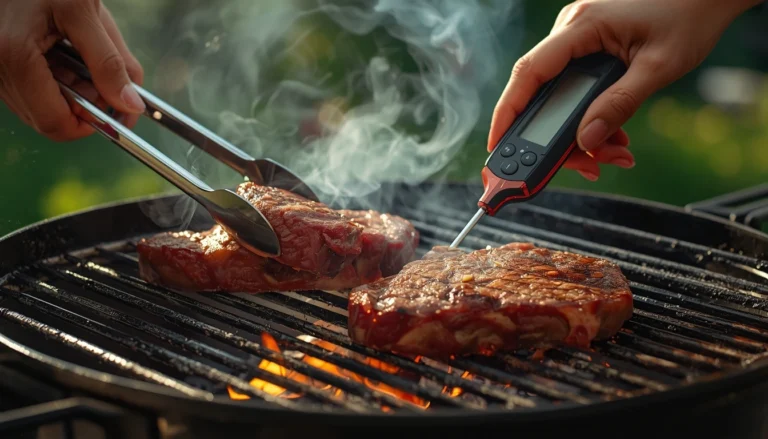
A thermometer matters more than the clock. Bone-in steaks are uneven by nature because the meat close to the bone can heat differently than the outer edge. Check the thickest part of the meat and avoid touching the bone with the probe.
| Doneness | Common Pull Range | Approx. Final Range After Rest | Texture |
|---|---|---|---|
| Rare | 115–120°F | 120–125°F | Very red, soft center |
| Medium-rare | 120–125°F | 130–135°F | Warm red center, juicy fat |
| Medium | 130–135°F | 140–145°F | Pink center, softer rendered fat |
| USDA safe minimum | 145°F | 145°F + 3-minute rest | Official safety reference for steaks |
For more detail on beef doneness and safe temperatures, see our beef cooking temperature guide.
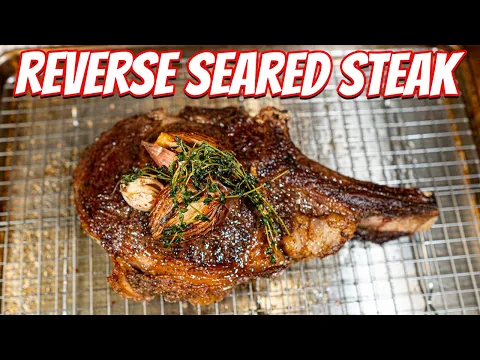
Video: Reverse Sear Steak Reference
Use this video as a visual reference for the reverse sear idea. The article method below is written specifically for bone-in ribeye, but the same low-heat-then-sear logic applies.
Recipe Block: Reverse-Seared Bone-In Ribeye Steak
This is a master method for cooking a thick bone-in ribeye steak with a controlled center and a strong final crust.
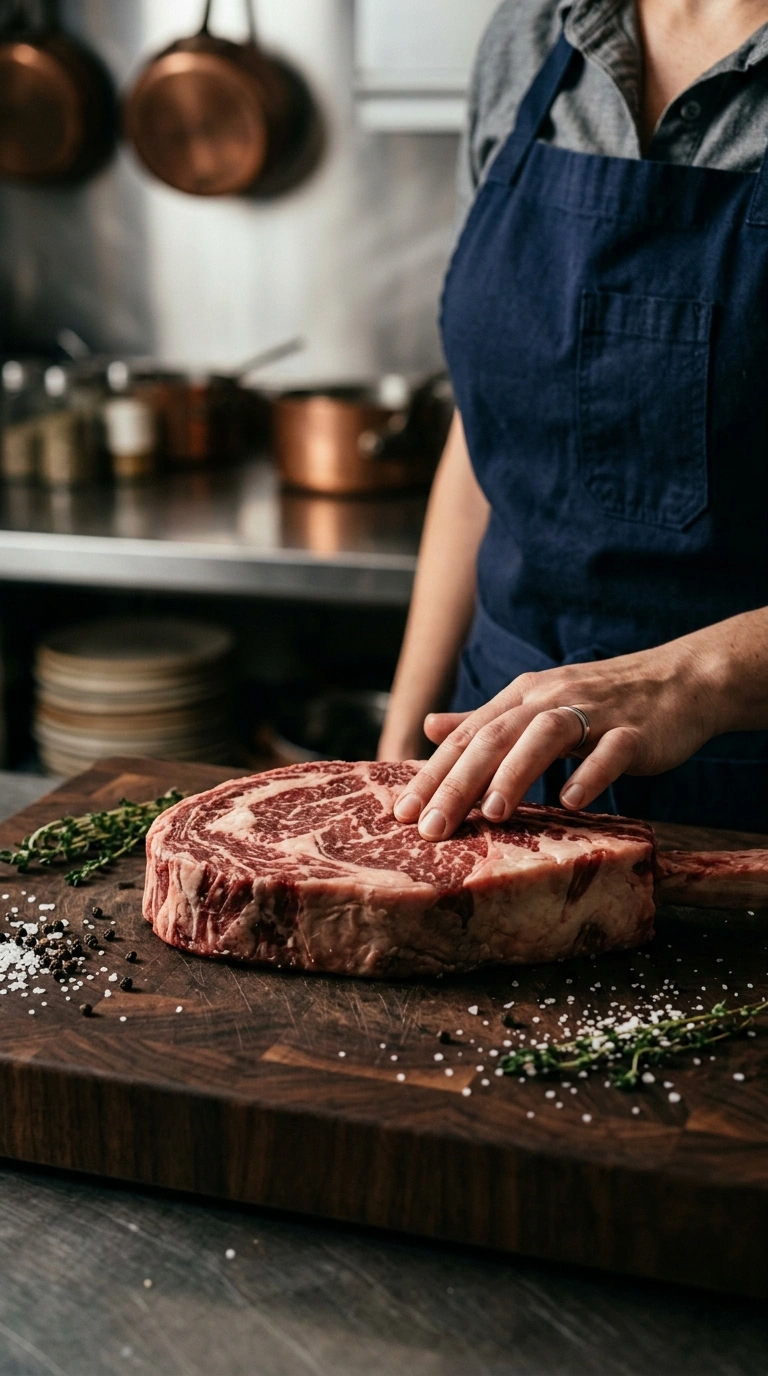
Best for: a 1½ to 2 inch bone-in ribeye, cowboy ribeye, or thick rib steak. For a very thin ribeye, use a faster skillet or grill method instead.
Ingredients
 Kosher salt
1½ tsp
Kosher salt
1½ tsp Black pepper
1 tsp
Black pepper
1 tsp High-heat oil
1 tbsp
High-heat oil
1 tbsp Butter, optional
1 tbsp
Butter, optional
1 tbsp Garlic, optional
1 clove
Garlic, optional
1 clove Rosemary or thyme
1 sprig
Rosemary or thyme
1 sprigStep-by-Step: How to Cook Bone-In Ribeye
Follow these visual steps to cook a thick bone-in ribeye with a controlled center, strong crust, and proper resting time.
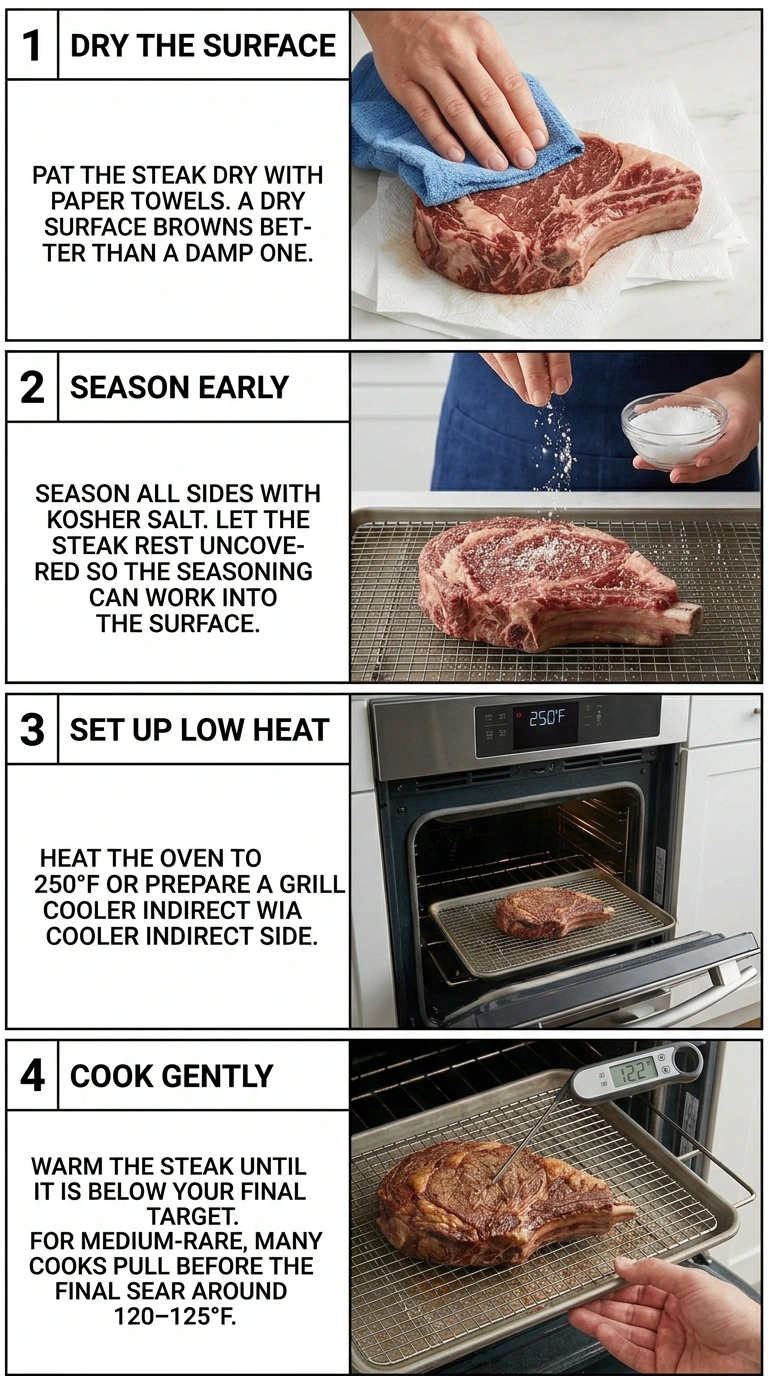
Image 1: Season and Warm the Steak
1Dry the surface
Pat the steak dry with paper towels. A dry surface browns better than a damp one.
2Season early
Season all sides with kosher salt. Let the steak rest uncovered so the seasoning can work into the surface.
3Set up low heat
Heat the oven to 250°F or prepare a grill with a cooler indirect side.
4Cook gently
Warm the steak until it is below your final target. For medium-rare, many cooks pull before the final sear around 120–125°F.
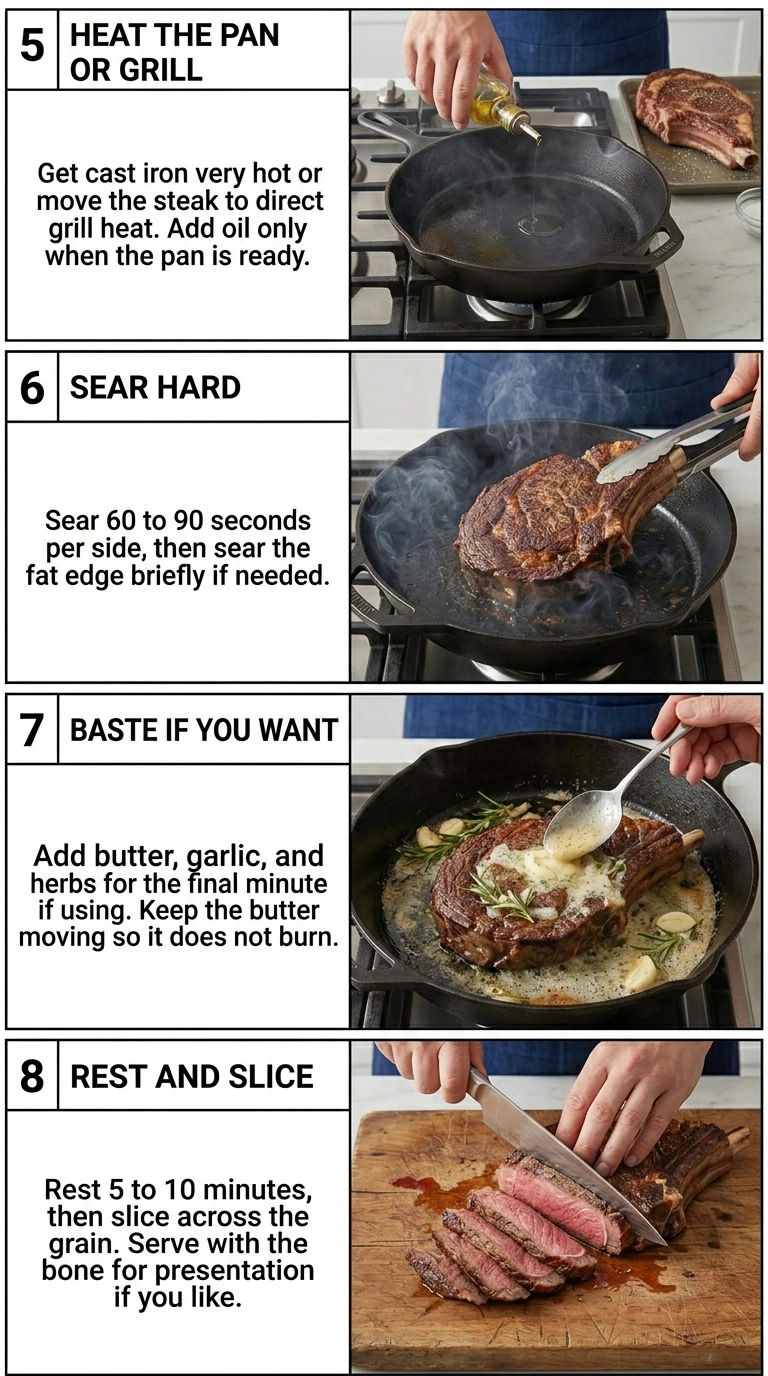
Image 2: Sear, Rest, and Slice
5Heat the pan or grill
Get cast iron very hot or move the steak to direct grill heat. Add oil only when the pan is ready.
6Sear hard
Sear 60 to 90 seconds per side, then sear the fat edge briefly if needed.
7Baste if you want
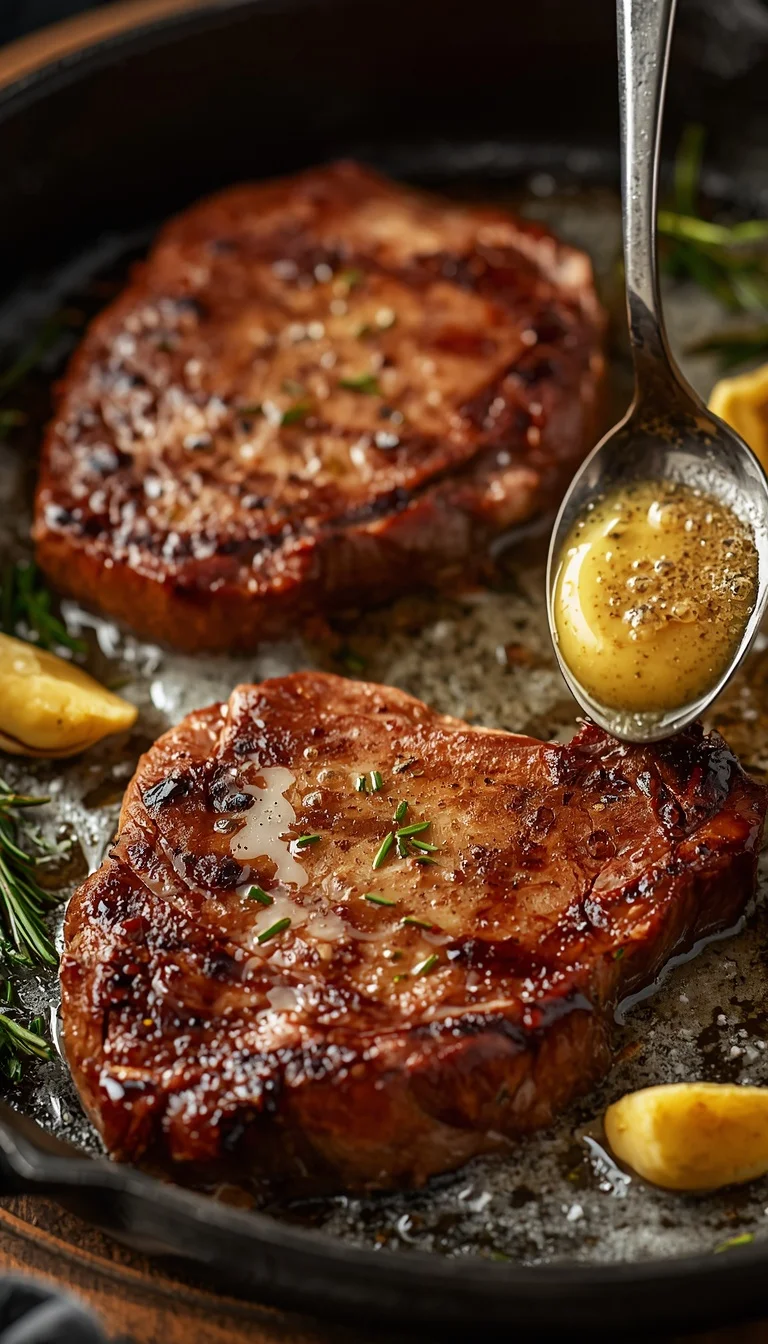
Add butter, garlic, and herbs for the final minute if using. Keep the butter moving so it does not burn.
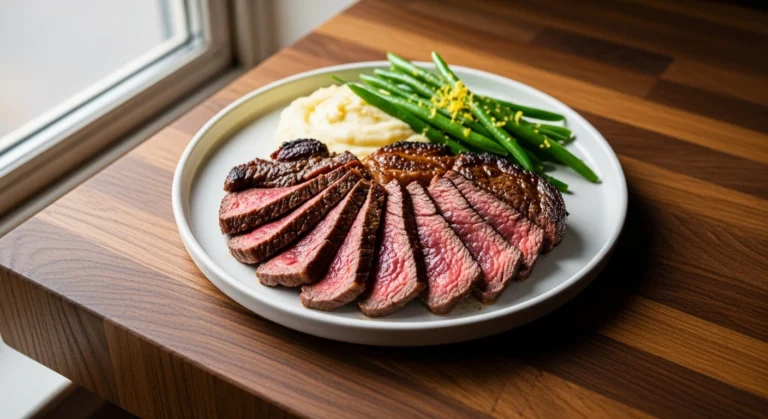
8Rest and slice
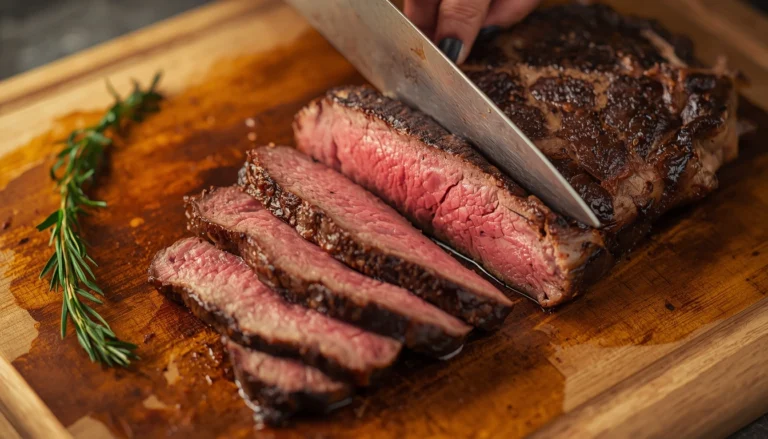
Rest 5 to 10 minutes, then slice across the grain. Serve with the bone for presentation if you like.
Expert Tips for Better Bone-In Ribeye
- Buy thicker than you think. A thin bone-in ribeye is harder to cook well than a thick one.
- Salt ahead when possible. Even 45 minutes helps the surface dry and season more evenly.
- Use two-zone heat on the grill. Ribeye fat can flare, so you need a cooler area to move the steak.
- Do not keep flipping over weak heat. You need real heat at the end to build crust.
- Check temperature in more than one spot. Bone-in steaks can have hot and cool zones.
Common Mistakes When Cooking a Ribeye Steak
Use controlled heat first for thick steaks, then sear hard at the end.
Thin steaks cook through before the crust has enough time to develop.
Bone-in ribeye is too expensive to cook by color alone.
Rest the steak before slicing so the heat can even out.
What to Serve With Bone-In Ribeye
Bone-in ribeye is rich, so it works well with sides that add contrast: crisp potatoes, grilled asparagus, roasted mushrooms, peppery salad, chimichurri, or a sharp pan sauce. Keep the sides useful rather than heavy.
For more ideas, use this guide to steak sides.
Storage and Reheating
Store leftover cooked ribeye in a shallow airtight container in the refrigerator. For best quality, slice only what you plan to eat right away and keep the remaining steak as whole as possible.
- Refrigerator: Use cooked leftovers within a few days and keep them chilled.
- Reheat gently: Warm slices in a low oven or covered skillet. Avoid blasting leftovers over high heat.
- Cold use: Thin cold slices work well in steak salads, sandwiches, and rice bowls.
For official leftover handling guidance, see USDA leftovers and food safety.
Approximate Nutrition
Ribeye nutrition changes a lot by steak size, grade, trim, fat eaten, and how much bone weight is included. Use this as a practical estimate for about half of one thick bone-in ribeye, edible portion only.
For exact tracking, match your steak’s cooked edible weight and trim level against a reliable nutrition database such as USDA FoodData Central.
Bone-In Ribeye FAQs
Not always. Bone-in ribeye looks impressive and can help protect part of the steak from harsh heat, but boneless ribeye is easier to sear evenly and slice. Marbling, thickness, and grade matter more than the bone alone.
Reverse sear is the most reliable method for a thick bone-in ribeye. Cook it gently first, then finish with a hard sear in cast iron or over direct grill heat.
Yes. Use two-zone grilling. Start the steak on the cooler side, then move it over direct heat to sear. This helps reduce flare-up problems from the ribeye’s fat.
A thick steak may take about 25 to 40 minutes in the low-heat phase, then only a few minutes to sear. Time depends on thickness, starting temperature, oven or grill heat, and your target doneness.
Butter is optional. Ribeye already has plenty of fat. If you use butter, add it near the end with garlic or herbs so it flavors the crust without burning.
About JULIA
JULIA writes practical meat guides and cooking methods for MeatRecipeZone, with a focus on clear steps, realistic home-kitchen results, and safe temperature guidance.
This guide was built around practical steak-cooking logic, official safety references, beef buying considerations, and current product-page checks where relevant. Last updated: May 20, 2026.